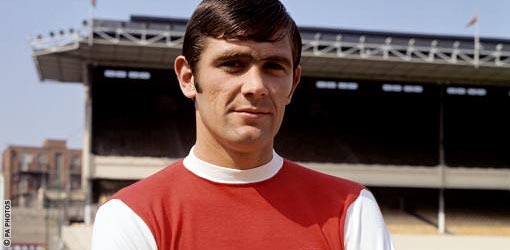
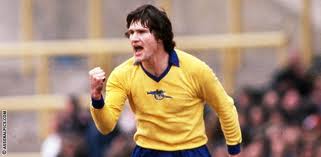
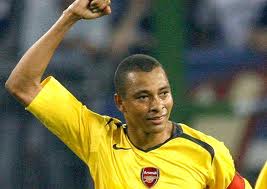
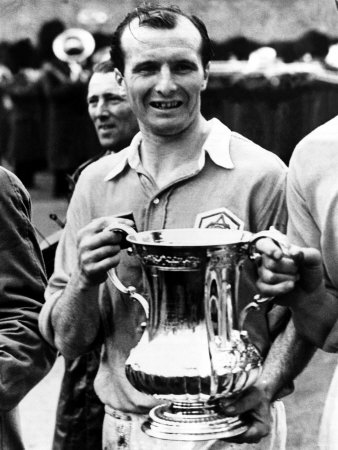
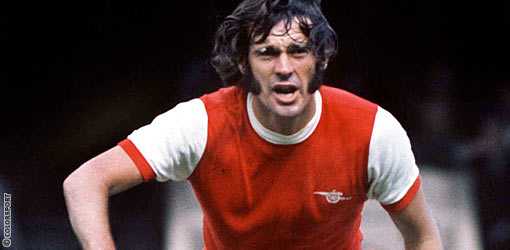
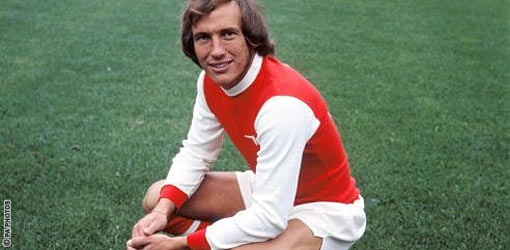
Vote for your favourite defenders from Arsenal’s modern era

June 22, 2013

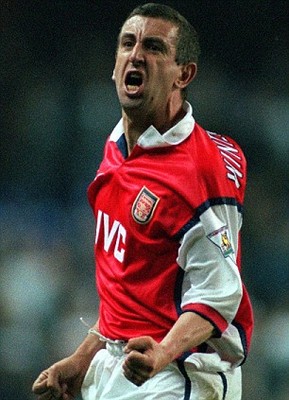
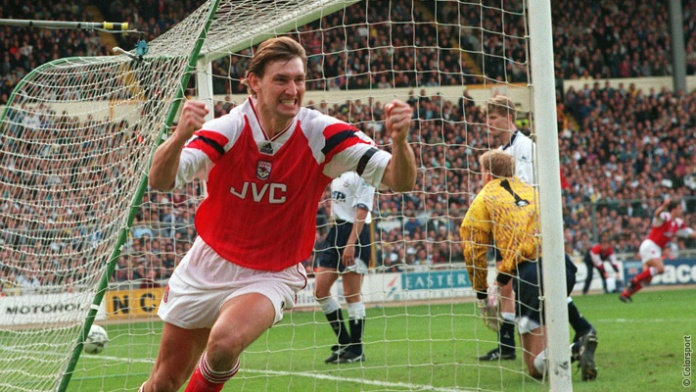
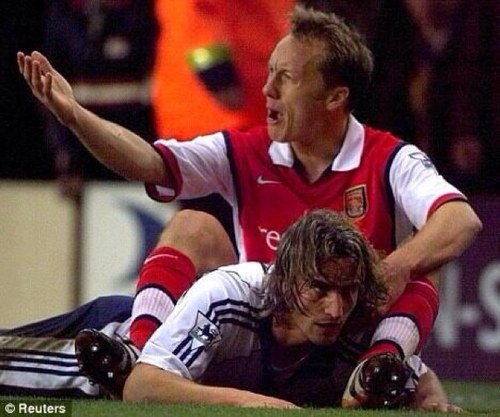
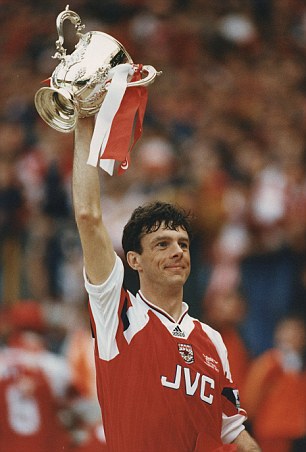
Today you get to vote for your favourite defenders from Arsenal’s modern era. The articles published on Tuesday, Wednesday and Thursday of this week provided in depth profiles on our best defenders spanning from Peter Simpson who played his first game in 1960 to the present day.

To provide a broader picture of readers’ preferences, you can vote for up to 3 players in this poll.

Thanks to GunnerN5 and Gooner In Exile for this excellent series of posts providing a forensic analysis of the best players in Arsenal’s history. Today we conclude the defence …. next week we start the midfield.


Arsenal Obsessed? Memories from a ’60’s Childhood.

June 21, 2013

Have you ever been an “anorak”? I have – I was and probably remain an Arsenal anorak. In my youth I didn’t hang around train stations or sit by airports, flask of tea and a notebook in hand obsessively writing down times and numbers – No, my obsession took it’s material form in a Scrapbook.

To those younger readers who do not know what a scrapbook is; a scrapbook is a book of empty pages into which one can stick newspaper articles, pictures, tickets and other ephemera.

This was back in the days of Yore, the pre-digital world when men were men and women were grateful. There wasn’t daily access to The Arsenal, just reports of the game in the Sunday papers and a few stories about players. There was the Charlie Buchan Football Annual and monthly magazine; it wasn’t until the late 1960’s that football magazines became popular, but given the small amount of pocket-money the young BR had available, I didn’t want to spend a weeks money on a mag. Plenty did – The Charlie Buchan Football Magazine had a monthly circulation of over 250,000, which is more than all the current football mags added together!!

Unknown-1

So I started my own “magazine” which took the form of a scrapbook. It was an adjunct to my precious AFC programmes which were locked away in an air conditioned, humidity-controlled steel bunker outside London (in case of alien attack). I would cut out the reports from all the games, make tables of attendances,league position, player appearances, goal scorers, type of goal (head/foot). All manner of things related to The Arsenal.

I have to admit I became obsessive about my scrapbook. My family paper was The Daily Mail (he wrote in great shame) and I would cut any AFC related article or pictures out and add them to the scrapbook – though midweek there was very little. The main sources were the weekend papers. The Saturday night pink Sports edition and the Sundays. Having listened to the football scores on the radio I would be given newspaper money and sent to the local newsagent to wait for the arrival of the Evening Sports paper. There would be at least 10 men/boys eagerly awaiting it’s arrival – seems another world!

The family Sundays were the The Mirror and The Times ( 😦  ). Both to be cut to pieces on Sunday evening after a day spent playing coats for goalposts in the local park.

It wasn’t easy making a scrapbook, there were editorial decisions to be made which could affect the whole project.; layout, which glue, are there too many pics of the same player, do I write in print of joined-up?

Arsenal-wh_500x331

Living with a demented younger brother and a spiteful older sister (both top chaps now – well, one of them is!!) the value of the scrapbook meant that it could be used as ransom. No blood was spilled but many an argument was started by one of the swine hiding my third most valuable possession (after my bicycle and my Dansette transistor radio).

I gave up the scrapbook collecting in my mid-teens when I started to attend Highbury on a regular basis and then away games. Plus, the newly discovered attractions of the opposite sex altered my perspective of life – and I had discovered another typical male teenage obsession (thank you Geno Washington and the Ram Jam Band). Strangely, the 3 obsessions I developed in those days still occupy most of my time today 😀

I need to point out to that I was not alone in my scrapbooking – most of my school did the same. Not only football but all sorts of subjects. My sister pressed flowers (what a pointless waste of time), my brother had a Dinosaur scrapbook, Robert over the road had a Red Indian scrapbook but mine was by far the best.

I guess I kept collecting for 6 or 7 seasons, goodness know what happened to those  oh-so-precious scrapbooks, probably thrown out in one of my house moves.

Wish I still had them.

n.b. Of course, Arsenal Arsenal is our modern digital scrapbook with all the previous info now on the righthand sidebars, and even better than my old version, this one is created by many hands.

Written by Big Raddy


Arsenal’s Greatest Defenders Day 6

June 20, 2013

Continuing our Summer series of articles in search of Arsenal’s greatest ever team, this week we continue to highlight the defenders.  Don’t forget to take the opportunity to choose your personal favourite defender by voting in the poll at the end of the week

17. Nigel Winterburn: 1987-2000

Nigel played in 584 games over a 13 year period.

He was born in Arley, Warwickshire and began his career with Birmingham City gaining his first youth caps for England while with the club. He left to join Oxford United and then in 1983 he was signed on a free transfer by Wimbledon who gained promotion to the First Division in 1986, at the same time Nigel won England under-21 honours. Nigel was the Wimbledon supporters, Player of the Year, for each of the four seasons he spent at Plough Lane.
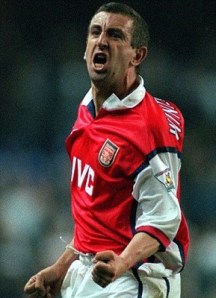
RackMultipart.5031.0_display_imageArsenal, who was looking for a long-term replacement for Captain Kenny Sansom, paid Wimbledon £350,000 in the summer of 1987 and Nigel became an Arsenal player. He began his Arsenal career at right-back even though he was heavily left-footed. When Sansom left Arsenal Nigel moved to his more familiar left back role and stayed there for more for more than a decade.

He and fellow full back Lee Dixon flanked central defenders Tony Adams and David O’Leary later being joined by Steve Bould, George Graham would often play all five of them as his defensive unit. They played together. as Arsenal beat holders Liverpool to a last-game showdown at Anfield for the First Division title, he made his England debut later that same year.

Arsenal ended 1990 trophy less, but went on to win the league title again the next year, with only one loss. Two years later he was in the Arsenal team which won both cup competitions and thus completed his domestic set of medals. Arsenal defeated Sheffield Wednesday 2–1 in both the League Cup and FA Cup finals. In 1994, Arsenal beat Italian side Parma’s 1–0, to win the European Cup Winners Cup, Arsenal’s first success continentally for a quarter of a century.

Arsène Wenger arrived at Arsenal at the end of 1996 and instilled new self-awareness and dietary habits into the Arsenal squad, allowing the ageing defence to thrive in their latter years and prolong their football careers. Arsenal won the “double” of Premiership and FA Cup in 1998 and in 2000 they reached the UEFA Cup final.

He left Arsenal and joined West Ham United in 2000 for a fee of £250,000, playing in 94 games in all competitions for West Ham and retired in 2003

He played in 429 matches for Arsenal placing him the fourth on the all time list.

18. Tony Adams: 1983-2002

Tony played in 669 games over a 19 year period.

Born in Romford, London, Tony grew up in Dagenham before signing for Arsenal as a schoolboy in 1980. He made his Arsenal first team debut in November 1983 just four weeks after his 17th birthday and became a regular player in the 1985–86 season, winning the Football League Cup Final, his first major trophy, in 1987.

gun__1357644158_adams_tottenham1993Alongside Lee Dixon, Nigel Winterburn and Steve Bould, he was part of the “famous back four” that lined up in Arsenal’s defence – they became renowned for the use of their well-disciplined offside trap. On 1 January 1988, he became Arsenal captain at the age of 21 and remained as such until his retirement 14 years later.

Their, strong and disciplined defence was  a major a factor in Arsenal winning the League Cup in 1986–87 followed by two First Division championship titles; the first in 1988–89 and the second in 1990–91 after losing only one game all season. In 1992–93 he became captain of the first English side to win the League Cup and FA Cup double, and he lifted the European Cup Winners’ Cup the following year.

All along Tony had a ghost in his closet, namely his battle with alcoholism, which started in the mid-1980s and became increasingly worse; reportedly he was often being involved in fights in nightclubs. On 6 May 1990, he crashed his car and when  breathalysed his blood alcohol level was found to be more than four times the legal drink-drive limit, in December of that year, he was found guilty and he was imprisoned for four months. Unfortunately his alcoholism continued and he was involved in further alcohol-related incidents. In September of 1996, he went public admitting that he was an alcoholic and was receiving treatment. Since his recovery he has become one of the most high-profile recovering alcoholics in the UK and his battle with alcohol is detailed in his autobiography, “Addicted”.

The arrival of Arsène Wenger as Arsenal manager in October 1996 was also played a significant part in his recovery as Wenger reformed the club’s dietary practices and the players’ lifestyles. Wenger showed his faith in Tony by sticking by him and keeping him as the club’s captain, the improvements in the regime probably helped to extend his career by several years. Arsene’s trust was rewarded with Tony captaining the club to two Premiership and FA Cup Doubles, in 1997–98 and 2001–02 – he is the only player in English football history to have captained a title-winning team in three different decades.

In August 2002, just before the start of the 2002–03 season, he announced his retirement from professional football after a career spanning almost 20 years in which he played 668 matches for Arsenal making him second on the all time appearance list, he is also the most successful captain in the club’s history.

He made his debut for England against Spain in 1987, and played in Euro 88, scoring one of England’s two goals. He was the first player to represent England who had been born after the 1966 World Cup win. In total he appeared 66 times for England.

Nicknamed “Mr Arsenal”, he was honoured by Arsenal with a testimonial game against Celtic in May 2002 with many Arsenal legends playing, including Ian Wright, John Lukic and Adams’s fellow back four stalwarts, Dixon, Winterburn and Bould. The game finished 1–1 with Lee Dixon, in his final appearance for the Gunners, getting their goal.

In 2004, Tony was inducted into the English Football Hall of Fame in recognition of his impact on the English game. A statue of Adams was placed outside Emirates Stadium in celebration of the club’s 125th anniversary on 9 December, 2011. He has also been honoured with the MBE for his contribution to football.

19. Lee Dixon: 1988-2002

Lee played in 619 games over a 14 year period.

Born in Manchester, he was a boyhood Manchester City supporter. He began his professional playing career in the lower divisions joining Burnley as an apprentice in 1980, turning professional in 1982 after which he played for Chester City and Bury before joining Stoke City in 1986.

His performances attracted the attention of Arsenal and he was signed by Arsenal boss George Graham in 1988 following the departure of England right back, Viv Anderson, to Manchester United. This was the first time that he had played in the First Division and it took a while for him to be given a first team role at Highbury. Nigel Winterburn had been a guarded success in the unfamiliar role of right back, though Lee did make his debut against Luton Town in February 1988 and played six times in total before the season ended. In the new season, Winterburn moved across to left back, allowing Dixon to take over the No.2 shirt, which he duly did for well over ten years.

7511f332b29ae01378552e5be565a39cHe and Winterburn made the full back positions their own for the next decade or so, while Captain Tony Adams and the long-serving David O’Leary operated in the middle. Later in 1988 they were joined by Steve Bould who, like Dixon before him, had been spotted by Graham playing for Stoke City. These five defenders, often playing as a back five together and were the foundation stones of much of Arsenal’s success.

He wrote in his column in The Independent of the defence that he played in at Arsenal.

“I was fortunate to play in an Arsenal back line that earned itself a reputation as being OK. I’m not trying to be overly modest in saying that, as individuals, we weren’t the best players in the world. But certainly all my weaknesses were compensated for by Tony Adams, Nigel Winterburn, Martin Keown and Steve Bould, and vice versa. If one of us wasn’t playing well, the others picked up the slack”

His career at Arsenal saw him collect four league champion’s medals, three FA Cup winner’s medals and a UEFA Cup Winners’ Cup medal. He was named in the PFA Team of the Year twice, for the seasons 1989–90 and 1990–91.

His retirement came at the end of Arsenal’s domestic double-winning 2001–02 season, their second in his time at the club.

He made his England début in April 1990 in a World Cup warm-up game against Czechoslovakia, ending up with a total of 22 caps.

His 619 appearances for Arsenal place him third on the all time list.

20. Martin Keown: 1981-2004

Martin played in 449 games over a 23 year period.

Born in Oxford, Martin first played for local sides and his local Gaelic football team, before joining Arsenal on a schoolboy contract in 1980; he made his professional debut while on loan at Brighton & Hove Albion in 1984. His debut for Arsenal came in November 1985, when Don Howe was still manager. He played 22 league games that season but when George Graham became manager in 1986, he decided that Martin was not part of his plans and sold him to Aston Villa for £200,000.

Villa was relegated after finishing bottom of the First division on 1986-87. After Graham Taylor was appointed manager Villa won promotion back to the First Division, Martin helped them secure their top flight status the following season, but was sold to Everton in 1989, following which Everton sold Martin back to Arsenal in 1993.

_39363750_keown_forlanThis move created intense competition for the central defensive positions between himself, Andy Linighan, Steve Bould and Captain Tony Adams, for places in the centre of one of the best English defences of the 1990s. He rarely missed a game in his first four full seasons back at Highbury, though he was used sparingly by Arsene Wenger in the 1997–98 double winning campaign, playing just 18 times. But Martin still claimed the first two major trophies of his career, after well over a decade of waiting. He went on to became a key player in Arsène Wenger’s double winning sides of 1998 and 2002, he remained as a first team regular until the end of the 2002–03 season, when the Gunners won their ninth FA Cup.

Martin remained at Arsenal until 2004, winning another Premier League title, before being released on a free transfer. His final season he made 10 league appearances – the minimum to qualify for a title winner’s medal. On his release he signed for Leicester City, but left after less than six months and signed for Reading in January 2005, he played until the end of the season and then he retired.

He made his England debut in 1992 against France, earning a total of 43 caps.

His 449 appearances for Arsenal place him ninth on the all time list.

Written by GunnerN5 and compiled by Gooner in Exile


Arsenal’s Greatest Defenders – Day 5

June 19, 2013

Continuing our Summer series of articles in search of Arsenal’s greatest ever team, this week we continue to highlight the defenders.  Don’t forget to take the opportunity to choose your personal favourite defender by voting in the poll at the end of the week

14. Kenny Samson: 1980-1988

Kenny played in 394 games over an 8 year period.

He was born in Camberwell, London. While still at school, Kenny played for the Crystal Palace youth team, and made his first team debut for them at the age of just 16. In 1977 he captained the Palace junior’s team to FA Youth Cup success; he also skippered the England team at the same level. In his first 156 games he only missed playing in one league fixture. The team quickly progressed from the old Third Division in 1976, through the divisions to Division One, which they briefly topped by the end of 1979.

image027Arsenal had been scouting Kenny and in the summer of 1980 they put in a bid of £1million, with striker Clive Allen going to Crystal Palace in exchange; this was a controversial move, as Allen was a prized young player and had only joined Arsenal weeks earlier. That same summer he played for England in the 1980 European Championships in Italy.

He made his Arsenal debut in August 1980 and was a regular for the next two seasons, and a near-constant figure at left back for Arsenal for the next six years. He was voted Arsenal’s Player of the Year in 1981, but it took him seven years to win a trophy, with the Gunners largely underachieving through the early and mid-1980s.

It was from his England career that he earned the most praise and recognition he was rarely out of the team and played in the 1982 World Cup in Spain. He remained as the first choice left back for the 1986 World Cup in Mexico and played in every game up to and including the quarter final loss to Argentina, and was one of the England players who witnessed Diego Maradona’s ”Hand of God” goal.

He rarely missed a game for England between 1980 and 1988, with the only competition for his position coming in 1987, when Nottingham Forest left back and Captain Stuart Pearce was given his England debut. However Kenny remained as the regular left-back during England’s 1988 European Championship qualifications. To this day, he remains as England’s second-most capped full back after Ashley Cole and only a handful of players have received more caps.

He finally won some silverware with Arsenal in 1987, captaining Arsenal to a League Cup final victory over Liverpool at Wembley; he was instrumental in the win as he set up Arsenal’s late winner, scored by Charlie Nicholas. The following season he fell out with manager George Graham and was replaced as captain by Tony Adams, who was just 21. He did, however, keep his place in the side even though Arsenal had just signed a long-term replacement in Nigel Winterburn, Nigel played at right-back in his first season rather than his accustomed left back.

He left Arsenal in December 1988; Arsenal had signed Lee Dixon and had reshuffled the side, with Dixon playing at right-back and Nigel Winterburn on the left. He continued to play for many years playing for Newcastle United, QPR, Coventry City, Everton, Brentford and Watford.

15. David O’Leary: 1973-1983

David played in a club record 722 games over a 20 year period.

He was born in Stoke Newington; London moved to live in Dublin at the age of three.

A Shelbourne schoolboy player O’Leary signed for Arsenal as an apprentice in 1973. He soon progressed through the ranks at Highbury, playing in the reserves at the age of 16. He made his debut for Arsenal against Burnley on in 1975, and despite being only 17, went on to make 30 appearances that season. For the next ten years he was ever-present in the Arsenal side, playing more than 40 matches a season (except for 1980–81, when he was injured and played in only 27).

article-0-0002B72F000001F4-475_306x452David was noted for his good positioning and elegant style of play. He won his first major honour with Arsenal in a win over Manchester United in the 1979 FA Cup Final. He also played in the 1978 and 1980 Cup finals, and the 1980 Cup Winners’ Cup final, all of which Arsenal lost. In 1982 he became club captain, but relinquished it to Graham Rix eighteen months later.

O’Leary broke numerous appearance records at Arsenal; he was the youngest person to reach the 100 and 200 match milestones, making his 400th appearance while still only 26. He passed George Armstrong’s all-time record of 621 first-team games in November 1989. By this time, O’Leary was no longer automatic first choice (with the partnership of Tony Adams and Steve Bould at the centre of George Graham’s defence), but he still turned in over 20 appearances as Arsenal won the 1988–89 First Division title thanks to a 2–0 win over Liverpool, at Anfield on the final day of the season.

He won another League title in 1991 and an FA Cup and League Cup double in 1993, though by this time he was mainly used as a sub. He holds Arsenal’s all-time record for appearances, with 722 first-team games, and over 1000 games at all levels in a twenty-year long association with the club.

He joined Leeds on a free transfer in 1993 after 19 years at Highbury. Throughout the1993–94 season he was a regular player in the Leeds side until he suffered an injury to his Achilles , which ruled him out for the whole of the following season. He gave in to his injury and announced his retirement from football at the age of 37.

The highlight of his 68-cap international career came in the 1990 World Cup. With Ireland in a penalty shootout with Romania, he stepped up to take the decisive final penalty to win the shootout 5–4. He only played 26 minutes in the tournament after replacing Steve Staunton in the Romania match.

When the former Arsenal manager George Graham was put in charge at Leeds United in September 1996, O’Leary was installed as his assistant. He remained as assistant for two years and he was made manager shortly after Graham moved to Tottenham. After several good seasons, including making the semi-final of the Champions League, the team went through a dramatic loss of form that ended with Leeds sacking him in 2002.

These are some of his thoughts (from Arsenal.com) after Arsenal won the FA Cup replay in 1993.

“We did a lap of honour with the trophy and before I got to the tunnel I thought to myself “‘this is the last time I’ll ever wear the Arsenal jersey again”. It was an amazing night, a brilliant way to end 20 years, but it was such a sad night for me as well.”

It was a night that stretched well into the early hours as the players let off steam after making history. And O’Leary went home with an extra companion when the celebrations finally died down.

“That night – I’ll always remember this – I took the FA Cup home. No one else seemed to be responsible for it so I took it with me.

“My wife drove us home and I remember sitting in the front with the FA Cup in my lap and somebody pulled up at the lights, seconds before it went green, and he looked over and then looked over again, thinking ‘is that David O’Leary with the FA Cup?!’ We pulled away and I still don’t know if that guy thought he was imagining things.

“I remember getting home that night and I thought, if my house gets robbed they are not going to take the FA Cup, so I took the cup up to my bedroom. My kids were young then and the following morning they came in and saw the FA Cup there on the side of the bed.

“That morning I took it to the club and gave it to Ken Friar. I said goodbye to Ken, I actually went to the steps of the old directors’ box at Highbury, had a look out there for the last time, and said to myself ‘hey, it’s been a fantastic 20 years, I’ve been so proud to play here, thanks for putting up with me’.

“Then I walked away, and that was that.”

(Copyright 2013 The Arsenal Football Club plc.)

16. Steve Bould: 1988-1999

Steve played in 372 games over an 11 year period.

He was born in Stoke-on-Trent and signed for his hometown club Stoke City as a schoolboy in 1978, turning professional in 1980.

Steve-Bould-Arsenal-1992_1270336He spent seven seasons with the Potters and as he gained a reputation, as one of the best central defenders in the 2nd Division, it became inevitable that he would move to one of the big clubs. He was scouted by both Everton and Arsenal and after lengthy discussions Steve chose Arsenal and a tribunal set the price at £390,000 – a small fee compared to what Stoke was demanding. Signing in June 1988 he became a part of Arsenal’s formidable and famous back four with Tony Adams, Nigel Winterburn and Lee Dixon, his former Stoke team-mate, winning 9 major honours.

He won the First Division title in both 1988–89 and 1990–91 but he was ruled out of the FA Cup and League Cup finals that Arsenal won in 1992–93, due to injury. He was voted as player of the year, by the clubs fans for the 1992-93 season.

Steve was a member of the team that won the Cup Winners’ Cup 1993–94, and was also in the squad that won the double in 1997–98 – he famously set up Tony Adams with a chipped through ball, for the final goal in Arsenal’s 4–0 win over Everton, the match that won them the Premier League title. Two weeks later they won the FA Cup.

In his final season Arsenal reached the FA Cup semi-final, losing to Manchester United, and then a month later they also beat Arsenal to the Premier League title. Steve left the Gunners in 1999 and ended his playing career with Sunderland.

After retiring, he began working towards his UEFA coaching badges and in 2001 moved back to Arsenal and became a coach for the youth teams and was the head coach of Arsenal’s U18 Academy side, whom he led to winning the Premier Academy League 2008–2009, 2009–2010 and FA Youth Cup in 2008–2009.

He became assistant manager, to Arsene Wenger in May 2012, following the retirement of Pat Rice.

Written by GunnerN5 and complied by Gooner in Exile


Arsenal’s Greatest Defenders – Day 4

June 18, 2013

Continuing our Summer series of articles in search of Arsenal’s greatest ever team, this week we continue to highlight the defenders.  Don’t forget to take the opportunity to choose your personal favourite defender by voting in the poll at the end of the week.

11. Peter Simpson: 1960-1978

Peter played in 477 games over a 15 year period.

Born in Gorleston, Norfolk, he worked at Arsenal as a member of the club’s ground staff before signing as an apprentice in 1961, turning professional in 1962. Initially he played in the youth and reserve teams and made his first team debut in 1964.

gun__1255678355_simpson_peterHe only made 22 appearances in his first three seasons but gained a regular first team spot under the management of Bertie Mee becoming an integral member of the team for the next ten seasons. He started out as an all purpose player, playing in every outfield position, but soon settled into the centre half position, usually alongside Frank McLintock.

Peter was a member of the losing teams in both the 1968 and 1969 League Cup Final’s but was a leading figure in Arsenal’s success in the early 1970s including winning the Inter-Cities Fairs Cup in 1969-70, and making a total of 57 appearances in all competitions that season. He then went on to be part of the side that won the League Championship and FA Cup Double in 1970-71. After missing the first three months of that season with a cartilage problem, he returned in time for the FA Cup run, and appeared in the final, beating Liverpool 2-1 after extra time.

Despite his long career at the top, he was never capped for England, although he was called into a few squads by Sir Alf Ramsey during 1969-70. He continued to play for the club in the trophy less years following the Double, playing more than 35 games a season for four seasons. By 1975 age was starting to get the better of him, and he only played nine times in 1975-76. Despite a recall in 1976-77, earning 25 appearances, he was dropped again the following season.

He left the club in 1978, having played 477 times for the club, and is seventh on the Arsenal all-time appearances list.

He had brief stints with the New England Tea Men of the NASL in the United States, and then returned to England to play for non-league Hendon, before retiring.

12. Pat Rice: 1964-1980

Pat played in 528 games over a 16 year period.

Born in Belfast, Pat grew up in London, working for greengrocers on Gillespie Road. He joined the Gunners as an apprentice in 1964, turning professional in 1966 and made his first-team debut in the League Cup in December 1967.

Initially a bit-part player Pat played at right back and made only 16 appearances in his first three seasons, missing out on Arsenal’s 1969–70 Inter-Cities Fairs Cup win.  However, during this time he won his first cap for Northern Ireland in 1968, while still largely a reserve player for Arsenal. Peter Storey was Arsenal’s first choice right back, but after he was moved into central midfield at the start of the 1970–71, Pat took his place and was a near-ever present in the side that season, as Arsenal won the League and FA Cup Double.

imagesHe remained first-choice right back for the rest of the 1970s, playing in the 1972 FA Cup Final as well; he was an ever-present for three seasons, 1971–72, 1975–76 & 1976–77. Of the Double-winning side, he was the one who remained at the club the longest, and became club captain in 1977. As captain, he had the honour of lifting the FA Cup after Arsenal beat Manchester United in 1979, as well as playing in two losing finals in 1978 and 1980. He is one of only 3 Arsenal players to have played in five FA Cup Finals (1970–71, 1971–72, 1977–78, 1978–79, 1979–80), the other two being David Seaman and Ray Parlour. He also led Arsenal to the 1980 UEFA Cup Winners’ Cup Final, which Arsenal lost on penalties to Valencia.

Pat continued to play for Northern Ireland in this time, amassing 49 caps in an eleven-year career, which ended with his final international game against England on October 17, 1979, which ended in a 5–1 defeat.

He finally left Arsenal in 1980 at the age of 31, by which time he had played 528 games in total for the club. He moved to Graham Taylor’s Watford and played 137 times for the Hornets, helping the club gain promotion to the First Division in 1981–82. He scored in Watford’s first game in the top flight in 1982–83 against Everton before retiring from playing in 1984.

He rejoined Arsenal in 1984 as youth team coach, a post he held for the next 12 years, winning the FA Youth Cup twice in 1987–88 and 1993–94. In September 1996, Rice was briefly caretaker manager of the club, after the resignation of Stewart Houston, and managed the side for three winning FA Premier League matches.

With the arrival of Arsène Wenger, Pat became his assistant, and played a key role in helping the club to their success in the 1990s and 2000s, including the Doubles of 1997–98 and 2001–02, and Arsenal’s unbeaten League season of 2003–04. He holds the distinction (along with Bob Wilson) of having taken part, as player or coach, in all three of Arsenal’s Doubles.

On 5 May 2012, it was announced that he would be stepping down after an accumulative 44 years with club, since joining as an apprentice.

Arsene Wenger stated ”Pat is a true Arsenal legend and has committed almost his life to Arsenal Football Club, which shows huge loyalty and devotion to this club…I will always be indebted to him for his expert insight into Arsenal and football as a whole. On the training pitches and on match days, Pat has always been a passionate, loyal and insightful colleague, who we will all miss”.

His 528 games place him fifth on the all time list of player appearances.

Pat was appointed Member of the Order of the British Empire (MBE) in the 2013 New Year Honours for services to sport.

13. Sammy Nelson: 1966-1981

Sammy played in 339 games over a 15 year period.

Sammy was born in Belfast, Northern Ireland and joined Arsenal on his 17th birthday in 1966. He originally played on the left-wing and was later moved into defence as a left back. He was a regular in Arsenal’s reserve side for several seasons, before making his first-team debut October 25, 1969. He was used primarily as an understudy to Bob McNab, and it wasn’t until McNab was injured in the 1971–72 season that he became a regular, but when McNab returned from injury, Sammy stepped back down to the reserve team.

Sammy made his debut for Northern Ireland, as a sub against England on April 21, 1970 going on to win 51 international caps, including two of Northern Ireland’s matches in the 1982 FIFA World Cup.

He finally became Arsenal’s first choice when left back when McNab left Arsenal in 1975 and for the next five seasons he was a constant member of the Arsenal side, playing in all three of the Gunners’ successive FA Cup finals (1978, 1979 and 1980 – but only winning against Manchester United in 1979, he also played in the Gunners’ 1980 Cup Winners’ Cup loss on penalties to Valencia.

Sammy was known as a character, one particular moment that he is remembered for was when he dropped his shorts in celebration in front of the North Bank – the FA didn’t share his sense of humour and suspended him for two weeks.sammy-nelson

With the arrival of England international Kenny Sansom at the club in 1980, Sammy once again found himself in the reserves. He left Arsenal in 1981 to join Brighton & Hove Albion. He spent two seasons at Brighton, although unable to save the side from relegation in 1982–83, he did reach another Cup final (his fourth) that season, with Brighton losing 4-0 to Manchester United in a replay, after a 2–2 draw in the final.

Sammy retired from football that summer, and after spending a season as a coach at Brighton, he left the game completely and went into the insurance industry.

He played 339 first-class matches for the Gunners in total, and scored 12 goals.

Written by GunnerN5 and compiled by Gooner in Exile


Arsenal’s Positional Priorities for this Transfer Window.

June 17, 2013

I am very much in the Camp that says we have a very good squad, with a number of players who will only get better with playing time.

Now, given that a season is long, and players will need a rest and injuries will occur, I’d still say that we should add two players who would improve the First XI. Refreshing the team, providing competition, and giving the side new dimensions.

Many big names are being chucked around amongst the Red Tops, but I don’t want to discuss individual targets or players, simply the positions where AA’ers would like to see improved models.

For the sake of this chit chat, I’ll assume that none of the current first squad are leaving.

Here are my priorities in order:

1. Striker

2. Defensive Mid

3. Left Wing

As far as the defence is concerned, I don’t think it is any coincidence that the unit improved as the personnel stabilized. Consistency and understanding is everything. I also happen to believe that Verm will return to form and provide excellent rotational options, that with fixture pile ups and injuries, will still see him with plenty of playing time.

Perhaps more controversially, I’d stick with Sz as first choice. We have invested much time in a player, who as a keeper, still has his best years ahead of him, and I can only see the extra playing time and maturity improving him and the basic errors of judgement being erased.

Your Priorities?

You can vote for up to 3 positions.

Written by MickyDitIt89


Hey, here’s a crazy thought.

June 16, 2013

We all know the Premier League will have oodles of extra cash from next season due to the extra TV money coming in, you know the adverts running for a certain company with the dutch skunk fronting their campaign. The one with a slow-mo shot of the traitorous Judas performing a bicycle kick .

Every club will gain more revenue, while we at the Arsenal will soon have extra revenue from better commercial deals coming through also, yet something bothers me about that.

The automatic assumption made is that more money coming in means better buying power in the transfer market but therein lies the rub.

The extra revenue is going to go straight into the hands of agents, and their clients, and effectively out of the game and into prestige car dealerships and retailers of bling and various other “tasteful” accoutrements of success – hell, you could even splash out on jewellery from Big time Bendtner’s N3 range.

11

Now call me a wide-eyed reactionary but how about if all the Premier League clubs got to together to agree ticket price reductions so that hard pressed, and not so well off, supporters can afford to go to the games?

It’s often being said that attendances are falling at many grounds with the Grove seeing less than full attendance compared to the situation 5 or 6 years ago.

If ticket prices are reduced to any extent surely the positive PR and the extra atmosphere created by the fully occupied ground would help to bridge some of the disconnect I see merging between the players(and potentially the Clubs) and supporters ?

As the difference between what players and supporters earn reaches inter dimensional distances the growing resentment at underperforming players can only be exacerbated by the jaw-dropping wages they earn and anticipated rises in weekly wages(anyone on a deal less than £120k/week will seem like a pauper).

You’ve all heard the shouts from the lower tiers “You get £80k a week and you can’t even kick the ball straight !!” and then “Now you’ve got your new contract you can’t be arsed to put in half the effort you did before !!”, these being the expletive deleted versions as this is a family blog.

Being one of the resident AA bean counters I’m well aware that player wage inflation is simply a reaction to supply and demand, but wouldn’t it be a nice change of pace if for once extra money coming into football went back to those people who are the lifeblood of the game?

Namely us, the supporters ?

By Charybdis1966


Vote for your favourite defenders from Arsenal’s early era.

June 15, 2013

Today you get to pick defenders from our first era of defenders. The articles published on Tuesday, Wednesday and Thursday of this week provided in depth profiles on our best defenders spanning from Percy Sands in 1902 to Bob McNab who played up to 1975.

To provide a broader picture of readers’ preferences, you can vote for up to 3 players in this poll.

As others have commented through the week these players have all served the club well, okay Peter Storey may have had a bit of a dubious post playing career but you cannot deny that had you been lucky enough to pull on the red and white that you would have loved to have him alongside you.

Or what about Eddie Hapgood, quite possibly the original Mr Arsenal or was that Joe Shaw who served the club for so many years so loyally and by all accounts successfully.

Hapgood could be seen as the prototype for what players today have become, supplementing his then maximum wage with advertising deals etc.

My personal favourite Walley Barnes, to come back from serious injury which many believed he would not return from he managed to forge a successful career with the club lifting a trophy along the way.

This is the first era of defenders from which you have to vote, the more recent players come next week.

Written by GunnerN5, compiled by Gooner in Exile


Do we need Wanyama?

June 14, 2013

Arteta, Wilshere, Cazorla,Ramsey, Rosicky, Frimpong, Coquelin, Oxlade – Chamberlain, Eisfeld. Everyone a midfield player whom I would be happy to see play in most games. Yet ask most fans what is missing and they would say a muscular defensive shield – someone we have lacked since Gilberto Silva.

Unknown-1

But do we really need this player?

The performance of Arteta last season was superb; he kept the team going forward, he worked tirelessly to cut out danger and in tandem with Ramsey proved we can hold onto a one goal lead. The final few games when the defence ensured our progress to 4th showed we can be effective with Ramsey and Mikel working in tandem.

Coquelin and Frimpong? Reports from the trenches are that Frimpong ‘s injuries will severely hamper his aggressive style of play and I expect him to move on following rehab. Coquelin is difficult because I see a quality player in this fellow. He has energy, an eye for a pass and technique. What he lacks is tactical awareness but that can be taught and Francis is still young. Sadly, I expect him to ask for a transfer, though perhaps he is not good enough to become a first choice DM.

The attacking possibilities are so good there is no need for an addition – probably a cull is in order!

Eisfeld is an interesting player who appears to have a big future ahead of him, but will he get any first team chances and if not will he say “Thanks but no thanks”, as he sees a future on the bench.

Who gets dropped if we do sign a quality DM? Ramsey? Arteta? Don’t talk to me about rotation because a settled team is an essential in my eyes and a big money DM will insist upon a first team place.

I have no idea what Mr Wenger will do in summer, nor how he will pick his midfield next season. I cannot tell you who would be my midfield 3 or 4 and would like to hear your opinions.


Arsenal’s Greatest Defenders – Day 3

June 13, 2013

Day 3 of this week where we look at the defenders in our Summer series of articles in search of Arsenal’s greatest ever team. Don’t forget to take the opportunity to choose your personal favourite defender by voting in the poll at the end of the week.

7. George Male: 1929-1948

He played in 318 games over a 19 year period (including WW11).

He was born in West Ham. London, George played football with non-league Clapton. He joined Arsenal as an amateur in November 1929, turning professional in May 1930. Initially he was used as either a left-winger or left-half, typically deputising for Bob John. Initially his appearances were few and far between but he was a surprise choice at left half in the 1932 FA Cup final after Alex James was withdrawn because of injury. Arsenal lost the final 2-1 on a controversial goal.

GeorgeMale1936In 1932 Arsenal’s regular right back Tom Parker was showing his age and his replacement, Leslie Compton was not playing too well so manager Herbert Chapman converted George from left half to right back. He later recounted being summoned to Chapman’s office fearing that he would be sacked, only to be told by Chapman, that he was not only the new right back but that Chapman felt he was also the best right back in the country.

Enthused by the news George easily slotted into his new position and he became the undisputed first-choice right back for the next seven seasons playing over 35 matches every season during that period. He was a regular when Arsenal won the First Division title four more times (1932-3, 1933-4, 1934-5 and 1937-8), plus the FA Cup in 1935-6.

He made his international debut for England against Scotland in 1934, going on to gain a further nineteen caps for his country, being England’s captain for six of them, during the late 30’s he also became the Arsenal captain.

He was 29 and at the peak of his career when WW11 commenced, during which he played nearly 200 wartime matches for Arsenal while also serving in the Royal Air Force. When football resumed, after WW11, George was now 36 and nearing the end of his career but he still played in 15 games for Arsenal when they won the First Division title in 1947-8 and became the first player in League history to play in six title-winning seasons.

On retirement, as a player, he first became a coach at Arsenal, training the youth and reserve teams then he became a scout famously discovering, amongst others, Charlie George. He was still at the club to see it win its first double in 1970-1 and finally retired in 1975.

He passed away in 1998 and reaching the grand old age of 87 years.

8. Walley Barnes:1943-55

He played in 294 games over a 12 year period (including WW11).

He was born in Brecon, Wales to English parents and he played as an inside-forward for Southampton during WW11 making 32 appearances between 1941 and 1943, it was there that he was spotted and signed by Arsenal.

wally-barnes-football-player-of-arsenal-holding-trophyDuring the war years he played in virtually every position for Arsenal, including a match as goalkeeper, but he suffered a serious knee injury in 1944. It was an extremely bad injury from which he was not expected to recover, but despite the poor prognosis he recovered, and worked himself back into the team. He made his League debut for the Gunners in November 1946.

Walley became noted for his solid performances at left-back, with his neat distribution and uncanny ability to cut out crosses. He soon won a regular place in the Arsenal side, and was part of their First Division Championship winning side of 1947-8. By this time he was also a regular in the Welsh national side, gaining his first cap playing against England in 1947, unfortunately, for him; he was given a harsh football lesson by Stanley Matthews, England winning 3-0. However he went on to win 22 caps, and became captain of his country.

Following an injury to skipper Laurie Scott he was switched to right back, and won an FA Cup winners’ medal in 1949-50 when Arsenal defeated Liverpool. Two years later, Arsenal got to the Cup final again and played Newcastle United, Walley twisted his knee badly and had to come off the pitch after 35 minutes; with no substitutes permitted, in those days, Arsenal were down to ten men, and went on to lose 1-0.

As a result of his Cup final injury, he was out for Arsenal’s entire league winning season of 1952-3. Although he was back in the side for the next three seasons, his appearances were now less regular and he only played eight times in 1955-6. With age as well as past injuries counting against him, he retired from playing in the summer of 1956. In all, he played 294 matches and scored 12 goals.

During the last two years of his playing career, Walley was also manager of the Welsh national team, after which he joined the BBC broadcasting team. He presented coverage of FA Cup finals and alongside Kenneth Wolstenholme was one of the commentators for the very first edition of Match of the Day in 1964. He also assisted Wolstenholme in the live commentary to the 1966 World Cup final of England versus Germany, providing expert opinion.

Walley wrote his autobiography, titled “Captain of Wales”.

He passed away in 1975, at only 55 years of age.

9. Peter Storey: 1961-1977

Peter played in 501 games over a 16 year period.

peter storeyHe was born in Farnham, Surrey, Peter joined Arsenal as an apprentice in 1961 and turned professional the following year. He started off as a right back, and spent three seasons playing in the youth and reserve teams, making his first-team debut against Leicester City in October 1965. He secured his first team place in the Arsenal side and went on to be a first-choice player for the next ten seasons.

As his career progressed he switched from his full back position to become a defensive midfielder. He played on the losing team in two consecutive League Cup finals in 1968 and 1969 before winning an Inter-Cities Fair winners medal in 1969-70. He was known as one of footballs “Hard Men” being a tough uncompromising tackler (he was rated at number 26 in a Times “50 greatest hard men” list in 2007).

He remained a member of Arsenal’s first team, who won the First Division and FA Cup Double the following season. Peter was an unsung member of Bertie Mee’s team but his very special contribution came during the FA Cup semi-final against Stoke City at Hillsborough – with Arsenal staring defeat in the face at Hillsborough. He had already halved a two-goal deficit with a great second-half drive but as stoppage time arrived Stoke looked set to seal a 2-1 victory, and book their place at Wembley, when Arsenal were awarded a penalty. The Gunners leapt with joy – all that is except Peter Storey. He had the unenviable task of beating England legend Gordon Banks to keep Arsenal’s Double dream alive. Cool as you like Peter watched Banks go right and he slotted the ball low to the keeper’s left, for the Arsenal win. Arsenal went on to win the replay, lift the Cup and complete the Double.

He played in 19 games for England making his debut in 1971 against Greece. However this happened to be a dismal period for the England side where their record was W11, D5, L3, resulting in him never playing in any tournament finals.

After losing his place under new Arsenal boss Terry Neill, he transferred to Fulham for £10,000. He had played 501 times in all for Arsenal, making him the club’s sixth-leading player in terms of appearances. His aggressive nature on the pitch sparked the joke among fans and the media that his was “One Storey that belonged in a horror movie”

In September 2010 he released a no-holds-barred autobiography called “True Storey: My Life and Crimes as a Football Hatchet Man”.

10. Bob McNab: 1966-1975

Bob played in 365 games over a 9 year period.

He was born in Huddersfield, Yorkshire. He played locally for Huddersfield Town, appearing nearly seventy times in three seasons. He was signed by Bertie Mee for Arsenal in 1966, and soon won a place in the Arsenal side, making his debut against Leeds United on 15 October 1968.

gun__1261470056_mcnab_bob3He enjoyed his fair share of success domestically, winning the 1969-70, Inter-Cities Fairs Cup and then the Double in 1970-71. He was a strong member of a stalwart back line alongside Pat Rice and Frank McLintock, he played 62 matches in Arsenal’s double winning season, missing just two games.

He was in the side that lost in the FA Cup final to Leeds United in 1972; but injuries kept him out of the team for much of the 1971-72. This was suggested by Luke Aikman (who played the part of Paul Ashworth in the movie Fever Pitch) when he predicted part of the lineup for the FA Cup Semi-final between Arsenal and Stoke City, by stating – “McNab won’t play. Bertie Mee wouldn’t risk him.”

He returned to play over 50 matches the following season, but his poor injury record continued and he shared the left back position with Sammy Nelson for the next two seasons. With his age (32) catching up on him he was replaced by Nelson and was released on a free transfer in the summer of 1975, after playing in 365 matches and scoring six goals.

He made his debut for England on 6 November 1968 against Romania, winning four caps, but never becoming a regular.

When he left Arsenal, he first played for Wolves before trying his luck in the NASL with the San Antonio Thunder, after which he returned to England and played for Barnet. Continuing his travels he moved back across the Atlantic to play for, and then coach, the Vancouver Whitecaps in Canada, after which he retired.

He was part of a group led by Milan Mandaric that took over Portsmouth in 1999, and briefly came out of retirement and took over as caretaker manager of the side until Tony Pulis became the full time manager.

He now lives in Los Angeles, California, working as a property developer.

Written by GunnerN5 and compiled by Gooner in Exile