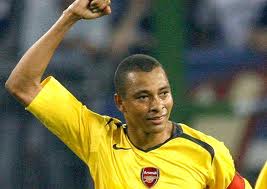
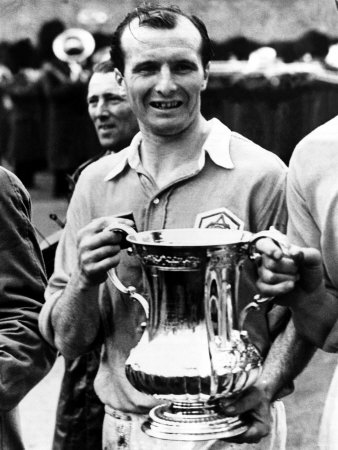
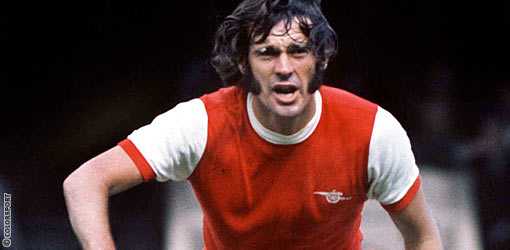
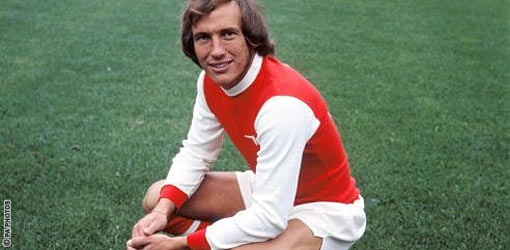
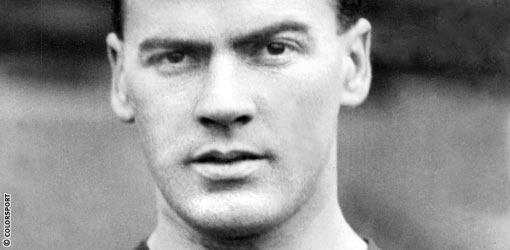
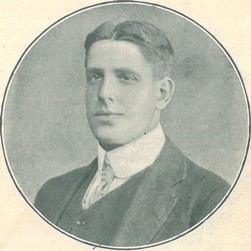
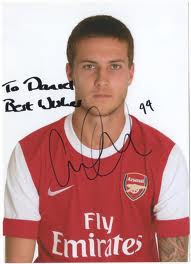
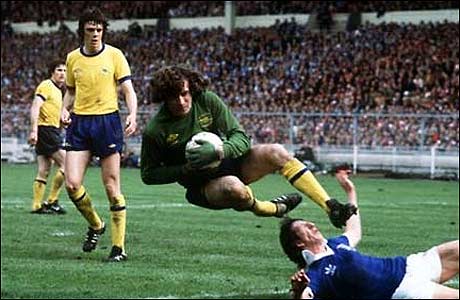
Vote for your favourite defenders from Arsenal’s early era.

June 15, 2013

Today you get to pick defenders from our first era of defenders. The articles published on Tuesday, Wednesday and Thursday of this week provided in depth profiles on our best defenders spanning from Percy Sands in 1902 to Bob McNab who played up to 1975.

To provide a broader picture of readers’ preferences, you can vote for up to 3 players in this poll.

As others have commented through the week these players have all served the club well, okay Peter Storey may have had a bit of a dubious post playing career but you cannot deny that had you been lucky enough to pull on the red and white that you would have loved to have him alongside you.

Or what about Eddie Hapgood, quite possibly the original Mr Arsenal or was that Joe Shaw who served the club for so many years so loyally and by all accounts successfully.

Hapgood could be seen as the prototype for what players today have become, supplementing his then maximum wage with advertising deals etc.

My personal favourite Walley Barnes, to come back from serious injury which many believed he would not return from he managed to forge a successful career with the club lifting a trophy along the way.

This is the first era of defenders from which you have to vote, the more recent players come next week.

Written by GunnerN5, compiled by Gooner in Exile


Do we need Wanyama?

June 14, 2013

Arteta, Wilshere, Cazorla,Ramsey, Rosicky, Frimpong, Coquelin, Oxlade – Chamberlain, Eisfeld. Everyone a midfield player whom I would be happy to see play in most games. Yet ask most fans what is missing and they would say a muscular defensive shield – someone we have lacked since Gilberto Silva.

Unknown-1

But do we really need this player?

The performance of Arteta last season was superb; he kept the team going forward, he worked tirelessly to cut out danger and in tandem with Ramsey proved we can hold onto a one goal lead. The final few games when the defence ensured our progress to 4th showed we can be effective with Ramsey and Mikel working in tandem.

Coquelin and Frimpong? Reports from the trenches are that Frimpong ‘s injuries will severely hamper his aggressive style of play and I expect him to move on following rehab. Coquelin is difficult because I see a quality player in this fellow. He has energy, an eye for a pass and technique. What he lacks is tactical awareness but that can be taught and Francis is still young. Sadly, I expect him to ask for a transfer, though perhaps he is not good enough to become a first choice DM.

The attacking possibilities are so good there is no need for an addition – probably a cull is in order!

Eisfeld is an interesting player who appears to have a big future ahead of him, but will he get any first team chances and if not will he say “Thanks but no thanks”, as he sees a future on the bench.

Who gets dropped if we do sign a quality DM? Ramsey? Arteta? Don’t talk to me about rotation because a settled team is an essential in my eyes and a big money DM will insist upon a first team place.

I have no idea what Mr Wenger will do in summer, nor how he will pick his midfield next season. I cannot tell you who would be my midfield 3 or 4 and would like to hear your opinions.


Arsenal’s Greatest Defenders – Day 3

June 13, 2013

Day 3 of this week where we look at the defenders in our Summer series of articles in search of Arsenal’s greatest ever team. Don’t forget to take the opportunity to choose your personal favourite defender by voting in the poll at the end of the week.

7. George Male: 1929-1948

He played in 318 games over a 19 year period (including WW11).

He was born in West Ham. London, George played football with non-league Clapton. He joined Arsenal as an amateur in November 1929, turning professional in May 1930. Initially he was used as either a left-winger or left-half, typically deputising for Bob John. Initially his appearances were few and far between but he was a surprise choice at left half in the 1932 FA Cup final after Alex James was withdrawn because of injury. Arsenal lost the final 2-1 on a controversial goal.

GeorgeMale1936In 1932 Arsenal’s regular right back Tom Parker was showing his age and his replacement, Leslie Compton was not playing too well so manager Herbert Chapman converted George from left half to right back. He later recounted being summoned to Chapman’s office fearing that he would be sacked, only to be told by Chapman, that he was not only the new right back but that Chapman felt he was also the best right back in the country.

Enthused by the news George easily slotted into his new position and he became the undisputed first-choice right back for the next seven seasons playing over 35 matches every season during that period. He was a regular when Arsenal won the First Division title four more times (1932-3, 1933-4, 1934-5 and 1937-8), plus the FA Cup in 1935-6.

He made his international debut for England against Scotland in 1934, going on to gain a further nineteen caps for his country, being England’s captain for six of them, during the late 30’s he also became the Arsenal captain.

He was 29 and at the peak of his career when WW11 commenced, during which he played nearly 200 wartime matches for Arsenal while also serving in the Royal Air Force. When football resumed, after WW11, George was now 36 and nearing the end of his career but he still played in 15 games for Arsenal when they won the First Division title in 1947-8 and became the first player in League history to play in six title-winning seasons.

On retirement, as a player, he first became a coach at Arsenal, training the youth and reserve teams then he became a scout famously discovering, amongst others, Charlie George. He was still at the club to see it win its first double in 1970-1 and finally retired in 1975.

He passed away in 1998 and reaching the grand old age of 87 years.

8. Walley Barnes:1943-55

He played in 294 games over a 12 year period (including WW11).

He was born in Brecon, Wales to English parents and he played as an inside-forward for Southampton during WW11 making 32 appearances between 1941 and 1943, it was there that he was spotted and signed by Arsenal.

wally-barnes-football-player-of-arsenal-holding-trophyDuring the war years he played in virtually every position for Arsenal, including a match as goalkeeper, but he suffered a serious knee injury in 1944. It was an extremely bad injury from which he was not expected to recover, but despite the poor prognosis he recovered, and worked himself back into the team. He made his League debut for the Gunners in November 1946.

Walley became noted for his solid performances at left-back, with his neat distribution and uncanny ability to cut out crosses. He soon won a regular place in the Arsenal side, and was part of their First Division Championship winning side of 1947-8. By this time he was also a regular in the Welsh national side, gaining his first cap playing against England in 1947, unfortunately, for him; he was given a harsh football lesson by Stanley Matthews, England winning 3-0. However he went on to win 22 caps, and became captain of his country.

Following an injury to skipper Laurie Scott he was switched to right back, and won an FA Cup winners’ medal in 1949-50 when Arsenal defeated Liverpool. Two years later, Arsenal got to the Cup final again and played Newcastle United, Walley twisted his knee badly and had to come off the pitch after 35 minutes; with no substitutes permitted, in those days, Arsenal were down to ten men, and went on to lose 1-0.

As a result of his Cup final injury, he was out for Arsenal’s entire league winning season of 1952-3. Although he was back in the side for the next three seasons, his appearances were now less regular and he only played eight times in 1955-6. With age as well as past injuries counting against him, he retired from playing in the summer of 1956. In all, he played 294 matches and scored 12 goals.

During the last two years of his playing career, Walley was also manager of the Welsh national team, after which he joined the BBC broadcasting team. He presented coverage of FA Cup finals and alongside Kenneth Wolstenholme was one of the commentators for the very first edition of Match of the Day in 1964. He also assisted Wolstenholme in the live commentary to the 1966 World Cup final of England versus Germany, providing expert opinion.

Walley wrote his autobiography, titled “Captain of Wales”.

He passed away in 1975, at only 55 years of age.

9. Peter Storey: 1961-1977

Peter played in 501 games over a 16 year period.

peter storeyHe was born in Farnham, Surrey, Peter joined Arsenal as an apprentice in 1961 and turned professional the following year. He started off as a right back, and spent three seasons playing in the youth and reserve teams, making his first-team debut against Leicester City in October 1965. He secured his first team place in the Arsenal side and went on to be a first-choice player for the next ten seasons.

As his career progressed he switched from his full back position to become a defensive midfielder. He played on the losing team in two consecutive League Cup finals in 1968 and 1969 before winning an Inter-Cities Fair winners medal in 1969-70. He was known as one of footballs “Hard Men” being a tough uncompromising tackler (he was rated at number 26 in a Times “50 greatest hard men” list in 2007).

He remained a member of Arsenal’s first team, who won the First Division and FA Cup Double the following season. Peter was an unsung member of Bertie Mee’s team but his very special contribution came during the FA Cup semi-final against Stoke City at Hillsborough – with Arsenal staring defeat in the face at Hillsborough. He had already halved a two-goal deficit with a great second-half drive but as stoppage time arrived Stoke looked set to seal a 2-1 victory, and book their place at Wembley, when Arsenal were awarded a penalty. The Gunners leapt with joy – all that is except Peter Storey. He had the unenviable task of beating England legend Gordon Banks to keep Arsenal’s Double dream alive. Cool as you like Peter watched Banks go right and he slotted the ball low to the keeper’s left, for the Arsenal win. Arsenal went on to win the replay, lift the Cup and complete the Double.

He played in 19 games for England making his debut in 1971 against Greece. However this happened to be a dismal period for the England side where their record was W11, D5, L3, resulting in him never playing in any tournament finals.

After losing his place under new Arsenal boss Terry Neill, he transferred to Fulham for £10,000. He had played 501 times in all for Arsenal, making him the club’s sixth-leading player in terms of appearances. His aggressive nature on the pitch sparked the joke among fans and the media that his was “One Storey that belonged in a horror movie”

In September 2010 he released a no-holds-barred autobiography called “True Storey: My Life and Crimes as a Football Hatchet Man”.

10. Bob McNab: 1966-1975

Bob played in 365 games over a 9 year period.

He was born in Huddersfield, Yorkshire. He played locally for Huddersfield Town, appearing nearly seventy times in three seasons. He was signed by Bertie Mee for Arsenal in 1966, and soon won a place in the Arsenal side, making his debut against Leeds United on 15 October 1968.

gun__1261470056_mcnab_bob3He enjoyed his fair share of success domestically, winning the 1969-70, Inter-Cities Fairs Cup and then the Double in 1970-71. He was a strong member of a stalwart back line alongside Pat Rice and Frank McLintock, he played 62 matches in Arsenal’s double winning season, missing just two games.

He was in the side that lost in the FA Cup final to Leeds United in 1972; but injuries kept him out of the team for much of the 1971-72. This was suggested by Luke Aikman (who played the part of Paul Ashworth in the movie Fever Pitch) when he predicted part of the lineup for the FA Cup Semi-final between Arsenal and Stoke City, by stating – “McNab won’t play. Bertie Mee wouldn’t risk him.”

He returned to play over 50 matches the following season, but his poor injury record continued and he shared the left back position with Sammy Nelson for the next two seasons. With his age (32) catching up on him he was replaced by Nelson and was released on a free transfer in the summer of 1975, after playing in 365 matches and scoring six goals.

He made his debut for England on 6 November 1968 against Romania, winning four caps, but never becoming a regular.

When he left Arsenal, he first played for Wolves before trying his luck in the NASL with the San Antonio Thunder, after which he returned to England and played for Barnet. Continuing his travels he moved back across the Atlantic to play for, and then coach, the Vancouver Whitecaps in Canada, after which he retired.

He was part of a group led by Milan Mandaric that took over Portsmouth in 1999, and briefly came out of retirement and took over as caretaker manager of the side until Tony Pulis became the full time manager.

He now lives in Los Angeles, California, working as a property developer.

Written by GunnerN5 and compiled by Gooner in Exile


Arsenal’s Greatest Defenders – Day 2

June 12, 2013

Day 2 of this week where we look at the defenders in our Summer series of articles in search of Arsenal’s greatest ever team. Don’t forget to take the opportunity to choose your personal favourite defender by voting in the poll at the end of the week.

4. Bob John: 1922 – 1937

Bob appeared in 470 games over a 15 year period.

gun__1341823148_john_bobBorn in Barry, Wales, Bob played for Barry Town and Caerphilly, before joining Arsenal, who signed him despite stiff competition for his signature. He made his Arsenal first-team debut on 28 October 1922 in a 2-1 home defeat to Newcastle United, and soon became a regular, succeeding Tom Whittaker at left half. He made his debut for Wales against Scotland on 17 March 1923; going on to gain fifteen caps.

He lost his place from the Arsenal side in the 1923-24 season due to stiff competition from Billy Blyth and Andy Young, but after switching to left back, he once again became a first team player. Eventually he was put back to left half, and this time he remained a first-team regular. A prodigious ball-winner and noted passer of the ball, Bob reached (but lost) in the 1926-27 FA Cup Final, after an error by his compatriot and close friend, goalkeeper Dan Lewis whose one mistake led to Arsenal’s loss. It was Bob who consoled Lewis after the final whistle, assuring him he would get another chance to a win a medal, but Lewis never did get the opportunity.

Despite some very strong competition he remained a first team regular, finally winning some silverware in the 1929-30, FA Cup Final. This was followed by three First Division titles in 1930-31, 1932-33, and 1933-34. He also scored Arsenal’s only goal in the 1932 FA Cup Final when Arsenal were controversially beaten by Newcastle United. Newcastle benefited from scoring a goal that was later determined to have been out of play just before the goal was scored. By this time he was one of the senior members of the Arsenal squad, and mentored many of the club’s younger new arrivals, such as Alex James.

He played for Arsenal until he retired in 1938, playing for the final three years of his career mainly as a reserve player, missing out on a medal in the League win of 1934-35.

In all he played in 470 games for Arsenal, the most of any of Arsenal’s pre-WW11 players which places him eighth on the all time list.

After his retirement he had a largely unsuccessful career as a coach, finishing his football career as a scout for Cardiff City.

He passed away in 1982 aged 83 years.

5. Herbie Roberts: 1926-1937

Herbie played in 335 games over an 11 year period.

Born in Oswestry, Shropshire, he first played as an amateur for his local club Oswestry, while also working in the police force.  He played as a right half, and was signed by Herbert Chapman in 1926 for £200, then turning professional. He made his debut against Aston Villa in April 1927, but only played in a handful of games during his first two seasons.

gun__1340799849_roberts_herbieChapman converted him to a centre half replacing Jack Butler in that position. In the revolutionary new “WM” formation pioneered by Chapman and Arsenal captain Charlie Buchan, he became the tall “stopper” centre half in the middle of defence; at that time this was a new tactic, created in response to the relaxation of the offside law in 1925. Herbie was often abused and pilloried by opposition fans for what they saw as his overly negative play.

He now started to feature more regularly for Arsenal but he missed out on the FA Cup Final in 1930 due to an injury. However, from the next season on he was the undisputed first-choice centre-half at the club, making over 30 appearances for each season up until 1936-37, winning four First Division titles, and finally, an FA Cup medal in 1935-36, after also playing in the side that lost the final in 1931-32. In 1931 he also won a cap for England, against Scotland.

He was forced to retire early on in the 1937-38 season, when he broke his leg in a match against Middlesbrough. Arsenal won the First Division title for a fifth time, in 1937-38, but Herbie had only played 13 matches that season, one short of the minimum required for a medal at the time. In all he played 335 matches for Arsenal, scoring 5 goals.

Upon retiring he worked as a trainer for Arsenal’s reserve side. When WW11 broke out, he served as a lieutenant in the Royal Fusiliers; he died from erysipelas, while on duty at the age of 39. Herbie was the most famous of the nine Arsenal players who died during WW11.

6. Eddie Hapgood: 1927-1945.

Eddie appeared in 440 games over an 18 year period, including WW11.

Eddie Hapgood Highbury web007He was born in Bristol. Eddie started his football career in the mid-1920s as an amateur playing in local football (while still employed as a milkman), after which he played for Kettering Town in the Southern League. In 1927 Herbert Chapman signed him for Arsenal at a fee of £950. He was so thin and fragile that Arsenal’s trainer Tom Whittaker forced him to take up weight training and to start eating meat, as he was a vegetarian. This turned to Eddie’s advantage outside of football as his new found muscular physique allowed him to supplement his minimum wage, as a footballer, by fashion modelling and advertising confectionary.

He made his Arsenal debut on 19 November 1927 against Birmingham City; initially he was used as backup for left back Horace Cope. Eddie had to wait until 1929 before he became a first team regular, after that he made the position his own, right up until the outbreak of WW11 in 1939. He played 35 or more matches in every season in that period and went on to succeed Alex James as Arsenal’s captain and he led the side to the League title in 1937-38, while personally winning five League titles and two FA Cups.

He was capped by England on 30 occasions making his debut in1930, and was England’s captain for 21 games including his first match which was the infamous “Battle of Highbury” against Italy in November 1934. Italy was the reigning World Champions at the time and England had declined to take part in the World Cup, so the match was billed as the “true” World Championship match. The match was notoriously dirty, with many players sustaining injuries, including Hapgood who had his nose broken. England beat the Italians (who were reduced to ten men for most of the match) 3-2. He was also captain when the English team played Germany, in Berlin and were forced (under pressure from British diplomats) to give the Nazi salute before the match, England won 6-3.

When WW11 started, Eddie who was only 30 served in the Royal Air Force, while also playing for Arsenal and England in unofficial matches. During the war he fell out of favour with the Arsenal management and he was loaned out to Chelsea, eventually leaving under a dark cloud.

In 1945, he wrote one of the first football autobiographies, entitled “Football Ambassador”. After that he left football completely; he fell on hard times and wrote back to his old club Arsenal asking for financial assistance (as he had never been given a testimonial match) but the club only sent him £30. He spent his later years running YMCA hostels.

His 440 games place him tenth on the all time list.

He passed away on Good Friday 1973 aged 64 years.

Witten by GunnerN5, compiled by Gooner In Exile


Arsenal’s Greatest Defenders – Day One

June 11, 2013

Continuing our Summer series of articles in search of Arsenal’s greatest ever team, this week we highlight the defenders. The daily posts will list the players in chronological order so many of you will never have heard of today’s crop of Arsenal heroes from yesteryear. Read on and appreciate what fantastic players these ‘Brylcreem Boys’ were and take the opportunity to choose your personal favourite by voting in the poll at the end of the week.

1. Percy Sands: 1902 – 1919

He played in 350 games over a 17 year period.

Percy was born in Norwood, London in 1881; he trained as a teacher in Cheltenham and also played football for Cheltenham Town.

Percy_Robert_SandsHe joined Woolwich Arsenal in 1902 as an amateur, and while still an amateur he made the first team as centre half, he did not turn professional until three years later, while still working as a part time teacher. When Arsenal was promoted to the First Division in 1904 Percy was an ever present member of the first team who reached the FA Cup semi-final in both 1905-6 and 1906-7.

Known as “Mr. Reliable” he stayed with the club through thick and thin which included the leaner years and the club’s financial problems, and then relegation in 1912-13. During this time he was promoted to club captain and still remained captain when Arsenal moved to Highbury and the club was renamed “Arsenal”.

Football was suspended with the outbreak of WW1, but despite being 33 years of age he still played for Arsenal in unofficial war time games. He later joined the Royal Army Medical Corps and served as a sergeant on the Western Front.

In all he played in 350 games for Arsenal a record that stood for the next 15 years until it was broken by Bob John.

He passed away in December of 1965 aged 84 years.

2. Joe Shaw: 1907 – 1923

He played in 326 games over a 16 year period.

Joe was born in Bury, Lancashire in 1883 he first played for his home club, Bury, and then Accrington Stanley, helping them win the Lancashire Combination, before moving moved south to London, where in 1907 he joined Woolwich Arsenal.

Joseph_Ebenezer_ShawHe made his debut with Woolwich Arsenal against Preston North End on September 28, 1907, soon becoming a regular in the Arsenal side where he was first-choice left back. Despite Arsenal’s relegation in 1912-13 he stayed with the club as they moved across London to Highbury, and was an ever-present in the final season of 1914-15 before first-class football was suspended for WW1. He continued to play during this period in unofficial wartime matches, and by the time competitive football had resumed, he had made the switch to right back. After the departure of Percy sands in 1919 he was made Arsenal captain, by this time Arsenal were back in the First Division, and he continued to play until the age of 38 and in 1922 he made his 300th first-class appearance.

In all he played 326 matches for the club, after retiring from playing he became first a coach, and then manager of the Arsenal reserve side. After the unexpected death of Herbert Chapman in January 1934, he was made caretaker manager of the first team and carried on Chapman’s good work, for the rest of the season, as Arsenal won the 1933-34 League title. When George Allison was appointed permanent first-team manager in the summer he went back to his previous post as manager of the reserve team.

Joe remained with Arsenal through the 1930’s and after WW11 he went to Chelsea as a coach, returning to Arsenal in 1947 to become assistant manager under Tom Whittaker. He later served as a club ambassador before retiring from football in 1956, after 49 years’ service for Arsenal.

He passed away in 1963 at the age of 80 years.

3. Jack Butler: 1914 – 1930

He played in 296 games over a 16 year period.

Born in, Colombo to English parents. He played for Dartford and Fulham Wednesday as a youth, before signing for Fulham in 1913. He became an Arsenal player in 1914 playing for the reserve side in his first season.

Soccer - FA Cup - Final - Cardiff City v Arsenal - Arsenal TrainingWith the outbreak of WW1 he signed up for the Royal Artillery and served in France, returning to Arsenal at the end of the war, with the resumption of first-class football, he  made his first-team debut for the Gunners on 15 November 1919.

Playing as a traditional “centre half” he was in competition with the Gunner’s regular centre halves, Chris Buckley and Alex Graham but by the 1924-25 season he was the undisputed first-choice centre half. He also won his first and only cap for England against Belguim in 1924. The following season he missed only one game as the Gunners finished second behind Huddersfield.

He was a regular first team player for the next four four seasons, playing in every match of the FA Cup run in 1927, reaching the final, but losing 1–0 to Cardiff City. Taking advantage of a relaxation in the offside law, Herbert Chapman introduced the new “WM” system. Although Jack experienced some success in the new system Chapman thought the side could do better, and in 1929-30 replaced Butler with Herbie Roberts.

He left Arsenal in the summer of 1930 and joined Torquay United for two seasons before becoming the coach of Royal Daring, a Belgian club. Later on he took over as coach of the Belgian National team at the 1938 FIFA World Cup. He went on to manage Torquay United, Crystal Palace and Colchester United.

Jack passed away in 1961 at the age of 66 years.

Written by GunnerN5 and compiled by Gooner In Exile


In Praise Of Ivan The Not-So-Terrible

June 10, 2013

There is an unbridgeable divide between supporters who feel we have overachieved since the stadium move and those who feel we have underachieved.

I am in the first camp. The arguments for and against have seen more daylight than Ashley Cole’s wayward todger so there’s no need to go into them in too much depth again.

But in summary, the case for us having overachieved is this:

  • We moved stadium at great expense, leaving us with a mighty debt.
  • To pay for the stadium we had to enter into long-term commercial deals which, while just about OK at the time, became less and less competitive as the years went by. Unfortunately we were locked in for the long haul as it was the only way we could finance the new stadium.
  • The world entered the biggest financial crash for 75 years.
  • Rich oilygarchs started taking over English football clubs and completely skewed the economics of the game. In this rich man’s game we were suddenly the paupers at the table.
  • Somehow, despite all these adverse trends, we managed to qualify for the Champions League every single year while showing a net profit on transfers. During this period we were massively outspent not just by the oilers, but also by such footballing titans as Stoke City, Aston Villa, QPR, West Ham, Sunderland, Wigan, Reading and Norwich.
  • All the above constitutes a minor footballing miracle. That any club could be steered through such stormy seas and still find its way to harbour safely year after year is simply incredible. One day this achievement will be understood and appreciated more widely than it is now.

Now if you, like me, accept this case as being self-evident, then it naturally follows that some people have been doing an extraordinarily good job at Arsenal.

First and foremost the credit for this overachievement is rightly given to Arsene Wenger.

We now know that his “project youth” experiment (while undoubtedly appealing somewhat to his philosophy and vanity) was actually a policy of financial necessity.

And while many are angry that he failed to bring us any silverware in the years since we left Highbury, with the financial resources we had available it’s remarkable that we did not slide into mid table mediocrity.

But enough has been said and written about Arsene.

I want to dole out some credit to another man – one who has been pilloried and vilified by huge swathes of the fan base for many years: Ivan Gazidis.

The reason I feel he deserves praise is because if Arsene was the captain of our ship during the stormy years, Ivan was the chief engineer. It was his job to keep HMS Arsenal seaworthy (financially sound) during some very difficult years – and he has succeeded brilliantly.

To be honest, I have never understood the vitriol – hate, even – that has been directed at him. Most of the critics have not the faintest idea of what he actually does (not that it stops them hating him).

When he became Chief Executive in 2008 the challenges before him were many and complex but the main ones were: retain the services of Arsene Wenger; pay down the high-interest elements of our stadium debt; ensure stability in the boardroom during a period of intense struggle between shareholders; improve on the commercial deals when possible.

Well, you can put a tick against every one of those aims.

His recent interview, in which he spoke with great optimism about the future of Arsenal, has received mixed reactions entirely depending on the prejudices of the listener/reader.

If you are part of the Angry Brigade, his talk of being now able to compete financially with the best in the world was a cynical ploy related to season ticket renewal and in advance of the meeting with supporters this week. Or it was a way of passing the blame on to Arsene if we fail to make any significant signings this summer.

I am a much less complicated listener. I took his words to mean what they said. In fact, they sounded to me like self-evident truth: we know that our new commercial deals are bringing in vast sums of money; we know that the new Premier League broadcasting deal is doing likewise; we know that the remaining “mortgage” on The Emirates Stadium is at low interest rates and is entirely manageable.

If you want to understand what our club has achieved in the last seven or eight years, just think about what COULD have happened during that period.

  • The stadium move could have spiraled out of control, running over time and over budget, but it didn’t, which says a great deal for the oversight from the club’s hierarchy (before and after Gazidis’s arrival).
  • Without Wenger’s genius and with no “net” money to spend on transfers, the team could have really struggled to stay competitive and could have slid down the Premier League table.
  • This might then have prompted desperate, panic buying to try and prop up the playing side even though we couldn’t afford it.
  • In the worst case, we could have found ourselves in a vicious spiral of debt off the pitch and failure on the pitch, which might ultimately have led to flirting with relegation, bankruptcy or both.
  • St Totteringham’s bones would have stayed in their casket for year after miserable year.

None of these bad things happened and we are now better placed than all but the “financially doped” teams to succeed in the years ahead.

And as Ivan has pointed out, the two teams in the Champions League final this year – Munich and Dortmund – both got there on the back of sustainable financial models and without the help of rich sugar-daddies.

So, Ivan Gazidis, you have taken many barbs since you arrived at Arsenal. Just for once, it’s time you took a bow…

Footnote

I have seen Ivan referred to as an American, as a South African, as someone who knows nothing about football. Well, here are some facts that you may not know about our Chief Exec:

Born in Johannesburg, South Africa.

Moved to England (Manchester) at age four because he father, a prominent anti-apartheid activist, was being persecuted by the then South African government.

Was considered a very talented footballer at school in Manchester.

Went to Oxford University where he earned a “blue” at football (which means he represented the University which also means he was a better player than 99% of the people reading this Post).

Graduated in law.

Moved to the US in 1992.

Was a founding member of Major League Soccer in the US in 1994.

RockyLives

DON’T FORGET: TOMORROW WE RESUME OUR SEARCH TO FIND THE ALL-TIME GREATEST ARSENAL SQUAD. THIS WEEK WE MOVE ONTO THE DEFENCE.


Blame where blame is due

June 9, 2013

We all know the phrase “credit where credit is due”, but perhaps the time has come to take a look at Magic Hat’s theory “blame where blame is due”.

Everything started when two friends became enemies. Not an unusual story, I hear you saying and you are naturally right, but the rift between these two has helped to bring about a disastrous course of events.

I am of course speaking about David Dein and Danny Fiszman. Dein was forced out, Fiszman died and we are where we are.

How can a man who truly loves Arsenal side with Usmanov, who supposedly doesn’t give a hoot about Arsenal?

How can his son “put the boot in” with the footballers he represents and encourage them to leave?

Is it a case of getting sweet revenge?

Why was SK welcomed with open arms? He knows nothing about our team either, but it was a good way of keeping a true Gooner out, once and for all.

Does AW really care about anything other than realising his vision and proving everyone else wrong? As long as we reach the CL, the board is happy, Wenger gets to carry on with his plan and we sit here with “egg on our faces”, unable to do anything.

So, when it comes to apportioning the blame, the only innocents are you and me – the true Arsenal fans.

Written by Jeanette Kliger


A Sad Day at The Arsenal

June 8, 2013

Yesterday was a tough old day for many Arsenal players and ex-players as they saw their contracts come to en end and were released from their clubs.

Some, like Kolo Toure, have the chance to go to a top team and continue their highly successful careers. Others like Connor Henderson are left wondering what happens next?

Unknown

Conor

We have released 14 players which compared to last season’s 5 is a huge reduction in staff. It calls into question the efficacy of the youth system and perhaps explains why Liam Brady is retiring.

How must it feel for those young aspirants who have been at Arsenal since they were children?

Imagine: You are thrilled to be asked to join the Arsenal as a child, all your mates are excited for you. Everywhere you go people know you as a future star, your parents are beyond ecstatic and help you in every way, your school hold you up as shining example and you wake up every day as a member of one of the biggest football clubs in the world. You are one of the elite.

You work hard and progress through the youth teams, and have articles written about you. You are top of the Google list for your name; it looks so great and you are planning how to spend your millions. You have an agent who tells you that you are the Dog’s B’s, and have a swarm of willing ladies who follow you. You have access to VIP areas in night clubs because You are Arsenal.

Then you are called in to see Mr Wenger. It can go one of two ways – either you are going to be offered an improved wage and a contract extension or you are out. Imagine the nerves. You sit and listen to what is said, the managers kind introduction and words of consolation, but all you hear is rejection. You walk out of the office in a stunned silence. You have to tell your parents and your friends that you are no longer an Arsenal player – imagine making those phone calls. At the age of just 18/19.

To those young players who today must scramble around and find new clubs and rebuild your careers, please remain strong and resolute. Just getting as far as you have shows there is a future for you. Perhaps not at the top level, as statistically few who are released come back to the Premiership, but a decent living nonetheless.

My heart goes out to you

written by Big Raddy


Week 2 – Goalkeepers Vote

June 7, 2013

So over the last few days you have seen the goalkeepers in contention for a place in the Greatest Ever Arsenal Squad, but me and GN5 both feel that there are too many Johnny Come Lately types who only ever vote for players in their most recent memory (or only memory). So to stop our squad being made up of 11 Invincibles and friends we are forcing you to vote by era.

4 goalkeepers 2 from each era are going in our squad, it’s up to you to decide…….

Has anything you have read over the last few days changed your mind? Hopefully you’ve been in search of Pathe news reels to see some of them in action, or maybe you’ve now realised why your Dad was so respectful to the old guy selling you your first scarf.

Today’s poll will allow multiple answers (up to 3 in total) for those of you who are in two minds or just wish to acknowledge more than one keeper.

1900-1970

George Swindin
Dan Lewis
Frank Moss
James Ashcroft
Jack Kelsey
Jim Furnell
Bob Wilson

1970-2013

Jimmy Rimmer
John Lukic
Pat Jennings
David Seaman
Jens Lehmann

I expect this to be a fiercely contested category, we have had some fine keepers over the years, and may have one more in the making, time will tell.

Written by GN5, compiled by Gooner in Exile


Goalkeepers – Day 3

June 6, 2013

9. Pat Jennings 1977 – 1985

Pat was our keeper for 8 years and played 327 games.

Pat was born in in Newry, County Down, after playing for Shamrock Rovers under-18 side at the age of 11, he concentrated on Gaelic football until the age of sixteen, when he made his soccer comeback with his hometown side Newry Town. After impressing with Newry he moved to English Third Division side Watford.

He was signed by Tottenham Hotspur for £27,000 in 1964. Pat spent thirteen years with Tottenham where he played in 472 league games, and 591 in all competitions. He won the FA Cup in 1967, the League Cup in 1971 and 1973, and the UEFA Cup in 1972.

He played an unsuspecting role in Arsenal’s League and Cup double in 1971 as he was in goal for Tottenham when Ray Kennedy’s header flew past him as Arsenal famously wrapped up the title at White Hart Lane.

jenningsIn August 1977, he was transferred to Arsenal, the fact that Arsenal enjoyed some of his finest years was largely thanks to a miscalculation by Spurs manager Keith Burkinshaw who incorrectly suspected that Pat was approaching the end of his career when he let him leave for Highbury. He found himself out of favour at Arsenal in 1982 as Scottish keeper George Wood assumed the No 1 spot, but he bounced back and regained his starting place until his retirement from club football in 1985. His long career ended in style with an appearance, at the age of 40, at the 1986 World Cup Finals in Mexico. It was a fitting finale for one of our greatest goalkeepers. In total, Jennings participated in the qualifying stages of six World Cups between 1966 and 1986.

After his retirement, he returned to Tottenham Hotspur, playing in their reserve side to maintain his match sharpness for Northern Ireland’s 1986 World Cup campaign. He was also briefly on Everton’s books, having been signed as goalkeeping cover for the 1986 FA Cup Final against Liverpool, Neville Southall having been injured playing for Wales.

In 1973 the Football Writers association named him as its footballer of the year Three years later he won PFA’s version of the award – he was the first goalkeeper to receive this accolade, he also received an MBE and an OBE.

In 2003 Pat was inducted into the English Football Hall of Fame in recognition of the skills he demonstrated in English football

10. John Lukic 1983 -1990

John played for 7 years and appeared in 298 games.

John was born in Chesterfield, he signed for Leeds United as a schoolboy. He made his debut for them in 1979 and went on to play 165 games. After making a transfer request, he moved to Arsenal in July 1983 for £75,000, as a long-term replacement for Pat Jennings.

gun__1322669536_lukic_johnBy the middle of the 1984-85 season he was the club’s No. 1, and won the League Cup in 1987 and the Division One title in 1989. He was ever present in Arsenal’s first team throughout seasons 1987-88, 1988-89 and 1989-90. He played in the final game of the 1989 season where Arsenal won the title in the last minute of the game against Liverpool, with John starting the move which led to Michael Thomas’ famous goal.

In the summer of 1990 Arsenal manager George Graham signed David Seaman from Queens Park Rangers – Seaman had ironically been his understudy at Leeds. This outraged many Arsenal fans at the time, especially as John was a fan favourite. On his departure, Graham commented “I still think John Lukic is one of the best keepers in the country; I just think David Seaman is the best”

Having played 277 times for the Gunners, he rejoined Leeds for £1million, playing a further 265 times and winning a second League title in 1991-92 and a runners up medal in the League Cup in 1995-96

His career took another twist when he rejoined Arsenal in 1996 as understudy to Seaman and four years later was on the bench for Arsenal’s UEFA Cup final defeat to Galatasaray. John became the oldest player to feature in a Champions League match when, in October 2000, he played against Lazio at the age of 39 years and 311 days.

In 2000, after a series of injuries to the club’s other ‘keepers, he made a brief return to the first team, playing four times. The last of these four games, against Derby County, was a month shy of his 40th birthday – he is also one of several players to have played in the top flight of English football in four separate decades.

11. David Seaman 1990 – 2003

David played for 13 years and appeared in 564 games.

David was born in Rotherham, South Yorkshire; he began his career at Leeds United, the club he supported as a boy. However (much to his disappointment), he was not wanted by then-manager Eddie Gray, who had been his favourite player. David went to Division 4 club Peterborough United for a £4,000 fee in August 1982, where he began to make a name for himself.

Just over two years later, in October 1984, Second Division club Birmingham City paid £100,000 for his services. They ended up winning promotion at the end of that season, but were relegated again at the end of the following season. Seaman was not to follow them back to Division Two, however as in August 1986, David moved to Queens Park Rangers for £225,000. He earned his first England cap, which came under Bobby Robson in a friendly against Saudi Arabia in November 1988. Whilst at Q.P.R.,he was coached by Arsenal1971 double-winner Bob Wilson, who was to work with him for more than a decade.

Arsenal manager George Graham paid Leeds United £1.3 million for him which, at the time was a British record for a goalkeeper with John Lukic leaving to rejoin Leeds. Seaman became the cornerstone of an Arsenal back five which kept 23 clean sheets and conceded just 18 goals en route to the 1990/91 League title. His qualities were manifold – he had sharp reflexes, excellent positional sense, great judgement from crosses and bags of courage.

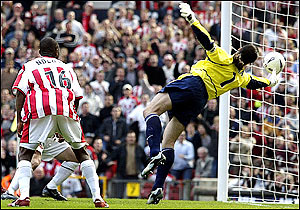
seaman1504_176880aOne of his most memorable moments came in April 2003 when Arsenal was defending a 1-0 lead in the FA Cup Semi-Final against Sheffield United at Old Trafford. In the closing minutes he was stranded when Paul Peschisolido headed towards goal but somehow he threw himself across goal and reached back to claw the ball away from under the crossbar. What made the save even more remarkable was that it was made in his 1,000th professional game. A month later, as Arsenal’s captain, he lifted the FA Cup at Cardiff’s Millennium Stadium following a 1-0 win against Southampton. After 564 appearances and eight major trophies, it was his final act as an Arsenal player and a fitting climax to his Arsenal career.

He retired from the game on 13 January 2004, following a recurring shoulder injury.

He was appointed an MBE in 1997 for services to the sport.

12. Jens Lehmann 2003-2011.

Jens played for 11 years and appeared in 200 games.

Jens was born in Essen, Germany.

The German international signed for Arsenal from Bundesliga side Borussia Dortmund in July 2003. During his first spell with Arsenal he played in every match of the Club’s unbeaten league campaign in 2003/04, when he was awarded the Premier League Golden Glove Award for his integral part in the ‘Invincibles’ season. He also won the Premier League title in 2003/04, the Community Shield in 2004 and an FA Cup winner’s medal in 2005, when he famously saved from Paul Scholes in the victorious penalty shoot-out

However, his style of play, often coming out of his goal to intercept passes occasionally led to mistakes, as it did in the title-winning match against Spurs when he pushed Tottenham striker Robbie Keane as they both waited for a Tottenham corner, he also made a mistake that led to the equalising goal in Arsenal’s Champions League defeat at home to Chelsea the same season.

Before joining Arsenal he was a Bundesliga title winner with Borussia Dortmund in 2002, and UEFA Cup winner with Schalke in 1997. He also had a brief spell with AC Milan in 1998.

He was a regular fixture for the Germany national team making 61 appearances before retiring from international football in 2008, Jens was a member of the Germany World Cup squads in 1998, 2002 and 2006, in addition to their squads for the European Championship Finals in 2000, 2004 and 2008.

soc_g_jens_576He was voted UEFA Club Goalkeeper of the Year for the 1996–97 and 2005–06 seasons, and he has been selected for three World Cup squads and also holds the UEFA Champions League record for the most consecutive clean sheets – not having conceded a goal in 10 matches while playing for Arsenal.

After leaving Arsenal he joined German club Stuttgart, where he spent two years before announcing his retirement from football at the end of last season. He rejoined Arsenal on a short-term basis in March 2011 during the time when, Wojciech Szczesny, Lukasz Fabianski and Vito Mannone were out through injury. He only made one appearance during his three-month spell back, helping Arsenal to victory at Blackpool.

Jens set a national team record of not conceding a goal for 681 minutes in a friendly against Switzerland on 26 March 2008