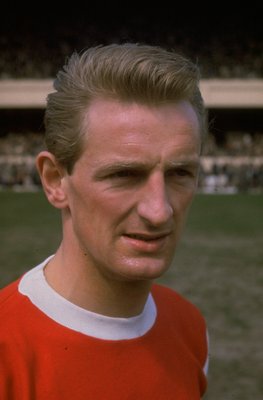
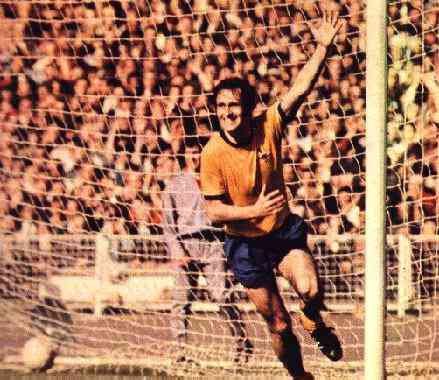
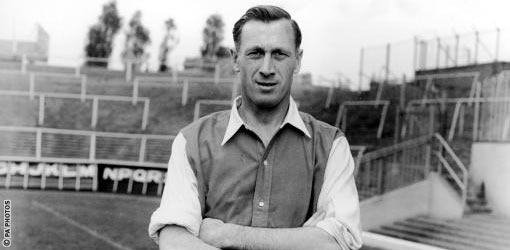
Definitely NOT Arsenal Transfer News.

July 5, 2013

My Uncle Earnest DidIt always says that “if you have nothing to say, then say nothing”.

Now this is easy for him to say, as he never has had anything worth saying. In fairness to the old trout, he is a Man of Action, not words. I have often wondered that if Earnest had actually managed to unearth an in interest in anything other than sex and the pursuit of other peoples’ money to support his foul habits, how he would have tackled something as tricky as being an Arsenalic during a Summer Lull.

Let’s face it, like most, he would be sitting somewhere in one of three camps entering the silly season.

In the Camp Doom, there was history on their side, which said that we will only spend what we earn from player sales. For these Doomsters, a bleak summer looked inevitable, as there was no obvious high value assets that wanted to “win things” and require fresh pastures.

Then, in Camp Chaos, there was the possibility of a Boardroom Power Struggle, with Usmanov grabbing an extra share or two with the ensuing fur and toupes flying.

Finally, Camp Whatever, or the “Que Sera, Seras”. A boringly mature troupe here, who prefer to deal in reality, and fuss not about matters beyond their control.

Where do I reckon Earnest would slot in? My gut feeling would be “None of the above”, rather “I actually don’t give a shit about anything apart from turning up on match day, getting ripped to the tits with my mates, watching a cracking game, then going home with a Goonerette on each arm”. Yip, two, as even in his eighties, he is a ferociously fertile man.

Him, not me, speaking. We are very loosely related you understand.

Written by MickyDidIt for a very quiet Friday 😦


Arsenal’s Greatest Midfielders Day 6

July 4, 2013

Continuing our Summer series of articles in search of Arsenal’s greatest ever team, this week we continue our quest for the greatest midfielders to include in our team.  Don’t forget to take the opportunity to choose your personal favourite midfielder by voting in the poll at the end of the week.

17. Robert Pires: 2000-2006.

Robert appeared in 284 matches over a 6 year period.

article-1287109-01C84CBA0000044D-155_468x286Born in Reims France, he is a graduate of the FC Metz youth academy, making his senior debut in 1993 against Lyon. During his six seasons there, he scored 43 goals in 162 matches, and won the Coupe de la Ligue, prompting a £5 million move to Olympique de Marseille in 1998, where he stayed for two year years.

Robert was signed by Arsenal for £6 million in 2000, after stiff competition from Real Madrid and Juventus. Initially his form was indifferent, and he was criticised for his comments that the English game was too physical. By 2001–02, he had fully got to grips with the English game and had one of his best seasons scoring many excellent goals. He led the Premier League assist charts and was voted both FWA Footballer of the Year and Arsenal’s player of the season, as Arsenal won the league title. This was despite not playing the last two months of the season after suffering a cruciate ligament injury in a FA Cup match against Newcastle United. This also ruled him out of playing in the 2002 World Cup with France.

After a lengthy layoff, he made his comeback in November 2002 and was voted Barclaycard Player of the Month for February 2003 and capping off his season by scoring the winning goal in the FA Cup Final against Southampton. He went on to be a crucial part of Arsenal’s quest for the Premier League title in the 2003–04 season, which they achieved, remaining unbeaten and becoming the first English top flight club to do so in 115 years. Robert along with his Arsenal team-mate Thierry Henry was a key player in that season, scoring a combined 57 goals in all competitions. In the 2004–05 season, he finished third in the Premiership goal scorers table and also picked up a second FA Cup winners’ medal after Arsenal beat Manchester United on penalties. His final game for Arsenal was in the UEFA Champions league final against Barcelona, in which he was substituted after goalkeeper Jens Lehman received an early red card.

In May 2006, he agreed to join Spanish side Villarreal. He joined on a free transfer, bringing to an end his six-year career as an Arsenal player. In 2009, he faced Arsenal in the quarter-finals of the UEFA Champions League, Villarreal were defeated 4–1 on aggregate, but Robert received a warm return from the Arsenal supporters, who sang his name throughout both legs. He was told in May 2010 that his contract would not be extended and he would have to look for a new club during the summer.

He won 79 caps for his country and scored 14 goals. He won the Golden Ball (for most outstanding football) and Golden Shoe (for most goals scored) awards at the 2001 Confederations Cup in Korea/Japan.

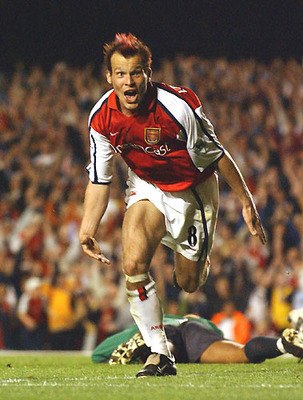
18. Freddie Ljungberg: 1998-2007. 

Freddie appeared in 328 matches over a 9 year period.

ljungberg_display_imageHe was born in Vittsjö, Sweden. Between when he was 5–14 years old, Freddie was coached by Olle Eriksson. He credits Eriksson for having a profound effect on his career as well as Brazilian football player, Sócrates. Also in his youth, he enjoyed playing ice hockey and developed a talent for handball; but decided to concentrate his attentions on football. Freddie also did well in academic subjects as well as sports and at 18 he decided to attend university, but struggled to balance the hectic academic timetable with the physically demanding commitments of football. Eventually, he quit university to concentrate on his football career.

He made his senior debut for Halmstad in October 1994 in the Allsvenskan against AIK. In 1995, he played 31 games in which he scored his first goal as a professional player. that same year Halmstad won the Swedish Cup. During his time with Halmstad, he made 139 appearances and scored 16 goals and he also won both the Swedish Cup and League title with the club. After two years with Halmstad, his star was on the rise with interest from Barcelona, Chelsea, Aston Villa, Parma and Arsenal.

Freddie was signed by Arsenal in 1998 for £3 million, Arsenal scouts watched him for over a year and Arsenal’s manager, Arsène Wenger, took the unusual step of authorising the signing after watching him play for Sweden in their victory against England on television, without seeing him play live. Freddie scored on his debut on 20 September after coming on as a substitute against Manchester United. He endeared himself to Arsenal supporters by having a bright red stripe in his hair. (A popular chant spawned from this to the tune of “Can’t Take My Eyes Off You” by Frankie Valli and the Four Seasons: “We love you Freddie, because you’ve got red hair, we love you Freddie because you’re everywhere, we love you Freddie, you’re Arsenal through and through” Later when he shaved his head this was updated to “We love you Freddie, because you’ve got no hair”).

Freddie became the first player to score a goal at an FA Cup final outside England, when Arsenal lost against Liverpool in 2001 at the Millennium Stadium in Cardiff. A year later, against Chelsea, he became the first player to score in consecutive FA Cup Finals. He also scored a penalty in the shootout in Arsenal’s 2005 FA Cup Final victory over Manchester United. In 2008, he placed 11th in Arsenal.com’s Gunners’ Greatest 50 Players.

After nine years at Arsenal, Freddie joined West Ham United on a four-year contract, later agreeing to terminate his contract only one year into the four-year deal.

On 28 October 2008, MLS team, Seattle Sounders officially announced they had signed Freddie as their Designated Player for the 2009 season. The terms of his contract saw Ljungberg earn $10 million over two seasons with the Sounders. Much like the contract of David Beckham and as is the norm for professional sports stars in the US, Freddie’s contract allowed him to retain all of his private endorsement money.  In July 2009, Freddie was selected for starting MLS’ All-Stars; selection for the All-Star team is based upon votes from players, coaches, general managers, members of the media and an online fan voting system. Ljungberg received the most votes among fans, a testament to his popularity in the MLS. He was also appointed captain of the 2009 MLS All-Star Team in their game versus Everton.

He was traded to Major League Soccer club Chicago Fire on 30 July 2010, after 15 league appearances, Freddie announced that he would be leaving Chicago at the end of the 2010 MLS season.

He has represented his country at Euro 2000, the 2002 World Cup, Euro 2004, the 2006 World Cup and Euro 2008, and in total he has represented Sweden on 75 occasions.

On 24 August 2012, Ljungberg announced his retirement from football.

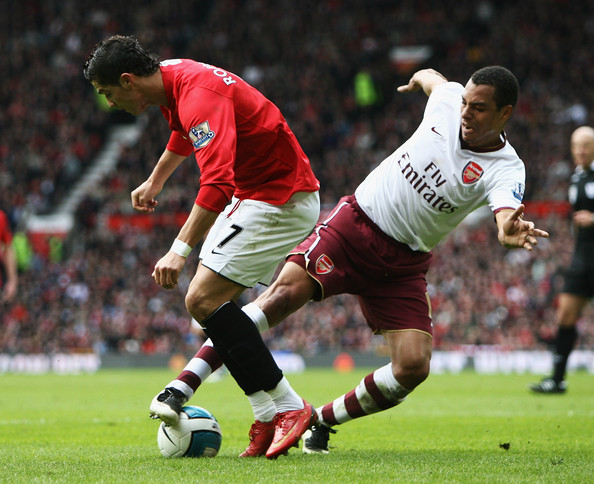
19. Gilberto Silva: 2002-2008.

Gilberto appeared in 244 games over a 6 year period.

Manchester+United+v+Arsenal+Premier+League+5LK__Q7P34HlBorn in Lagao da Prata, Brazil, he was raised in a poor family and as a child he balanced playing football with various labour jobs. He began his football career in 1997 with América Mineiro, where good form earned him a move to Atlético Mineiro in 2000. He became a star player for Atlético, playing for three years in the Brazilian Campeonato Brasileiro Série A. He came to particular prominence when he helped the Brazilian national team win the 2002 FIFA World Cup, playing in all seven of Brazil’s matches.

Arsenal signed Gilberto in August 2002 for a fee of £4.5 million. Upon signing Gilberto, Arsenal manager Arsène Wenger said, “What I like was the fact that he kept things simple. He can play all across the midfield but the holding role just in front of the defence is what he does best”. After two substitute appearances, he finally broke into the starting eleven on 27 August. He set a new record for the fastest goal scored in the UEFA Champions League, scoring after 20.07 seconds against PSV on 25 September 2002.

Even though he suffered a lapse in form towards the end of the season, he won an FA Cup winner’s medal, playing in the final at the Millennium Stadium as Arsenal beat Southampton 1–0.

The next season he was an important member of the squad that won Premier League title whilst going the entire season unbeaten. He played in 32 of Arsenal’s 38 unbeaten games during the season. In October 2005, Gilberto made his first appearance for Arsenal as captain, against Sparta Prague. Although Gilberto had a period of bad form during the winter months of the season, his form returned and on 17 May 2006 he played for Arsenal in the UEFA Champions League Final against FC Barcelona, which Arsenal lost 2–1. On 19 August 2006 he scored Arsenal’s first competitive goal at the newly built Emirates Stadium and was made vice-captain of Arsenal in 2006.

Gilberto was called “the invisible wall” his play often went unnoticed as he positioned himself between the two centre backs and the rest of midfield, breaking up opposition attacks before they could gather momentum. He played this role as part of the defensive unit for both club and country.  Both Arsenal and Brazil are both attack minded teams, and he created cover for attacking wing-backs and other midfielders who had a poor record of dropping back to help the defence.

According to ProZone (a data analysis system used by football managers) figures cited by The Sunday Times in January 2007, Gilberto was one of the few midfielders in England to attain “the elite Champions League level” of performance.

He made his international debut against Chile on 7 October, coming on as a substitute. On 7 November, in total he played in 93 games for Brazil.

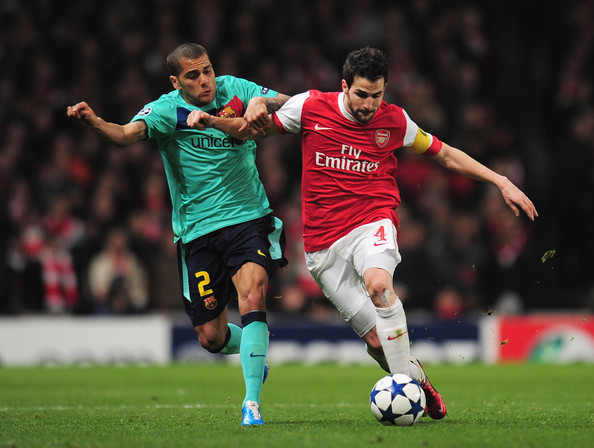
20. Cesc Fabregas: 2003-2011.

Cesc appeared in 303 matches over an 8 year period.

Cesc was born in Arenys de Mar, Barcelona, he had supported FC Barcelona since childhood and went to his first match when he was nine months old with his grandfather. He began his club football career with CE Mataró, before being signed for Barcelona’s La Masia youth academy aged 10 in 1997. His initial training was as a defensive midfielder playing alongside notable names such as Gerard Piqué and Lionel Messi. He was a prolific scorer, sometimes scoring more than 30 goals in a season for the club’s youth teams.

Cesc+Fabregas+Arsenal+v+Barcelona+UEFA+Champions+ogSuLT1RuEKlSensing that he would have limited opportunities at Barcelona, he joined Arsenal in their Academy, when he was just 16 years old, signing on 11 September 2003. He made his debut for Arsenal not long after, on 23 October 2003, in a League Cup tie at home to Rotherham United. In doing so he became Arsenal’s youngest ever first team player, aged 16 years and 177 days. He then became the youngest goal scorer in Arsenal’s history in a later round of the League Cup, scoring in a 5–1 victory against Wolverhampton Wanderers. He signed his first professional contract with Arsenal in September 2004. He concluded that first season by gaining his first honours with Arsenal when he was in the starting eleven that defeated Manchester United on penalties in the 2005 FA Cup Final.

After the departure of Patrick Vieira, to Juventus, Cesc was given the number 4 shirt and featured regularly in the Arsenal central midfield alongside Gilberto Silva. He made 49 appearances in all competitions during the 2005–06 season.  He also played in the Champions League Final against his former club Barcelona, Arsenal were defeated 2–1. His increased exposure drew transfer speculation during the summer; Real Madrid expressed a desire to sign him despite his long-term contract with Arsenal.  On 24 November 2008, he was named as the Arsenal club captain. However he was ruled out for four months after sustaining a knee injury against Liverpool.

In August 2011, he signed for Barcelona, ending one of the most protracted transfer sagas in recent times. Statistics show that in the 5 years prior to his departure from Arsenal he created 466 goal-scoring chances, made 75 assists and scored 30 goals.

His international national career began when he represented the Under-17 side at the 2003 FIFA U-17 World Championship in Finland. As a result of his club performances, he was called up to the senior squad in 2006. He has played in the 2006 FIFA World Cup, UEFA Euro 2008, 2010 FIFA World Cup and UEFA Euro 2012, helping Spain to become eventual winners in the three most recent tournaments.

Written by GunnerN5 and compiled by Gooner in Exile


Arsenal’s Greatest Midfielders Day 5

July 3, 2013

Continuing our Summer series of articles in search of Arsenal’s greatest ever team, this week we continue our quest for the greatest midfielders to include in our team.  Don’t forget to take the opportunity to choose your personal favourite midfielder by voting in the poll at the end of the week.

14. Paul Davis: 1978-1995.

Paul appeared in 447 matches over a 17 year period.

-Images-d-Davis_Paul_910810Born in Dulwich, London, Paul signed for Arsenal as an apprentice in 1977 and turned professional the following year, he made his debut in 1980 in a North London derby against Tottenham Hotspur, and within a year he was a regular in the Arsenal side, as well as a member of the England U21 team.

He was a key member of the successful Arsenal side of the late 1980s, winning the League Cup in 1987 and the First Division in 1989 and 1991. Paul will arguably be best remembered for an incident in 1988 when, during a match, he punched Southampton player Glenn Cockerill in the jaw. Cockerill’s jaw was broken and following the FA’s analysis of TV footage he was given a then unprecedented 9-match ban and £3,000 fine.

In spite of a disagreement with Manager George Graham he still appeared 447 times for Arsenal, scoring 37 goals. Paul played in both the League Cup and FA Cup finals wins in 1993 as Arsenal chalked up their Cup Double. He also featured in Arsenal’s Cup Winners’ Cup win against Parma F.C the following year.

Paul was released by Arsenal on a free transfer in the summer of 1995. After leaving Arsenal, he briefly joined Norwegian side Stabæk Fotball in 1995 and flopped. He returned to London to join Brentford signing on a free transfer in September 1995, but he retired within a year after just five appearances for the Griffin Park side. He returned to Arsenal to become a youth coach in 1996, before leaving the club in 2003.

In September 2003 he joined The Professional Footballers’ Association coaching department. On 27 October 2005, he was invited to become assistant manager of Kettering Town F.C. by new manager Paul Gascoigne, he left Kettering at the same time as Gascoigne’s departure from the club on 5 December 2005, but continues to work for the Professional Footballer’s Association coaching department. He has studied and gained the FA and Pro UEFA Coaching awards, the highest coaching award in the U.K. along with his UEFA ‘A’ Licence and the FA Diploma in Football Management from Warwick University, as well as his coach educators awards. Paul is now a senior coach/coach educator for the organisation and he is also an ambassador for the ‘Kick It Out’ and ‘Show Racism the Red Card organisations’.

15. Ray Parlour: 1988-2004.

Ray appeared in 466 matches over a 16 year period.

cristiano-ronaldo-469-ray-parlour-celebrating-arsenal-goal-wearing-a-dreamcast-jersey-1992-2004Born in Barking, London, Ray is most famous for his time at Arsenal, where he played for 14 years. He joined Arsenal as a trainee in 1989, and made his debut for the Gunners against Liverpool in 1992. He was only used sporadically in his initial few years, and was more noted for his disciplinary problems; however he made 12 appearances for the England U21 team during this time.

His breakthrough came in 1994–95, when he played in Arsenal’s European Cup Winners’ Cup final loss to Real Zaragoza. However, his real development, as a player, only came to fruition after the arrival of Arsène Wenger as manager in 1996; he became a regular fixture playing on the right wing or in central midfield for Arsenal. In 1997–98 Arsenal won the Double and Ray proved to be instrumental; he was man-of-the-match in the Gunners’ FA Cup Final win over Newcastle United, that season, where he set up Nicolas Anelka for Arsenal’s second goal in a 2–0 win. He continued to enjoy success with Arsenal for another four years but generally received little acclaim in the media compared with many of his more illustrious Arsenal team-mates, especially as he was almost constantly living in the shadow of Patrick Vieira.

In March 2000, he hit a hat trick in a 4–2 away win at Werder Bremen in a UEFA Cup quarter final tie. Seven months later, he followed it up with another hat trick in a 5–0 demolition of Newcastle United at Highbury. In April 2001, he struck a spectacular 30-yard winner as Arsenal beat Valencia 2–1 in the UEFA Champions’ League Quarter Final 1st leg tie at Highbury. One of the crowning moments of his career was his goal from 30 yards in the 2002 FA Cup Final against Chelsea, which Arsenal won 2-0.  Another one of Ray’s finest moments in Arsenal colours came in November 2003, when as stand-in captain, he led Arsenal to a famous 5–1 win against Internazionale at San Siro. Performances like these have led many Arsenal fans to believe that he was one of the most underrated players at the club, and of his generation

In total, with Arsenal, Ray won three FA Premier League titles, four FA Cups, (which included two Doubles) one League Cup and one European Cup Winner’s Cup.

During his Arsenal career he was nicknamed “The Romford Pelé”; although the nickname was given with an ironic sense of humour, on account of his solid performance but unglamorous image.

He moved to Middlesbrough in mid-2004, (but he still has remained a fans’ favourite at Arsenal and was recently named the 19th greatest player in the club’s history), he played 60 games for Boro in two and a half years but he was released from his contract in January 2007.

For a brief period he trained with Arsenal in order to regain fitness with a view to finding a new club. On 9 February 2007, he signed for Hull City until the end of the 2006–07 season. After helping City avoid relegation, it was confirmed on 1 June that he was not offered a new contract and this meant he was released.

He made his England debut as a substitute in a Euro 2000 qualifier against Poland on March 27, 1999. He won ten caps for England but did not score any goals.

Ray emerged as one of the most influential players for The England Legends, a 16-man squad of former internationals who have played Italy, Germany, Scotland, Ireland and The Rest of The World.

16. Patrick Vieira: 1996-2005.

Patrick appeared in 406 matches over a 9 year period.

Born in Dakar, Senegal, his family moved to Dreux, France, when he was eight. He first played for AS Cannes, where he made his debut at the age of 17 and captained the team aged just 19.] In the summer of 1995, he was signed by the Italian team Milan, though he played mainly in the reserves and made only two first-team appearances.

patrick-vIn August 1996, he joined Arsenal, in a £3.5 million move, Patrick later revealed he signed for Arsenal because his compatriot Arsène Wenger was going to be the club’s next manager; Arsene was officially manager of Arsenal by the start of October. His performances for Arsenal in the subsequent months made him a fans’ favourite. He ended his first season with 38 appearances in total and Arsenal finished in third place, missing out on a spot in the UEFA Champions League via goal difference. His partnership with French international team-mate Emmanuel Petit the following season was instrumental in helping Arsenal complete a domestic league and cup double. After a successful 1998 World Cup campaign with the national team, Patrick had another productive season at Arsenal in 1998–99. Although Arsenal failed to retain the Premier League, Vieira’s endeavour was rewarded as he was named in the PFA Team of the Year.

Disciplinary problems beset Patrick during his time with Arsenal and it was feared that he was prepared to turn his back on English football as he felt victimised. Wenge, several Arsenal players and fans supported him publicly, amid speculation that Italian club Juventus were prepared to offer Vieira an escape route. However Patrick stayed and Arsenal finished second in the league for a third consecutive season and runners-up to Liverpool in 2001 FA Cup Final. He was later named the club vice-captain, to ensure he would succeed Tony Adams as captain. In the 2001–02 season; Arsenal regained the league and beat Chelsea in the 2002 FA Cup Final to complete a second double. In 2003, Patrick missed Arsenal’s title run-in, due to a knee injury, and they were overtaken by Manchester United who took first place. He was also ruled out of the 2003 FA Cup Final, which Arsenal won, but jointly lifted the trophy with captain for the day, David Seaman.

In spite of growing interest to sign Vieira, not least from Manchester United, Real Madrid and Chelsea in the summer of 2003, he agreed terms to stay at Arsenal and signed a deal which ran until 2007. The 2003–04 season was a successful one for Arsenal, as they reclaimed the league title and became the first English team in more than a century to go through the entire league season unbeaten. He endured a mixed start to the campaign, as he was sent off against Manchester United in September 2003, banned for one match and later fined £20,000. However he scored the opening goal against Tottenham Hotspur, in what ended a 2–2 draw which was enough for Arsenal to regain the title.  In the 2005 FA Cup Final, he scored the winning penalty in a penalty shoot-out after a 0–0 draw with Manchester United, which proved to be his final goal for Arsenal.

In July 2005, representatives of Juventus met with Arsenal, with a view to signing Patrick, and on 15 August 2005, he signed a five-year contract, in a deal worth £13.75 million, making his debut on 28 August 2005. Despite his performances dipping as the result of a persistent groin injury he helped Juventus retain the Scudetto, however Juventus were stripped of their 2004–05 and 2005–06 titles after it was revealed they were involved in a match-fixing scandal and were relegated to Serie B and had 17 points deducted.

On 2 August 2006, he officially signed a four-year deal for Internazionale. In his first season at Inter, he added to his trophy cabinet the Italian Super Cup as well as the 2006–07, 2007–08, and 2008–09 Serie A. On 6 January 2010, José Mourinho stated that Vieira had played his last game at Inter.

On 8 January 2010, he signed a six month contract at Manchester City and, subsequently agreed to a one-year extension. He made a late substitute appearance in May 2011, as City won the FA Cup with a 1–0 win over Stoke City at Wembley Stadium.

On 14 July 2011, he announced his retirement from playing and accepted a training and youth development role at Manchester City with the title of Football Development Executive.

Vieira made his debut for France and was part of the France squad in the 1998 FIFA World Cup. He came on as a substitute in the final against Brazil, and set up Arsenal team mate Emmanuel Petit for France’s third goal in a 3–0 win. He, with the rest of the squad, was declared a Knight of the Légion d’honneur, France’s highest decoration, in 1998.

He subsequently played as a first choice midfield player in France’s successful campaign in Euro 2000, which they won, beating Italy in the final. He helped France to victory in the 2001 Confederations Cup, ending the tournament as joint top scorer with two goals, including the winner, a header, in the final against Japan. He also played in all three games in the 2002 World Cup, in which France were eliminated in the group stage, failing to score a goal. He was injured and missed France’s defeat to Greece at Euro 2004. He won a total of 107 caps for France, scoring six goals.

Written by GunnerN5 and compiled by Gooner in Exile


Arsenal’s Greatest Midfielders – Day 4

July 2, 2013

Continuing our Summer series of articles in search of Arsenal’s greatest ever team, this week we continue our quest for the greatest midfielders to include in our team.  Don’t forget to take the opportunity to choose your personal favourite defender by voting in the poll at the end of the week.

11. Liam Brady: 1971-1980.

Liam appeared in 307 games over a 9 year period 

Liam-Brady-ArsenalBorn in Dublin, he started his career at Arsenal, joining the club on schoolboy forms in 1971, at the age of 15, turning professional on his 17th birthday in 1973.

He made his debut on 6 October 1973 against Birmingham City as a substitute. Manager Bertie Mee decided to use him sparingly and Liam ended the 1973–74 season with just 13 appearances, four as a substitute.

In 1974–75 he was a first-team regular and shone a bright light in a side that hovered close to relegation. He found his best form under new manager, Terry Neill – his passing provided the ammunition for Arsenal’s front men and Arsenal reached three FA Cup finals in a row between 1978 and 1980. Arsenal won only the middle of the three, against Manchester United in the 1979 final, with Liam starting the move that ended in Alan Sunderland’s famous last-minute winner. He was nicknamed “Chippy”, not for his ability to chip the ball but for his fondness for fish and chips.

Liam was now at the peak of his form and during this time he was voted the club’s player of the year three times, and chosen as the PFA Player of the Year in 1979. Being from the Republic of Ireland, he was the first player from beyond Britain’s borders to win that award. He was the most talented player in what was then a promising young Arsenal side, which was looking to consistently challenge for honours like the Division One title.

But rumours persisted that he was unhappy. And in 1980, Juventus, who were impressed with his performances against them in the semi-finals of the Cup Winners Cup, signed him in for just over £500,000. He spent two seasons with Juventus, picking up two Italian Championship medals, in 1981 and 1982 and he scored the only goal (a penalty) in the 1–0 win against Catanzaro that won the 1982 title. After the arrival of Michel Platini in summer 1982, he moved to Sampdoria, and went on to play for Internazionale (1984–1986) and Ascoli (1986–1987), before returning to London to play for West Ham United.

He won 72 international caps for the Republic of Ireland, 70 in the starting line-up, scoring 9 goals.

After retiring from playing in 1990, he managed Celtic between 1991 and 1993, and then Brighton & Hove Albion between 1993 and 1995.  He rejoined Arsenal in July 1996, as Head of Youth Development and Academy Director. On 30 January 2013, Arsenal announced that he would leave his role as Director of the Arsenal Youth Academy in May 2014.

He is fondly remembered as one of Arsenal’s all-time greats, playing 307 matches for the Gunners, scoring 59 goals and setting up many more.

12. Brian Talbot: 1979-1985

Brian made 327 appearances over a 6 year period.

Born in Ipswich, Brian was a midfielder and began his football career as an apprentice with Ipswich Town in 1968, turning professional in 1972; in the meantime he had spent two seasons on loan with Canadian club Toronto Metros.

BrianTalbotShootPlace.ashxHe made 227 appearances for Ipswich winning the 1978 FA Cup, in the semi-final against West Bromwich Albion, he scored Ipswich’s first goal after just eight minutes. However he was injured on the play when he collided head-to-head with Albion’s skipper, John Wile and he left the field on a stretcher.

In January 1979, he was transferred to Arsenal for a fee of £450,000, immediately becoming first-team player. He played for the Gunners in the FA Cup final of that year, scoring a goal in a 3–2 victory over Manchester United; Brian thus achieved the unique distinction of winning the FA Cup with two different teams in consecutive seasons. The following year he set a club record, as an ever-present in Arsenal’s marathon 1979–80 season, when he played a total of 70 matches in a single season (the club reached the finals of both the FA Cup and the UEFA Cup Winners’ Cup, but lost them both).

His impressive stamina and fitness meant he played nearly every Arsenal first-team game for the next five seasons, missing fewer than half a dozen League games. In all, the strong and sturdy midfielder played 327 first-team matches for the Gunners, scoring 49 goals. He also played for England, five times while at Ipswich and once as an Arsenal player.

He left Arsenal in June 1985 and joined Watford, he spent a season and a half at Vicarage Road before joining Stoke City in October 1986. His presence helped to inspire the side as Stoke climbed the table and fell six points short of a play-off place. In 1987–88 he made 27 appearances before he left in January 1988 after being offered a player-manager role at West Bromwich Albion. He spent two and a half years in that role before leaving for Fulham in March 1991. After a short spell there he ended his playing career at Aldershot.

He then moved abroad and managed Maltese club Hibernians, where his team won the island’s Premier League in 1993 and 1994, returning to English club football as part of the coaching staff of Rushden and Diamonds, then in the Football Conference, in 1997. After a spell as head coach he was appointed club manager, and at the end of the 2000–01 season Rushden secured promotion to the Football League. In March 2004 he left the club to take over at Oldham Athletic, his spell there ended with him resigning at the end of February 2005.

In 2011, he joined English Premier League side Fulham as a scout where he mostly watches matches in the top leagues for the London club, for example in France or Germany.

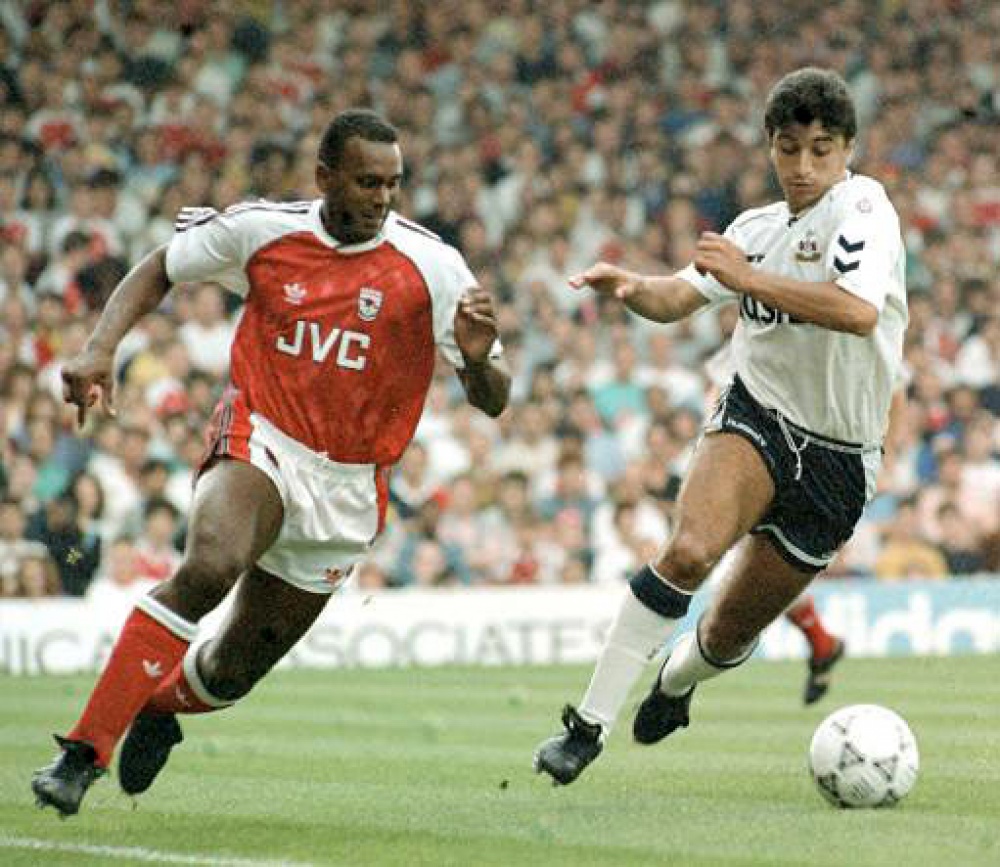
13. David Rocastle: 1982-1992

David made 277 appearances over a 10 year period.

gun__1301406982_rocastle12David was born in Lewisham, he spent the majority of his football career playing for Arsenal, joining in May 1982 and turning professional in December 1984. In his early career he faced problems with his eyesight, according to his team mate Martin Keown “They couldn’t work out why David was running around dribbling with his head down. So they took him to the halfway line and said: ‘Can you see the goal?’ and he couldn’t. His eyesight was terrible. They sorted him out with contact lenses and his career took off.”

He made his Arsenal debut against Newcastle United in the 1985-86 season and made 26 league appearances, scoring once. He remained a regular player in the first team following the departure of Don Howe and the appointment of George Graham as manager at the end of the 1985–86 season.  In 1987, just before his 20th birthday, he won a League Cup winners medal after Arsenal beat Liverpool in the final at Wembley. He was a member of the Arsenal side which reached the final against Luton Town the following year and he was ever present in the league in 1987–88.

“Rocky” won two league championship medals with Arsenal. The first came in 1989, when he played in every game. Arsenal’s success was sealed when they beat Liverpool 2–0 in the final game of the season at Anfield, snatching the title from the hosts on goals scored. But Arsenal were unable to compete in the 1989–90 European Champions Cup because the ban on English clubs in European competition after the 1985 Heysel tragedy still had one year to run. In 1990–91, a knee injury restricted him to just 18 league appearances but he still played his part in Arsenal winning the league championship – losing only one league game all season. The following season he only missed three out of 42 league games.

On 23 July 1992, after nearly a decade at Arsenal, he was sold to league champions Leeds United in a £2million deal, making him their most expensive signing. But the good form of Gordon Strachan and injuries kept him out of the side. He was transferred to Manchester City for £2million, but the move to Maine Road was not a success for him and he only managed two goals from 21 Premier League games. At the start of the 1994–95 season, he was transferred to Chelsea in a £1.25million deal.

In 1994–95, David played in nearly 40 games for Chelsea and scored two goals in the European Cup Winners Cup. The following season his injuries returned, and he played just one more game for the club, in October 1995. On completing his contract with Chelsea in 1998, he joined the Malaysian team Sabah on a free transfer but was unable to stay clear of injury and retired in December 1999.

During his time with Arsenal, David was capped 14 times for England, but did not make the squad for either 1990 World Cup or Euro 92.

In February 2001, he announced that he was suffering from non-Hodgkin’s lymphoma, an aggressive form of cancer which attacks the immune system. He underwent a course of chemotherapy and was hopeful of a recovery. He died in the early hours of 31 March 2001, aged 33.

The David Rocastle Trust is a charity based in London, England founded in memory of Rocastle.

Written by GunnerN5 and compiled by Gooner in Exile


Wenger to Work his Magic on Torres?

July 1, 2013

When the “Torres to Arsenal” rumours broke yesterday they came as no surprise to regular readers of the comments section of Arsenal Arsenal.

Our well-informed fellow blogger Kelsey revealed weeks ago that we were talking to Chelsea about the Spanish forward and that we had even gone so far as to make an offer.

t

To me the story makes a lot of sense.

Higuain may be our number one striker target (although who knows? No-one at Arsenal has commented about the Madrid-based Argentine and I would not entirely rule out the possibility that the whole thing is a newspaper fiction that has taken on a life of its own).

But let’s take things at face value and say we are interested in him. Even so, we would be crazy to have him as our only option to fill the “world class” striker role that is essential for giving extra edge to our attack.

Players change their minds; agents can mess up any deal and if one of the financially doped Oiler teams sets their greedy eye on him we would be out-bid in a heartbeat.

So I both hope and assume that Arsene Wenger has other goal poachers in his sights this summer.

Wayne Rooney may be one. He inspires mixed feelings amongst Arsenal supporters (Gn5 said only yesterday that he could never forgive him for the atrocious dive that helped end our unbeaten streak), but he would undoubtedly strengthen our team and his departure would weaken Manchester United at the same time.

Some people doubt we could afford his wages, but with a big signing on fee and the promise of a free granny flat in the Highbury Square development I reckon we could woo the Roo.

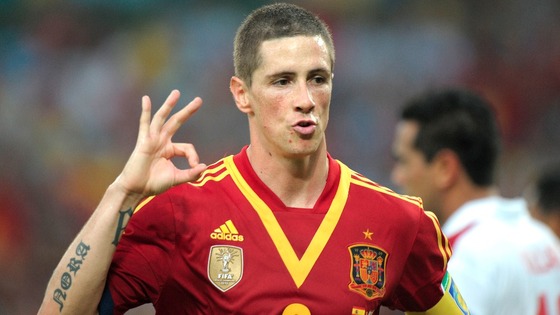
Then there is Torres. At Liverpool he looked like one of the best strikers in the world. Then he went to Chelsea and his career stalled badly.

Maybe he hit a run of bad form; maybe he found it difficult to displace fan favourite Didier Drogba; maybe he is just allergic to Chavmungus scumbags, of whom there are many in the Chelsea dressing room.

Whatever the reason, and despite some signs of recapturing his form from time to time while in West London, there is no doubt that Fernando Torres’s stock is much lower now than it was when he quit the Scousers.

With Mourinho arriving as manager, the Spaniard must be unsure of his place in the Chavs’ future plans.

All of which could make him a perfect Wenger signing. Much of Arsenal’s early success under Arsene Wenger came from players whose careers had stalled or stagnated elsewhere.

Dennis Bergkamp (yes, I know he was signed before Arsene arrived but there is evidence that Arsene advised Dein to buy him) was struggling at Inter Milan. He had been signed from Ajax after his startling skills caught the attention of top clubs throughout Europe. His first season in Milan was so-so, but the following year things started to go wrong. He suffered injuries and wasn’t scoring goals. This is what it says on Dennis’s Wikipedia page: “Off the field, Bergkamp’s relationship with the Italian press and fans became uncomfortable. His shy persona and his propensity to go home after matches was interpreted as apathy. Because of his poor performance on the pitch, one Italian publication renamed their award given to the worst performance of the week, L’asino della settimana (Donkey of the Week) to Bergkamp della settimana (Bergkamp of the Week).”

That last fact makes me want to find a Milanese and punch him in the kisser.

Anyway, thankfully Dennis opted to join us and became a legend.

Then there was Marc Overmars. No-one would touch the flying winger because he was coming back from a traumatic, long-term injury which – according to conventional wisdom – had taken the edge off his speed. Under Arsene he flew once again.

Patrick Vieira: at AC Milan he was languishing in the reserves and played only twice for the first team. Arsene brought him to The Home Of Football where, from his first memorable appearance in the famous red and white, it was clear that we had someone special.

Thierry Henry: yes, already a World Cup winner when we bought him – but only as a wide man used off the bench by Les Bleus. He was not seen as a central striker by anyone except Arsene.

Nwankwo Kanu: like Overmars, untouchable because of injury – in Kanu’s case a dodgy ticker that required major corrective surgery in the US and led to the memorable terrace song “he’s big, he’s black, he’s had a heart attack.” Untouchable, that is, by anyone except Arsene Wenger.

Bobby Pires: unhappy at Marseille and in dispute with the club’s owners when Arsene picked him up.

You can see what I’m getting at. Put in the context of those early Wenger signings, Torres could very easily be the sort of player who could rekindle the highest heights at Arsenal. And unlike the others, he already has comprehensive experience of the Premier League.

When he was at his pomp in Liverpool Torres looked like the heir to Thierry Henry. His speed, his strength and his finishing all reminded one of our great Frenchman. Now, at 29, he should have two or three years of being at the absolute top of his game.

I, for one, would be perfectly happy to see him with a cannon on his chest.

Do you agree?

RockyLives


Arsenal Brazilian disappointment and Barca DNA at the Confederations Cup

June 30, 2013

So, while watching various matches at the dress rehearsal for the World Cup in Brazil I found myself wondering who to root for, always a tricky task when there is no Arsenal involvement. For some reason I decided it would be the opponents of Brazil or Spain, two teams who I’d taken a dislike to for no readily apparent reason.

Now why should that be as how can any football fan dislike the Samba boys? Maybe, I thought, as a gooner my experience of our last two Brazilian imports was less than satisfactory, namely Denilson and Santos.

Denilson to me was overplayed too early in his development, and probably expected to fill a Gilberto/Flamini/Diarra sized hole in midfield and the abiding memory of him for many will be that of being outpaced by a portly referee who was keeping up with play a heck of a lot better than Denilson was.

Santos had a slow start to his Arsenal career and seemed to be filling into his left back role, as well as his ample XXL sized Arsenal top, when a string of slightly lackadaisical performances culminated in what, for me, was the cardinal sin of exchanging shirts with Van Judas on our first trip to old Toilet since the Cutch Dunt’s act of treachery. The shirt exchange on pitch was bad enough but to do it at half time showed a complete lack of awareness of the fans attitude to the aforementioned traitor!

Similarly, why did I feel an antipathy to Spain whilst they were playing the Eye-talians? There was no Nacho man or Santi on the pitch so that could explain why I didn’t warm to them.

Then it dawned on me: Barca DNA!

A side with the diving/cheating “skills” of Busquets and was bound to raise my hackles, and for Brazil the god awful play acting of Alves was what we’ve come to expect and loathe from this particular full back.

Alves alone was not enough to turn me away from the hosts – it was a Barca-to-be player who got special mention with respect to the Barcelona diving cheat award – Neymar.

I’m sure he has talent, is great on the ball, a pin up boy of Brazilian football yada yada yada, but to me he has the air of a young man who likes the look of himself too much and probably whiles away the long summer evenings gazing narcissistically at himself in the mirror.

The cherry on the cake of his Catalonian-ness was that horrendous dive when his jaw was brushed by one of the Azzurui and he flung his body into the contortions of a man who had been tazered.

3549689408_neymar dive full

Now before anyone pipes up with the “Well Pires dived to get a PK in season 2003-04 so that means no Arsenal fan can criticise anyone else subsequently for diving now or in history ever and forever more, amen!” – an argument that is older than Bruce Forsythe’s jock strap.

Marks out of ten for that lovely pirouette ?

Marks out of ten for that lovely pirouette ?

That would efffectivley mean no fan of ANY club could call out diving as every club has some who have dived, so that line of reasoning to me, like a chav with sketchy personal hygiene, just won’t wash.

For his histrionics and self-absorption I feel Neymar is a perfect fit for the Qatari boys.

Yes, you Catalans, this Neymar definitely has Barca DNA and Xavi can trumpet this fact far and wide.

By Charybdis1966


Arsenal’s Greatest Midfielders : Early Era’s Vote Time

June 29, 2013

Time for another vote in our summer quest to find our greatest squad. And as in previous weeks you have the chance today to vote for midfielders from our earlier era’s. Don’t worry your recent heroes come next week.

You can vote for up to 3 players if you find the decision difficult,

If you’ve missed out on reading the excellent articles earlier this week check out Tuesday, Wednesday and Thursday’s posts.

Written by GunnerN5 and compiled by Gooner in Exile


Santi Cazorla Shows The Way To Real Madrid

June 28, 2013

There are two ways of being frustrated as an Arsenal fan during transfer windows.

The first and most obvious is the endless parade of “Arsenal on the brink of signing Player X” stories.

But equally distressing can be the stories that purport to show that our stars are wanted by teams elsewhere and, worse, may be interested in upping sticks and leaving.

We know from recent painful experience that these tales sometimes turn out to be true.

santi 1

So when news feeds started reporting earlier this week that Real Madrid had given up monkey-hunting for a while and were interested in our gifted playmaker Santi Cazorla, it will have sent a quiver through the stoutest Arsenal bottom.

But no sooner had the reports emerged than little Santi – many fans’ choice for our player of the season last year – killed them dead in the water.

While on duty with the Spanish national side he told journalists: “I have three years left on my contract and I have not thought of anything like that. My plan is to continue at the club. Arsenal are treating me very well and I want to win a title with them.”

santi 2

There you go. It’s not so hard, is it?

I often wonder why more players don’t instantly put an end to transfer speculation by categorically stating that they are not going anywhere.

Maybe they like to keep their options open: “…you never know, what if Madrid offer me 200k a week?” Or maybe they think being linked with other big clubs will help them get a better deal at Arsenal. Or maybe those mischievous imps of the modern game, their agents, advise them to say nothing.

santi 3

But Santi Cazorla has shown exactly how it should be done. He is clearly happy at Arsenal. He knows the supporters love him and he feels optimistic about our future. So it was perfectly natural for him to do the honourable thing and pledge his loyalty. I remember Thomas Vermaelen doing something similar a year or two ago when linked with Barcelona (something his current detractors might like to reflect on).

What do you think? Do we fans have a right to know what our players’ intentions for their future are? Do have they have an obligation to speak to us and, if they do, are they obliged to speak honestly?

Either way, Santi’s statement is just one more reason to love the little man.

RockyLives


Arsenal’s Greatest Midfielders Day 3

June 27, 2013

Continuing our Summer series of articles in search of Arsenal’s greatest ever team, this week we continue to highlight the midfielders.  Don’t forget to take the opportunity to choose your personal favourite midfielder by voting in the poll at the end of the week

7. George Eastham: 1960-1966

George played in 223 games over a six year period.

1632512_display_imageBorn in Blackpool, Lancashire, he was part of a football family — his father George Eastham, Sr., was an England international who played for Bolton Wanderers and Blackpool, while his uncle Harry Eastham played for Liverpool and Accrington Stanley.

George junior first played for Northern Irish club Ards, where his father was player-manager, and the two played together on the pitch. A skilful midfielder/inside forward, he was signed by Newcastle United in 1956, and made his debut in October 1956. He spent four seasons with the Magpies and during his time there he won caps for the Football League and the England U23 side. He played 125 games for Newcastle, scoring 34 goals.

However, during his time at Newcastle United he fell out with the club over the house they had supplied him to live in and their attempts to stop him playing for the England U23 team.

With his contract due to expire in 1959, he refused to sign a new one and requested a transfer. However, Newcastle refused to let him go. At the time, clubs operated a system known as retain-and-transfer, which meant that teams could keep a player’s registration (thus preventing them from moving) while refusing to pay them if they had requested a transfer. Unable to leave, George went on strike at the end of the 1959–60 season, eventually taking the club to the High Court in 1963. As a result, although he did not gain personally, he succeeded in reforming the British transfer market. The “retain” element of retain-and-transfer was greatly reduced, providing fairer terms for players looking to re-sign for their clubs, and setting up a transfer tribunal for disputes.

After winning his case he signed for Arsenal and made his debut in 10 December 1960, scoring twice. Throughout his six seasons at Arsenal, he was a regular for the side; though not a prolific goal scorer, George was one of the most talented players in an average Arsenal team. Under manager’s George Swindin and Billy Wright, Arsenal never finished higher than 7th during his time there. His  time at Arsenal was often turbulent; as well as the court case against Newcastle United, he fell out with Arsenal after asking for a pay rise following the maximum wage’s abolishment in 1961. In both 1963–64 and 1964–65 he scored ten goals, the most per season during his Arsenal career, which included two in a 4–4 draw in a memorable North London derby match against Tottenham Hotspur at Highbury in 1963.

It was at Arsenal that his international career flourished; he joined the England squad for the 1962 FIFA World Cup as an uncapped player; his England debut finally came in 1963, against Brazil. In the 1966 World Cup final only the 11 players on the pitch at the end of the 4–2 win over West Germany received medals. Following a Football Association led campaign to persuade FIFA to award medals to all the winners’ squad members, George was presented with his medal by Gordon Brown at a ceremony at 10 Downing Street on 10 June 2009.

In February 1971, at the age of 34, George took a break from playing in order to develop his coaching ability, with the view of going into management. He embarked on a trip to South Africa, playing on loan with Cape Town City before having a spell as player-manager of Hellenic, who had previously been managed by his father.[ He returned to Stoke in October 1971, to continue his playing career. He made 194 league appearances for Stoke City in total, scoring four goals.

George retired from playing in 1974, having been awarded the OBE for services to football the previous year.

He quit professional football completely, and emigrated to South Africa in 1978. where he set up his own sportswear business as well as being a football coach for local black children. He is also chairman of the South African Arsenal Supporters’ Club.

8. Jon Sammels: 1961-1971.

Jon appeared in 270 matched over a 10 year period.
gun__1277731613_sammels_jonBorn in Ipswich, Suffolk, Jon joined Arsenal, the club he supported as a boy, in 1961, he was a regular in the reserves and a successful youth international winning seven caps for England.

He scored on his first-team debut for the Gunners on 27 April 1963, against Blackpool. However, he only played sparingly, twice in 1963-64 and not at all in 1964-65 and he did not secure a place in the side until the departure of Geoff Strong, and later George Eastham.

Not many footballers can say they’ve scored twice in a win over Brazil but Jon can, some of the world’s finest players descended on Highbury in November 1965 (although Pele and his fellow Santos internationals did not make the trip) but Jon stole the show with a goal in either half. And he was only 20 at the time.

Noted for his accurate passing and strong shooting, he broke through in 1965-66 and was an ever-present during the 1966-67 season. As well as being a regular for Arsenal, Jon played for the England U23 side nine times. He played in both of Arsenal’s League Cup final defeats in 1968 and 1969, before finally claiming a medal in the 1970 Inter-Cities Fairs Cup; he scored Arsenal’s winning goal in their 4-3 victory on aggregate over RSC Anderlecht, after Arsenal had trailed 3-1 after the first leg.

However, he lost his first team place in the 1970-71 season, thanks to an ankle injury and the emergence of George Graham; although he played enough games to win a First Division winner’s medal, but did not take part in the Gunners’ FA Cup Final win over Liverpool that completed their Double-winning season.

He submitted a transfer request, and he was duly sold to Leicester City for £100,000, Jon was a regular in the Leicester side for the next seven seasons, playing 265 matches for the Foxes, scoring 25 goals. Under Jimmy Bloomfield, Leicester were a talented and exciting side, but the only trophy they won was the 1971 Charity Shield, and they never finished above seventh in the League. He left Leicester on a free transfer in 1978, and played for the Vancouver Whitecaps in the NASL for a single season.

After that, he retired from the game and returned to the UK.

9. George Graham: 1966-1972.

George appeared in 308 games over a 6 year period.

Born in Bargeddie, Glasgow, Scotland, the youngest of seven children, George grew up in poverty in Bargeddie, near Coatbridge. He showed considerable promise as a footballer, and clubs like Newcastle United, Chelsea and Aston Villa showed an interest in his talent.

ggrahamHe signed for Aston Villa in 1961, on his 17th birthday and spent three seasons at the Birmingham club, making only eight appearances. Chelsea signed him in 1964 for £5000.  George scored 35 goals in 72 league games for the club and won a League Cup medal in 1965, but he fell out with the Chelsea’s manager, Tommy Docherty.  At the same time, Arsenal were looking for a replacement for Joe Baker, and paid £75,000 plus Tommy Baldwin in 1966 to bring George to Highbury. He made his debut on 1 October 1966 at home to Leicester City and soon became a regular in the Arsenal side. He was Arsenal’s top scorer in both 1966–67 and 1967–68, having started out as a centre forward for the club, but later moved to inside forward.

He was a runner-up in both the 1968 and 1969 League Cup finals, before finally winning a medal in the 1969–70, Inter-Cities Fairs Cup. He followed it up with being an integral part of Arsenal’s Double-winning side of 1970–71, and even had a claim to scoring Arsenal’s equaliser in the FA Cup Final against Liverpool, although Eddie Kelly is officially credited with the goal.

Winning the “Double” brought the attention of Scotland and he was selected for the national side for the first time against Portugal in 1971. He would go on to win twelve caps over the next two years for Scotland, scoring three goals, his final one coming against Brazil, by this time he was no longer an Arsenal player. The arrival of Alan Ball made his position at Arsenal less assured so he moved to Manchester United in December 1972 for £120,000. He spent two years at United, and was relegated to Division Two, before seeing out his career in England at Portsmouth and Crystal Palace. He played the summer of 1978 in America for the California Surf.

After retiring from playing, he became a coach at Crystal Palace and then later Queens Park Rangers. With the dismissal of Don Howe as Arsenal manager in March 1986, the Arsenal directors were interested in appointing Alex Ferguson, as their new manager with Graham as his assistant. However, Ferguson decided to wait until after the World Cup that summer before making a decision on his future, and so the Arsenal directors appointed Graham as their new manager on 14 May 1986.

In total, he played 308 matches for Arsenal, scoring 77 goals.

10. Frank McLintock: 1964-1973.

Frank appeared in 403 games over a 9 year period.

Frank was born in Glasgow and brought up in the Gorbals, he started his career in the Scottish Juniors with Shawfield, before moving to Leicester City in 1957 as a wing half, making his debut for them in 1959. He spent seven years at Filbert Street and he reached, but lost, two FA Cup finals (1961 and 1963) and a winning League Cup final (1964) During this time he also made his debut for Scotland, against Norway on 4 June 1963.

frank-mclintock-arsenal-football-player-1972In October 1964, he was signed by Arsenal for a club record £80,000 and went straight into the first team. He spent the next nine seasons with the Gunners, moving from midfield to centre half. He was a first-choice player throughout, and became the club’s captain in 1967, and would go on to skipper the club during their period of success under Bertie Mee. He reached  two League Cup finals (losing both, in 1968 and 1969), and became so disheartened that he handed in a transfer request in 1969, but manager Bertie Mee persuaded him to stay, and he went on to win three major trophies in the space of two years. In 1969-70, Frank led Arsenal to an Inter-Cities Fairs Cup final win beating Anderlecht 4–3 on aggregate. The following year, 1970-71 , he lifted the club’s first League and FA Cup Double.

He went on to play for Queens Park Rangers and spent four seasons with them making a total of 127 League appearances before finally retiring from the game in the 1977 close season. In all, he played over 700 times for his three clubs combined.

After retiring from playing, he joined his old club Leicester City as manager in 1977. However, he endured a difficult time in charge, and City went through a spell where they had one win in 26 matches. He was later manager of Brentford between 1984 and 1987, and then a coach at Millwall, helping the club gain promotion to the old Division One.

In 1971 he won the Football Writers’ Association Footballer of the Year award. In 1972 he was made an MBE and in 2009 he was inducted into the English Football Hall of Fame.

In total, he had played 403 matches for Arsenal, scoring 32 goals.

Written by GunnerN5 and compiled by Gooner in Exile


Arsenal’s Greatest Midfielders Day 2

June 26, 2013

Continuing our Summer series of articles in search of Arsenal’s greatest ever team, this week we continue to highlight the midfielders.  Don’t forget to take the opportunity to choose your personal favourite midfielder by voting in the poll at the end of the week

4. Alf Baker: 1919-1931.

Alf made 351 appearances over a 12 year period.

Born in Ilkeston, Derbyshire, Alf was originally a miner and played for various clubs in Derbyshire as an amateur.

ARSEbakerADuring World War I he \was a guest player for Chesterfield, Crystal Palace and Huddersfield Town, and in 1919 he turned professional signing for Arsenal; according to Arsenal folk lore, manager Leslie Knighton signed Alf  after meeting him at the pit where he worked,  beating rivals for the player’s signature who were waiting at his home. He made his debut for Arsenal in 1919 playing in the first-ever top flight game at Highbury. He played seventeen matches that season, becoming a first team regular in 1920-21.

“Doughy”, as he was nicknamed, played in every position for Arsenal, including as emergency goalkeeper, but he usually played as right half.

He was made club captain in 1924, however when new manager Herbert Chapman arrived at the end of that season, he made Charlie Buchan captain instead of Baker, but he continued to play for Arsenal for another five years.

In 1927, he played in Arsenal’s first ever FA Cup final; however Arsenal suffered an infamous 1-0 loss to Cardiff City after a mistake by Arsenal goalkeeper Dan Lewis. The following season, he was finally capped for England, appearing against Wales on 28 November 1927; England lost 2-1. It was his only international appearance.

Alf finally won a major medal when he played in Arsenal’s 1930 FA Cup final win over Huddersfield Town; by now he had nearly reached the end of his career. He played only one more game for the club (also against Huddersfield, on 7 March 1931) before retiring from the game aged 33 in the summer of 1931, later working as a scout for Arsenal.

In all, he played 351 matches for Arsenal, scoring 26 goals.

He passed away in 1955, at the age of 56.

5. Joe Mercer: 1946-1954.

Joe made 275 appearances over an 8 eight period.

gun__1279617767_mercer_joeJoe was born in Ellesmere Port, Cheshire, the son of a former Nottingham Forest and Tranmere Rovers footballer.

He first played for Ellesmere Port Town as a left half; he was a powerful tackler and good at anticipating an opponent’s moves. He joined Everton in September 1932 at the age of 18 becoming a first team regular in the 1935–36 season. He went on to make 186 appearances for Everton, scoring two goals and winning a League Championship medal in the 1938–39 season. While playing for Everton he gained five England caps between 1938 and 1939.

During WW11 he became a sergeant-major and played in 26 wartime internationals, many of them as captain. He was transferred to Arsenal for £9,000, in 1946 and commuted from Liverpool. He made his Arsenal debut against Bolton Wanderers on 30 November 1946 and soon after joining Arsenal he became club captain. As captain, he led Arsenal through their period of success in the late 1940s and early 1950s, helping to haul the side from the lower end of the table to win a League Championship title in 1947–48.

Joe went on to win an FA Cup winner’s medal in 1950 and was voted FWA Footballer of the Year the same year. He led Arsenal to Cup final in 1952, which they lost 1–0 to Newcastle United, but the following year bounced back to win his third League title with Arsenal winning the 1952–53 League Championship on goal average. Initially he decided to retire in May 1953, but soon recanted and returned to Arsenal for the 1953–54 season. However, he broke his leg in two places after a collision with team-mate Joe Wade in a match against Liverpool on 10 April 1954, and finally called time on his football career the year after.

After retiring he ran his own green grocery business in Wallasey and he became known as the Football Grocer in football annuals of the late forties and fifties.

He returned to football in 1955, becoming manager of Sheffield United, who was relegated in his first season in charge. The rest of his time as manager was spent in the Second Division and in December 1958, he resigned and moved to Aston Villa who was bottom of the First Division. Although he led them to the FA Cup semi-finals he was relegated to Division Two for a second time, but led Villa to victory in the inaugural League Cup in 1961.

He suffered a stroke in 1964 and upon his recovery he was sacked by the Aston Villa board. Despite this setback his health improved and he went on to enjoy great success as a manager with Manchester City between 1965 and 1971. In his first season at Maine Road, the club won the 1966 Second Division title to regain top-flight status. Two seasons later he led Manchester City to the 1968 First Division championship, going on to win the FA Cup in 1969, the League Cup in 1970 and European Cup Winners’ Cup in 1970. Later he became embroiled in a club takeover bid which led to his departure to become manager of Coventry City, during the same time Mercer was also caretaker manager of the England national football team for a brief period in 1974 after Sir Alf Ramsey’s resignation.

In 1976 he was made an Officer of the Order of the British Empire for services to football.

Later in life he suffered from Alzheimer’s disease and passed away, sitting in his favourite armchair, on his 76th birthday.

Joe played 275 times for Arsenal and scored two goals.

6. Alex Forbes: 1948-1956

Alex appeared in 240 games over an 8 year period.

$(KGrHqF,!osE63YPy-wiBPCfQKjJt!~~60_35Born in Dundee, he started his career playing wartime matches with Dundee North End, before signing for Sheffield United. He was a regular for Sheffield in the first two seasons of competitive football after the war ended, and made his debut for Scotland, against England on 12 April 1947.

Transfer-listed by the Blades, he signed for Arsenal in 1948 for £15,000, after being persuaded by his friend, and Arsenal player, Archie Macaulay. He made his debut against Wolves on 6 March 1948. Nicknamed “Red” (for the colour of his hair) and known for his hard tackling, he picked up a First Division winners’ medal in his first season at Arsenal (1947–48), making 11 appearances that season.

He eventually managed to displace his friend Macaulay from the Arsenal side, becoming a regular for the next seven seasons. He went on to win a second title in 1952–53, and picked up an FA Cup winners’ medal in 1949-50. He continued to also play for Scotland, eventually picking up 14 caps for his country.

Injury blighted his final season with the Gunners; a problem with his knee cartilage demanded an operation, which restricted him to five appearances in 1955–56. Having lost his place to Dave Bowen, he moved to Leyton Orient in August 1956, where he spent a season before finishing his playing career with Fulham.

After retiring from playing, Alex spent time coaching the Arsenal reserves and youth teams. He later immigrated to Johannesburg, South Africa, where he now lives in retirement, to coach children at a local private school, Yeshiva College of South Africa. He is also chairman of the South African branch of the Arsenal supporters’ club.

Alex is the last surviving player from Arsenal’s 1950 FA Cup Final winning team.

In all, Alex played 240 games for Arsenal, scoring 20 goals.

Written by GunnerN5 and compiled by Gooner in Exile