Early Liverpool
The origins of the city of Liverpool date back to 1207, when King John issued letters patent advertising the establishment of a new borough – ‘Livpul’. Soon after, in 1235, the building of Liverpool Castle was completed. This stood on the spot where the Victoria monument now is (on the aptly named Castle Street) and was removed in 1726.
In its early days, Liverpool comprised of just seven streets, which are all still there today – Bank Street (now Water Street), Castle Street, Chapel Street, Dale Street, Juggler Street (now High Street), Moor Street (now Tithebarn Street) and Whiteacre Street (now Old Hall Street). It would remain a relatively small and unimportant city until its rise to prominence in the 18th century as part of the booming transatlantic trade.
In 1715 the first ever commercial wet dock was completed in Liverpool on the River Mersey, originally known as Thomas Steer’s Dock. The dock accommodated up to 100 ships and was originally a tidal basin accessed directly from the river, and by 1737 via Canning Dock.
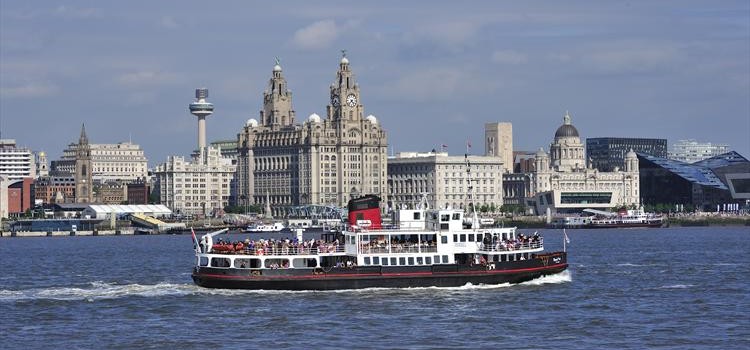
In July 2004 Liverpool received the UNESCO World Heritage accolade after a bid centred on Liverpool as a Maritime Mercantile city, reflecting the significance of the city as a commercial port at the time of Britain’s greatest global influence.
The World Heritage Site stretches along the waterfront from Albert Dock, through the Pier Head, up to Stanley Dock and through the commercial districts, such as the Ropewalks area, to St George’s Hall.
Liverpool FC’s origins lie with their neighbours Everton. Founded in 1878, Everton moved to Anfield in 1884, a facility owned by the club’s president, John Houlding, a former Lord Mayor of Liverpool. In 1892 a dispute arose between Houlding and the Everton board of directors, over the club’s tenancy of the ground. The annual rent had risen from £100 in 1884 to £250 in 1892; Houlding wanted to sell the ground to the club, which in turn wished to agree a long-term rental. Houlding would only agree to this on the basis of a rent at a level unacceptable to the club. Negotiations having failed, the directors decided to leave Anfield and find another ground, leaving Houlding with an empty stadium. His response was to form a new football club to occupy the stadium. He attempted to retain the team name “Everton” by registering the name “Everton Football Club and Athletic Grounds Company, Limited” with Companies House, but the Football League decided that the name belonged to the departed Everton club, which acquired new premises at Goodison Park. Houlding therefore adopted the name “Liverpool Football Club” for his new venture.
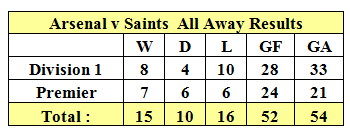
Our away record against Liverpool is less than stellar. Our last win was on September 2nd 2012. In the EPL era we have only won 6 league games in 26 attempts, and our overall league record including stands at 24 wins in 94 games.
Our last game was a 4-0 thrashing, am I confident? – not in the least.


Liverpool are this week’s Champions Elect what with City floundering.
Since Liverpool last won the League title, we’ve won up at Anfield 7 times in the top flight (once in the old First Division and 6 times in the Prem) plus victories in both the FA Cup and the League Cup.
There’s always hope when 22 men stand over a pig’s bladder in the middle of a field. Who knows, tomorrow could be our day!
GunnerN5


 Posted by Jeremy Bongo










 Arsenal News 24/7


 arsenalarsenal.net
This is the reason international friendlies never entice – if there’s nothing riding on a game of football, tedium ensues.
First Half
Laca scored a beauty from a Mesut pass.