A Blast from the Past No. 11 The birth of the FA and International Football

April 26, 2014

The early years 1872 – 1900

C. W. Alcock, one of the founder members of The Football Association in 1863, was one of football’s visionaries. He was the inspiration for both the FA Cup and the annual fixture between England and Scotland, these two events sparked a huge interest in the game and it spread quickly, firstly through Britain, followed by Europe, Africa and then to South America and beyond. Due to his imagination football quickly became a national obsession and by the early 1900’s numerous clubs had been formed in the heart of the country’s industrial communities. Prior to Alcock’s vision, football played outside of the country’s top public schools was considered to be no more than a loose and disorganised riot.

The England – Scotland fixture was drawing crowds of 100,000 and spawned debates over team selection and tactics both before and after the games. His idea for the annual fixture came after he witnessed the enormous interest aroused by rugby’s first international between the two countries in 1872 and he saw the publicity potential in a Football Association equivalent. However his announcement of the fixture, in the FA minutes of October 3rd 1872, did not indicate any real excitement – it read;

“In order to further the interests of the Association in Scotland, it was decided that a team should be sent to Glasgow to represent England”

England Scotland scrum 1878 001

Following the first international game football boomed in Scotland and many new clubs came into existence. The associations intention was for them to teach and for Scotland to learn but in the first ten matches England were humiliated by Scotland only winning twice in the first ten games including losing 6-1 in 1881 and 5-1 in 1882 – and to compound their dismay they only won four of the first twenty fixtures. The Scottish Football association secretary Robert Livingstone did not like the English dribbling game, he thought it was suicidal and instead he adopted the tactic of kicking the ball up the field and running after it and it proved to be very successful. The popularity of the annual fixture was encapsulated in an article which appeared in Bells Life prior to the 1878 match.

“All available conveyances were picked up long before two o’clock and a continuous stream of hansoms, dog carts and buses kept pouring their living freight to the foot of Hamden Hill…every inch of the locality was covered by spectators, In some places, it was packed like herrings in a barrel, but the majority bore it with Christian resignation”

English team -1890 001

The English Football Association Team, 1890

1900 – 1914

The dawn of the twentieth century did nothing to change England’s fortunes Scotland subjected them to a 4-1 pounding at Parkhead. The Football Sun reported;

“As soon as the gates were swung open people flocked in and the long wait was enlivened by patriotic songs, not to mention the whisky”

Two years later football suffered its first major crowd disaster during the England- Scotland game at Ibrox when a stand collapsed. It left 25 dead and hundreds injured but most of the crowd were unaware of the catastrophe in their midst. Early reports indicated that there were only a few injuries so the decision was made to continue with the game to avoid widespread panic. The stand was new and Ibrox had an official capacity of 80,000 but it was estimated that over 100,000 were in the ground – which led to the disaster. The original game ended in a 1-1 tie and was later downgraded to a “friendly”. It was replayed at Birmingham a month later and ended 2-2 with the gate proceeds going towards the disaster fund.

Between the turn of the century and the start of WW1 Scotland continued to be England’s only real competition of the 53 official internationals England lost just 7 games, 5 to Scotland and 2 to Ireland.  The 1909 Home Championship came within a whisker of being cancelled due to industrial unrest across England. The Players Union affiliated itself to the General Federation of Trade Unions and strike action in support of the miners threatened to bring the country to a standstill.

With just days left before the matches were due to begin the Players Union issued a statement announcing that “England would play and do their utmost to win” This was interpreted to mean that the team contemplated deliberately losing. The FA insisted that the players sign a statement declaring their determination to win. England went on to win the Championship without conceding a goal.

England players in 1911 001

England players conferring during a match in 1911

1919 – 1939

The 1920’s were an unsuccessful decade in England’s history. Following WW1 England, and other allied football associations, made the decision not to play against Germany, Austria or Hungary or any other country that agreed to play against their former enemies. This decision was shelved, two years later, when it became apparent that there was no reasonable opposition left to play against. But despite this change of heart England’s only foreign opponents were Belgium, France, Luxembourg and Sweden.

The 1930,s began promisingly with a triumph in the Victory International over Scotland; the game was played in appalling conditions and England’s team, nine of whom had seen service in WW1, found themselves 4-2 down at half time.  But in the second half, despite the continuous downpour, they turned the game around and won 5-4. Andrew Ducat, a member of the English team, died while batting at Lord’s during WW2. The win proved to be only a brief respite for England as they only won 6 of the next 17 games against Scotland during this period and had to wait until 1930 to win their first Home Championship since 1913.

Everton’s Dixie Dean played his first game for England against Wales on February 12th, 1927.  In the 1927/28 season he scored an astonishing 60 league goals, including a hat trick against Arsenal in the last match of the season, a record that is unlikely ever to be broken

Dixie Dean 001

England had a habit of stepping up their performances in important games and this showed in games against Italy and Germany. The match against Italy in 1934 was dubbed “The Battle of Highbury” it proved to be so violent that The FA seriously considered ending its participation in international football. Italy were the reigning World Champions and Italian newspapers called it the most important football game played anywhere in the World since the Great War.

An ankle injury to Italy’s Monti after just 3 minutes sparked a match of unrelenting violence. Centre- forward Ted Drake one of 7 Arsenal players in the line up, was punched on the chin early on and Captain Eddie Hapgood suffered a broken nose after a deliberate elbow flattened him. England went up 3-0 and after the game Hapgood recalled that the Italians started to hit everything in sight and fought back to 3-2. Arsenal’s Wilf Copping was in his element, he was considered to be the “hardest” man to ever pull on an England Shirt. His specialty was the, then legal, two footed lunge and he shoulder charged and tackled with ferocious enthusiasm. He more than any other player saved the day for England when their goal was under siege and they hung on for a famous, but ugly, victory.

England vs Italy 001

England’s Captain Eddie Hapgood wasn’t smiling after his nose was broken.

England faced Germany on May 15th, 1938 amidst a growing tension between the two nations, like Mussolini, Hitler’s Nazi re3gime understood the symbolic power of sport and the game against Engald provided an ideal arena for their propaganda machine.

110,000 spectators greeted the players in Berlin’s Olympic stadium amid a mass of red swastika flags with just the odd Union Jack.

Amid a storm of controversy back home English diplomats had agreed that the English team would give the Nazi raised arm salute. Captain Eddie Hapgood later reflected;

“I’ve been in a shipwreck, a train crash and inches short of a plane crash but the worst day of my life was giving the Nazi salute in Berlin”

Hitler was desperate for a symbolic victory over the mother country of football but the German team proved to be no match for Stanley Matthews and company and England ran out 6-3 winners.

England vs Germany 001

Action from the game in Olympic stadium May 15th, 1938

More to come………..

GunnerN5


Premiership clubs destroy England – Is Dyke right?

September 5, 2013

The new Chairman of the FA, Greg Dyke, has opened his account with a high profile critique of the current state of the game in England.  His fundamental point is that the pool of English talent continues to diminish and something needs to be done about that.

Looking at the last World Cup and the recent Under 21 Euros, you could say he has a point.  In both of those tournaments, England produced pretty lame and tame performances, and never looked to be in danger of troubling the silver polishers.

Personally, I think there are some very good young English players around right now, not least of all our own Theo, Jack, Gibbs, Corporal Jenks and the Ox. The likes of Daniel Sturridge, Joe Hart, Kyle Walker, Raheem Sterling, Ross Barkley, Ryan Bertrand, Jack Rodwell and Wilfried Zaha all look excellent.  And amongst the youngsters behind them, there are players who look to have real quality: for example, Spurs’ Tom Carroll looks very good.

It’s also worth bearing in mind that the English game is in fact the English and Welsh game, and right now there is something of a resurgence in the Welsh game, evidenced most obviously by Bale’s transformation into a Galactico, but also shown by the amazing success of Swansea and the return of Cardiff to the top division. And then there’s our own fantastic Welshman.

So, I’m not so sure the problem is as bad as it’s being made out to be.  It’s also worth remembering that, in recent years, the senior England squad has become more reliable about qualifying for major tournaments.  In the 1970s and 1980s, they made it a habit of missing out on qualification; that doesn’t much now.

Dyke’s focus seems to be on foreign players’ presence in the Premier League.  He cites figures suggesting that, in the last 20 years, the number of English players in the starting line-ups of top-flight clubs had gone from 69% to 32%.  He also said the proportion of new signings by PL clubs who are qualified to play for England had fallen from 37% to 25% in the past two years. “Last weekend only 65 English players started in the Premier League with another 14 coming on as substitutes,” he said. “Taking into account that some of these players are not international standard, I think it’s fair to say we already have a very small talent pool and it’s getting smaller.”

I won’t get into the basis of Dyke’s stats, save to make the general point that percentages can be calculated in many different ways, so I don’t necessarily take Dyke’s figures to be gospel.  For example, it isn’t clear to me where Scottish, Welsh, Northern Irish and Irish players fit into the analysis – players from those five footballing nations constituted the pre-PL pool from which players were drawn, so narrowly looking only at English players now would stunt the figures. Also, when you think of dual qualification, people like Carl Jenkinson for example, the truth behind the figures can become less clear.

But let’s assume that Dyke is right, that there is a diminishing pool of English PL players for the England coaches to recruit from.  Is that really a problem?  And if it is, why has it happened, and what could be done to rectify it?

Whenever I hear people complaining about the number of foreigners playing in the PL, my first reaction is always to point to the stubborn reluctance of young English players to make the same moves as their counterparts from other countries.  If they’re not getting enough pitch time in England, why not go to Holland, Sweden, France, Portugal, Belgium, or the US?  My guess is those youngsters are too scared to take on the challenge of moving country and/or prefer to take the easy, better money of being in an English PL squad.  Introducing quotas on foreign players (even if that were legally possible) wouldn’t answer those problems.  It would be better to give those young players some life-coaching, so that they make better decisions and broaden their horizons and their ambitions.

So, any thoughts?  Is Dyke right?  Do changes need to be made to the way the game is organised?  Does the strength of the national team even matter as compared with the ability of the clubs to recruit whatever players they want?

Written by 26may


SuperTheoGoesBallistic

June 16, 2012

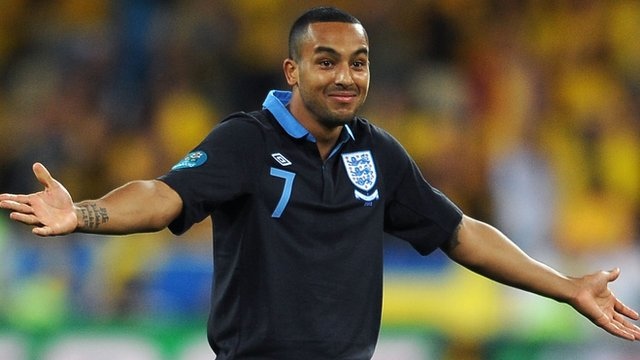
With England conceding two goals in quick succession Theo Walcott was finally given a chance to shine on a Major International Tournament stage.

Having been taken to 2006 World Cup and not played, then to feature heavily in 2010 qualification stages and not play, and then to feature again in these championships and again be overlooked when Hodgson’s pragmatic formation took shape it seemed yet again that Theo was destined for being unsuitable for the England team.

To be fair to the England managers I am not overly surprised, they don’t have the quality in the centre of midfield to pick out his runs, and they don’t have players with the ability to move up the field in numbers to support his blistering pace. So how can you use Theo to greatest effect? Well it turns out you just stick him on the pitch and let him sort It out for himself, and most importantly just let him play on his instincts.

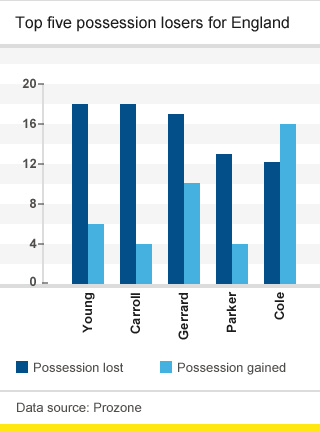
England had been poor in possession for the entire game, Stevie Me’s cross to Carroll the high point in an otherwise cumbersome England performance. The lack of ability to keep the ball without going back to the keeper and him hoofing it back to the halfway line and compete for another 50:50.

Theo was brought on to replace the poor Milner, and within minutes had set England level. None of us knew that Theo had that strike in him, as the ball dropped to the edge of the area Theo’s first touch was good, his second moved it to the right of on rushing defenders and his next sent the ball up and over the mass of players in the box and curving this way and that leaving the Swedish keeper totally befuddled. The look on his face suggested he didn’t quite know how he’d managed it.

How did I do that?

Minutes later Theo gained possession around the Swedish area, this is what we know he is capable of, committing defenders and taking the ball to the byline, looking up he saw Wellbeck’s movement and delivering a ball that the latter finished as well as RvP has done all season.

Twice more Theo got himself in positions to exploit the space on Sweden’s right but first Stevie Me and the Andy Carroll ignored the passing option, Arsene would have gone crazy if one of his players had ignored the pass.

There was still time for Theo to put the afterburners on during an England break that saw him overtake Stevie Me to get on the end of a Parker pass, and then deliver a cross for the Ox but Stevie Me wanted to get on the scoresheet and blasted at the keeper.

All in all a good nights work for Theo, but I don’t expect him to feature in a starting line up anytime soon, he showed his defensive weakness on several occasions during his short display, and unfortunately that weakness will not be tolerated in Hodgson’s defensive minded setup. He will continue to be a super sub when necessary though, and then the knives will be out if he can’t produce what he did last night every time he is brought on.

Gooner in Exile

One of our young gooners is taking part in the Race for Life on Sunday 17th June for Cancer Research. If you feel you would like to donate to this hard working charity please visit her giving page here http://www.raceforlifesponsorme.org/alicemonk Thank you.


Looking at Jack Wilshere’s U21 Call-Up From All Angles

May 5, 2011

“I will never say no to my country.”

So Jack Wilshere has vowed.

We all know the story by now. The European U21 Championship takes place this summer. Stuart Pearce has included Wilshere in his provisional 40-man squad for the trip to Denmark in June, there is absolutely no doubt he will make the squad and the starting XI. As you all know (in case my username isn’t a giveaway) I am Irish so I come at this 100% from an Arsenal point of view and want Jack to rest up and play the tourney on his Xbox this summer. However, I respect that the majority here are English, and while a lot, if not all, would put club over country in this case, that you want your country to do as well as possible, and having Wilshere in the squad will do that. Instead of rambling on, I will set out the arguments each side has for Jack going or staying.

Arsene Wenger — Arsenal

Jack Wilshere is 19 years old and has had his first full season as a senior starter under his belt. He has played 52 (FIFTY TWO!!) times for his club and country already this season. That would take the wind out of the best of seasoned players, never mind a young man who is barely old enough not to be called a teenager. During this time, he has taken on massive responsibility in our midfield. Personally, I can’t remember why he came into the squad, was it an injury? Was it because he did so well at Bolton? Was it tactical? All I know is he came in and played like he has been a senior for years. Playing against the likes of Xavi and Iniesta, and with the likes of Fabregas and Rooney (for England) hasn’t daunted him. He demands the ball, and he is not shy in trying to win it.

So Wenger has one question to ask himself when pondering Jack’s trip to Denmark; “What will he learn?” The answer is “nothing.” He already has all the technical ability, he won’t learn from those around him or those he is up against. He is already considered a main player for Arsenal so will not upgrade his responsibility chart. All Wenger cares about is Arsenal, and Wilshere’s trip to Denmark is nothing but a headache to him.

Stuart Pearce — England 

Just as Wenger’s considerations are all about Arsenal, so Stuart Pearce’s are all about England’s U21. He is not managing them to be friends with club managers, he is there to get the best out of who he can select, and Jack Wilshere is the best he can select. Pearce’s argument is very easy to see, yes he realizes that Jack has played a lot this season, but he also realizes that Jack is one of the best young talents in world football right now and not taking him would be madness. If Wilshere is tired after the tournament its not Pearce’s problem but Wenger’s, of course it could also be Capello’s problem. What is good for the England U21s might not be good for the Senior squad. What good will an exhausted Jack Wilshere be to you in Poland and the Ukraine next year?

Jack Wilshere

There is no doubting this is a fine young man we have on our hands at Arsenal. There was some stories early last season that he was getting a bit big for his boots, a few months at Bolton sorted that out (one of Wenger’s best loan decisions in my opinion) and you know he will always give a 100% for whoever he plays for, and he wants to play for England. Following his Twitter, Jack takes huge pride in being English, and unlike some other players who will claim man flu to get out of an international game, Jack will play whenever and wherever needed.

He sees the tournament in Denmark as a major one and one where he can lead his country. He is playing as well these last few weeks as he had been at the start so obviously he doesn’t feel tired, however its how he feels after the tournament that matters. It would be very sad that a young man who wants to do right by his country could set his career back a bit next season by getting exhausted and perhaps dropped by Wenger for the first few games.

Hopefully it doesn’t come to this. I  fully expect Jack to be in Denmark in June and in the starting XI, and while I wish England’s U21s all the best, I won’t hide my happiness if they get knocked out early and Jack is on the beach having a nice rest for the remainder of the summer.

Written by Irishgunner


Arsenal, Tottenham, Man City: Boo Boys Compared

November 18, 2010

Booing, when you think about it, is a very funny sound.

It’s the sort of sound a cow might make if it had a bad head cold.

And right now, around the more charmless corners of the Premier League, there has been quite an outbreak of snuffly Fresian behaviour.

The pale blue herd up at Middle Eastlands have been booing their little hearts out because their £350 million squad can’t rustle up a goal for love nor money. Well, actually, just for money – there’s not a single player at Man City who loves the club, although they all love their pay cheques.

Then, down the road in the pastoral idyll that is London N17, the all-white herd are just as noisily petulant because, in their case, they are feeling let down and betrayed: this was going to be THEIR YEAR. It really was – that top four finish was going to be a stepping stone to the League title, while the Champions League trophy would be scooped up along the way. The white herd, as is well known, is strongly infected with mad cow disease.

In both cases the booing is truly absurd.

Look at Citeh: Booed off at the weekend against Birmingham; booed off after drawing with Manchester United and at half time and full time when drawing with Blackburn; jeered off the pitch at half time when nil-nil at home to Wigan. I could go on but there are just too many examples to mention.

Sky Blues fans – what are you doing? Are you mad? You have spent years of your life loyally supporting a rubbish team that hasn’t looked remotely like winning anything for a generation and now, just because someone has come in and flashed his wad at you, you expect the earth?

Did you really think that all it takes to become a team of champions is to pay over-the-odds prices for greedy players looking for a mega payday, throw them all together and see what happens?

Chelsea managed it with Abramovich’s cash because (a) the league was not as competitive then and (b) Chelsea had the nucleus of a good team (which had already won silverware and competed in the Champions League before the Russian arrived).

City would probably be doing better now if they had kept the likes of Given, Ireland, Dunne, Elano and Bellamy and added some quality imports to that strong core. And yes I know Given is still there, but he’s not exactly first choice, is he?

I used to always like meeting Man City supporters because they had a great sense of cynicism and dark humour about the fortunes of their beloved club. Even their iconic anthem, Blue Moon, with it’s wistful, yearning air, reflected their understanding that they followed a club destined never to be fashionable or successful. And you know what? They hardly ever booed their boys back in the pre-lottery win days. Now look at them. Frankly it’s sad.

And then we move to our noisy neighbours, from whom we hear the sound of booing echoing over the rooftops of North London on an almost weekly basis – most recently after drawing with Sunderland last week.

Unlike poor Citeh, whose fans have had their heads turned by all that dough, the Spuds supporters have a long tradition of booing their team. They booed them under Ramos and under Jol and Santini and Pleat; they booed them under Hoddle and under Graham and Gross and Francis; they were probably booing them all the way back in 1898 under Frank Brettell, first in a long tradition of managerial failures at the mighty Cocks.

But they, too, need to ask themselves why they are booing their team this season of all seasons. They are in the champions league – a feat they will never achieve again in the lifetime of many of their fans – they are in the top seven in the table and are getting to see some decent players on a weekly basis (Bale, van der Vaart, Defoe, Modric, Kranjcar).

Don’t you Spuds realise that this is as good as it gets for you? And you’re STILL booing? Really, you deserve the club you’ve got and it deserves you.

Finally there’s Arsenal. One of the things I love about our club is that we don’t collectively boo the players off the pitch. When some sections of the crowd booed Emmanuel Eboue as he experienced a mid-game mental breakdown it caused an explosion of self-examination that continues in the blogosphere to this day.

Yes, there’ll be occasions when the team don’t exactly leave the pitch to a standing ovation, but collective booing by a large section of the Arsenal crowd is almost unheard of. (I have read reports of Arsenal being booed off at the end of games where I have been present and there was no booing – just muted applause. I can only imagine that some particularly dopey individual who likes to boo happens to sit near the press box).

Liverpool supporters hardly ever boo their team (and God knows, they have had reason to in the last few seasons). Nor do the supporters of Manchester United. Along with Arsenal, what those two clubs and their supporters have is history, and a touch of class. They know what success is, they have had high highs and low lows, but they also know their jobs as supporters.

Manchester City used to have class in a peculiar, downtrodden way, but the glint of money has stolen it from them.

The Spuds have never had it and they never will, so the mournful sound of booing from N17 will long continue to rival the chimes of Big Ben as one of the traditional sounds of Old London Town.

RockyLives

The England team were booed off the pitch at Wembley  last night. The France team which had a poorer World Cup than ours managed to look more like a football team than we did. What is more frustrating, the coach, the players or the media feeding the expectation of the supporters?


Jack Wilshere: The Surprise Star Of Arsenal’s Season

October 10, 2010

Yes, we’re only a few games into the season, and despite thumping Braga and Blackpool at home, it hasn’t being all that impressive. We’re still suspect at the back, and tending to play a pass too many in front of goal. It makes one wonder have any lessons from last season been learnt?! Well, one player who has learnt buckets from last season is our whizzkid Jack Wilshere. Chamakh has been very good, Koscielny better (but far from what we need) than what I thought and Squillaci looks like he could form a nice partnership with Vermaelen when he returns.  So while all these have been relatively nice surprises, the nicest and best for me have come from this young man:

Don’t worry, I can hear ye all from here! “What planet have you been on for the last few seasons? We all knew Jack Wilshere was going to make it, the young lad is a genius, future Liam Brady so he is.”

Yes, I’ve been well aware of Jack for some time now, just like the rest of ye. The wonder goals he has scored for the reserve and youth sides, he always playing one level ahead of his age group, but none of us are as green to not understand that it is a completely different kettle of fish playing in the Premier League and Champions League against some of the best players in the world. The acid test would always be how he would compare against them, and to date he hasn’t looked out of place.

He has already formed a great relationship with Arshavin, and this gives me such confidence on Wilshere’s footballing brain. This 18-year-old kid is already able to link up and read the thoughts of our Russian star in his prime?! If he can do that at 18, what will he be capable of at 23/24? Already he demands the ball, and his colleagues are so confident in his ability they make no qualms of giving it to him. Something Theo could learn from Jack is to have confidence in your own ability – we could perhaps name at least five examples that show Jack playing some wonderful passes that have either created goals or great goalscoring chances – the type of passes we are used to seeing from Cesc. That’s just the passes, there have been some clever flicks too.

However, the best thing about Jack to date has been his maturity, and it is because of this I mention he has learnt buckets from last season. Before he went on loan to Bolton there were a small couple of question marks regarding his temperament. There were suggestions he was getting a bit above himself and lacked some maturity (I can’t say this is 100% true and am not trying to portray Jack as a moany kid, just going on the information coming out at the time).

It personally shocked me to see Wilshere be sent on loan to Bolton last season, but it has to be classed as another stroke of genius by Wenger, or maybe by Liam Brady who may have had input in the decision. Either way, Jack was removed from the cotton wool effect of the Emirates and sent to Bolton were no inch is given. No doubt he was thought how to knuckle down and get work done by Davies and Co. None of us may be fans of Bolton, but for me at least I am grateful for the couple of months of footballing education Jack got from them. Already this season we’ve seen him getting kicked lumps out of, but Jack just dusts himself down and gets on with the game, none of this moaning.

It will be interesting to see how much game time Wilshere will get when Fabregas comes back from injury against Birmingham. Cesc probably won’t be a 100% match fit, so perhaps Cesc to start and Wilshere to replace him on the 60/70min mark, although Wenger may start the two of them in midfield with Song as DM? We’ll see next week, but for now Jack is developing very nicely as a player, one needed by Arsenal, and dare I say it, very much so by England.

Written by Irishgunner


Jagielka, Cahill and Hart ….. a glimpse of what might have been? – written by Rasp

September 7, 2010

Written by Rasp

After Dawson’s unfortunate injury (ahheerrmm) playing against Bulgaria last Friday, we saw the defensive triangle of English players that many had wished we could have signed this summer – and I thought they looked pretty good, but then again, they weren’t up against the most testing of opposition.

Of course the idea of us signing any of those players was just unsubstantiated speculation fuelled by a national press expert at feeding the paranoia of football fans. There is no concrete evidence that these players were available, willing to move or even the subject of interest from Arsenal.

The likelihood is that all three will all play against Switzerland tonight, so we will get a second chance to assess them. Are they any better than our trio of Vermaelen, Koscielny and Allmunia?

Vermaelen and Jagielka are very similar in height and stature. Jagielka has had two very good seasons at Everton and looks comfortable in international football. He’s strong and brave, good in the air, reads the game well, experienced (he’s 28) reasonably quick and dependable – all of which applies equally to Vermaelen, who at 24 is just coming into his peak. TV has captained club and country and scores more goals than the Evertonian, so although Jagielka is a good player, all in all,  I’m very happy to have our future captain (?) at the Arsenal.

Cahill and Koscielny are physically quite different. Cahill is 6ft 2in and powerfully built. He too is very good in the air and also looked the part when he came on for England. Both are developing their game at the age of 24 and can only improve. Cahill looks a reasonable footballer, but I’d say Kozzer has the edge in that department. It will take time for Koscielny to settle into the English game but he has huge potential. I thought he was better than TV against Liverpool but was outmuscled too easily by Diouf against Blackburn. If LK can develop into a ‘TV clone’, we will have an excellent CB pairing. He is more capable of playing wengerball than Cahill and is said to be working on his strength for the physical challenges that lie ahead.

Joe Hart can do no wrong at the moment and on current form, is probably the best keeper in the Premier League. It’s too easy jump on the bandwagon and draw unflattering comparisons between Hart and Almunia, – so I’m just going to list a couple of elements of Hart’s game that make him such a good keeper. He is confident. He has very strong wrists so when he makes contact with the ball it generally flies out of the danger area. His distribution is good and he communicates well with his defence. I expect him to be England’s number one for many years.

Almunia has my full support and has made an excellent start to the season. It is obvious that his confidence is fragile, but the more decent performances he can deliver, the more assured he will become. He should take strength from his team-mates, Eboue and Bendtner, who defied their critics and won their way back into the hearts of the fans.  The resolve of the defence and willingness of all the outfield players to ‘defend as a unit’ will also play a part in Almunia’s fate. Of course he will make mistakes – all keepers do, what is more important is how he reacts to setbacks. Arsène’s policy will be to give his keeper total support and that’s the way it should be.

We will know by Christmas whether the affable Spaniard has risen to the challenge. I would suggest that he is in the last chance saloon and if his form slips, we may yet sign another keeper in the January window.


Arsenal in Tatters

August 9, 2010

Why is everyone worried about our squad for this season? We have 4 world class keepers, the envy of every other side and they will be rotated so that they all play once every 5 games, to keep them fresh and on their toes.

We have Sagna and Eboue who absolutely love each other and they have formed a pact so there is no bitterness whoever plays. Then we have Clichy and Gibbs. Clichy is changing his nationality to Ukrainian as he is embarrassed to be French and he knows that Gibbs will soon be taking over, yes an English left back,heavens forbid,therefore watch for an imminent departure by Clichy.

Song, our most improved player, will surely be in demand by some other club soon, most probably City, with a swap plus cash for the return of Adebayor. Vermaelen should be captain and he is the lynch pin and if he doesn’t get the armband he will demand a transfer, as Cesc has already told him privately that the armband is his.

If we’re lucky Djourou might actually complete one match while Koscielny will come goodif we give him three or four seasons. Traore, can’t go back to Pompey as they are nearly bust. Diaby is fighting fit, therefore expect at least 5 games from him, and I am told he is trying his very best not to break a team-mate’s leg.

Rosicky is only 30 so has at least 6 or 7 years left. Nasri is a star and has progressed so much pre season that another club will rape us yet again for his services. Wilshere at 18 is a future captain of England though he might get the record for the most red cards in a season.

Denilson like Bendtner has been on the nest too much and both will suffer terminal groin strains. Walcott has just realised that the England team he hopes to represent is in fact at football not the 2012 Olympics 100 metres sprint.

Arshavin will spend more time on his own web site and will finish up with his own chat show between games, as he never gets out of a stroll.

Vela wins the glamour stakes but will he actually get two consecutive games as commuting on a daily basis from Mexico will surely take its toll. Chamakh is everything we wished for and no worries about him as yet, as he hasn’t learned the ropes at Arsenal.

Gallas has decided it is better to play for us at 5K a week even if he scores the odd own goal. RVP is our star player, will  he, can he, please, last a full season and of course Ramsey will be fit and ready to go in about 18 months.

Footnote: Gibbs,Wilshere and Walcott have made it into the England squad for Wednesday, so they are sure to be rested for a few weeks as we have to limit the younger players’ chances .

Finally there is Fabregas. Watch this space.

Written by kelsey


England relieve the pressure on Arsenal supporters

June 19, 2010

Well what a load of rubbish our national side dished up last night. My immediate post match reaction was all about anger and disappointment rather than logical analysis – just like when Arsenal have a poor game. Of course it’s all football and not surprising that the emotion is similar when watching England as watching Arsenal.

Arsenal will always come before England in my heart, but I’ll watch a game in the park and find myself urging one team to win even though I’ve never seen them play before.

All this got me thinking about the parallels between a poor England performance and a poor Arsenal performance.

The big question that applies to both is….. are the players to blame or the manager?

Did Capello become a bad manager in the last week? Do we have a different Arsène Wenger in charge compared to the one who orchestrated the Invincibles?

The England side lacked balance. Players were played out of position – Gerrard wide left; Heskey just a magnet for the long ball with no end product; Lampard there just for his reputation. Joe Cole was the only player available who could produce some magic and he was left sitting on the bench. I’m 100% sure that if Theo had been on the bench he would have been brought on last night, but he wasn’t even in the squad – BIG mistake.

The manager clearly failed to say anthing to make a difference in his half-time team talk and he didn’t select the players from the bench who were capable of turning the game around. I don’t buy the argument that the players are overpaid prima donnas who couldn’t care. To me they looked like they wanted it too much, were scared of failure and could not handle the pressure despite their wealth of experience. I consider Capello to be the most culpable for England’s poor performance.

Arsenal too have been guilty of fielding sides that lack balance and using players out of position. We have favoured players who by all accounts are brilliant in training but fail to reproduce that form in matches. We have looked clueless and lacking in a plan B, so logically, one would expect to apportion most of the blame to the manager – and as we are all aware, many supporters take that view to extremes.

Here I think the comparison falls down. Unlike Capello, Arsène is answerable to a Board who’s first concern is the future and financial stability of the club and possibly if I am cynical, the potential future value of their investment. The candy coated PR that Arsenal churn out is blatantly aimed at giving the message thay want us to swallow rather than a true account of activities behind the scenes and Arsène is a pawn in that process. I believe he is currently making statements regarding transfers that he knows are unlikely to come true.

Yes Arsène has made some bewildering team selections and persevered with players who many believe will not make the grade. Sometimes as in the case of Alex Song, he has been proved right andin other cases the jury is still out. But he is the manager and he is paid to make those decisions.

Some of the media mongrels are already calling for Hary Redknapp to replace Capello. Although I’d like to see it simply because it would be great to hear all the whinging totnum fans, I don’t believe he has ability to manage much above the Championship.

So thank you very much Mr. Capello, you have made the self flagellation of being an Arsenal supporter in the transfer window just a bit more tollerable. I wonder if Mr. Wenger has a wry smile on his face when he witnesses the fierce condemnation that his contemporaries Domenech and Capello are being subjected to.