George was the youngest of seven children, his father died of tuberculosis when he was less than a month old. He displayed considerable promise as a young footballer, and was signed by Aston Villa on his 17th birthday, in 1961, but only made eight appearances for them in three seasons. He was transferred to Chelsea in July 1964 where he scored 35 goals in 72 league games and also and won a League Cup medal in 1965, however his time at the club became uncertain after he clashed with his volatile manager Tommy Docherty.
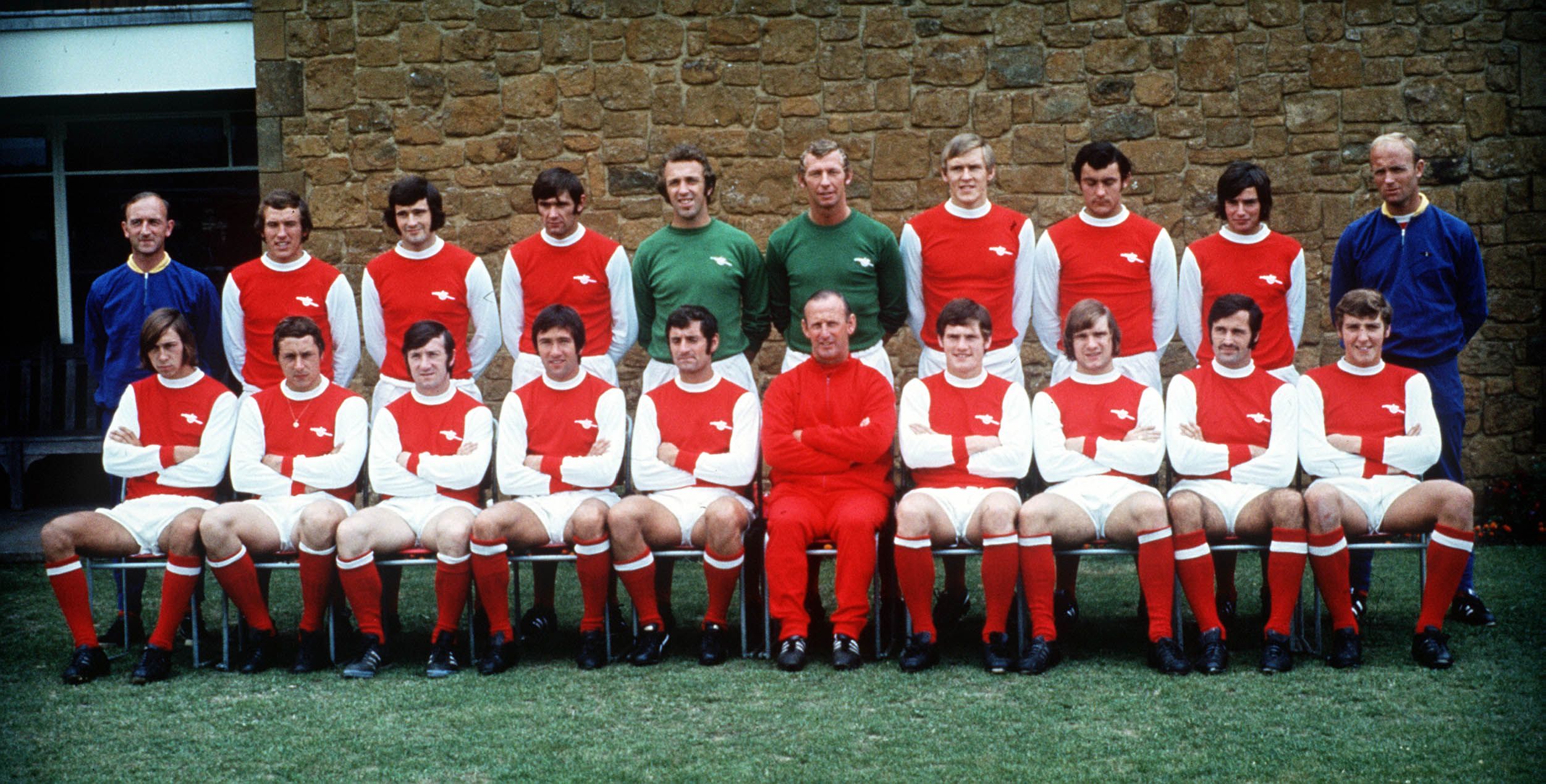
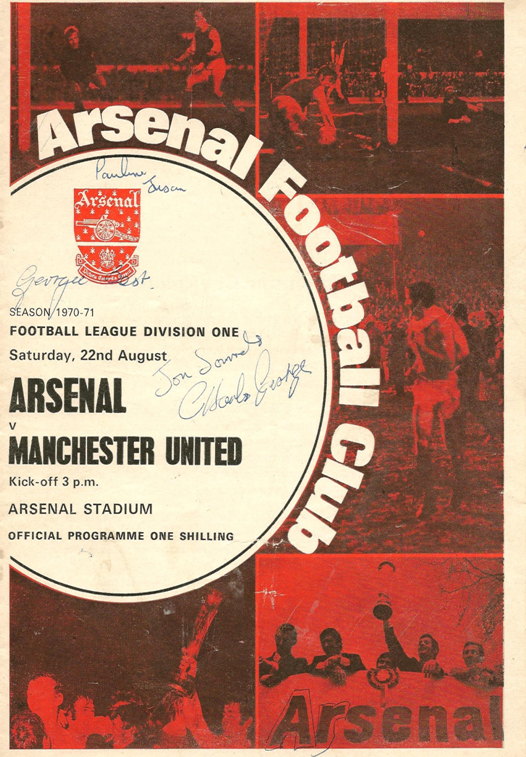
At the time Arsenal were looking for a replacement for Joe Baker, and paid £75,000 plus Tommy Baldwin in 1966 to bring 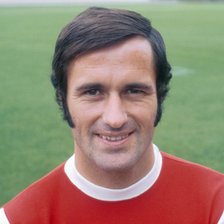 Graham to Highbury and he immediately became a first team regular and was Arsenal’s top scorer in both 1966–67 and 1967–68. After being a runner-up in both the 1968 and 1969 League Cup finals, he finally won a medal with Arsenal’s victory in the1969–70 Inter-Cities Fairs Cup. He followed it up by being a key member of Arsenal’s Double-winning side of 1970–71. Midway through the 1971-72 season Alan Ball became an Arsenal Player which led George to being transferred to Manchester United in December 1972. He had played in 308 matches for Arsenal, scoring 77 goals.
After retiring as a player he turned to coaching and managed at Crystal Palace, Queens Park Rangers and then Millwall. He guided Millwall from bottom of the old Third Division to the old Second Division and after he left the club in 1986, they went on to win the Second Division gaining promotion to the First Division in 1987–88.
In the mean time Arsenal were going through a torrid period in their history and had only won 4 trophies in the 33 year period from 1953-54 to 1985/86. The European Fairs Cup in 1969/70 and the double in 1970/71, under Bertie Mee then there was an eight year wait until we won The FA Cup under Terry Neill in 1978/79. The club dismissed manager Don Howe in March 1986 following yet 3 more trophy less seasons and finishing an average of seventh in the league.
Arsenal expressed interest in appointing Aberdeen manager Alex Ferguson as their new manager with Graham as his assistant but Ferguson decided to wait until after the World Cup that summer before deciding on his future, and so the Arsenal directors  appointed Graham as the new manager on 14 May 1986. Graham cleared out much of the old guard and replaced them with new signings and players promoted from the youth team, while imposing much stricter discipline than his predecessors, both in the dressing room and on the pitch. Arsenal’s form immediately improved, so much so that the club were top of the League at Christmas 1986, the club’s centenary, for the first time in a decade but they eventually finished in fourth position. The following season they went on to win the 1987 League Cup and reached the final again in 1988 where they suffered a shock 3–2 defeat to Luton Town.
His sides displayed tight defensive discipline, embodied by Captain Tony Adams, who along with Lee Dixon, Steve Bould and Nigel Winterburn, formed the basis of the club’s defence for over a decade. To compliment his stingy defence he also had capable midfielders like David Rocastle, Michael Thomas and Paul Merson, plus a prolific striker in Alan Smith.
At the end of his third season in charge (1988-89) Arsenal won their first League title since 1971, when Graham had been an Arsenal player, and they won in a highly dramatic fashion, in the final game of the season against Liverpool at Anfield; Arsenal needed to win by two goals to take the title; Alan Smith scored for Arsenal early in the second half to make it 1–0, but as time ticked down Arsenal struggled to get a second, and with 90 minutes gone on the clock, Arsenal still needed another goal. With only seconds to go, an Alan Smith flick-on found Michael Thomas surging through the Liverpool defence he calmly lifted the ball over Bruce Grobbelaar and into the net, and Arsenal were League Champions. After finishing fourth in 1990, he signed goalkeeper David Seaman and Swedish winger Anders Limpar in the close season; both players proved to be important as Arsenal went on to win Graham’s second title in 1990–91. In the autumn of 1991 season he signed Arsenal’s eventual second all-time top scorer Ian Wright and gained the club’s first entry in the European Cup for 20 years.
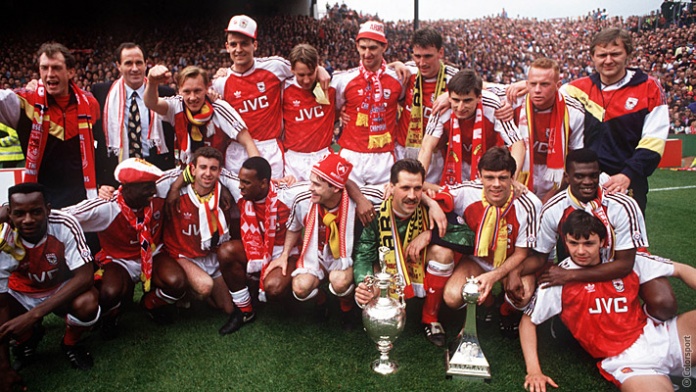
After the 1991-92 season he changed the teams tactics; he became more defensive and turned out far less attack-minded sides, which depended mainly on goals from Wright rather than the whole team. Between 1986–87 and 1991–92 Arsenal averaged 66 League goals a season (scoring 81 in 1991–92), but between 1992–93 and 1994–95 only averaged 48; this included just 40 in 1992–93, when Arsenal finished 10th in the inaugural season of the FA Premier League, scoring fewer than any other team in the division and 1-0 to The Arsenal began to echo around the grounds.
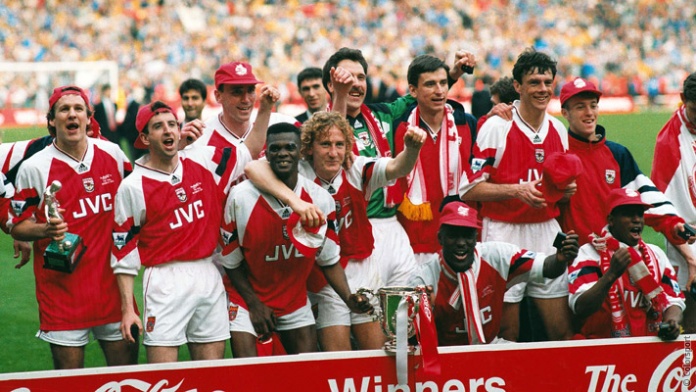
In the 1992–93 season Arsenal became the first side to win the FA Cup (in a replay) and League Cup double, beating Sheffield Wednesday on both occasions by a 2–1 score. The next season they continued in the same vein, winning the UEFA Cup Winners’ Cup, their second European trophy; in the final Arsenal beat favourites and holders Parma 1–0 with a typically tight defensive performance and Alan Smith’s 21st minute goal.
Unfortunately the 1994 Cup Winners’ Cup proved to be George Graham’s last trophy at the club; the following February he was dismissed by Arsenal after nearly nine years in charge. It was discovered he had accepted an illegal £425,000 payment from Norwegian agent Rune Hauge following Arsenal’s 1992 acquisition of John Jensen and Pål Lydersen, two of Hauge’s clients. After admitting he had received an “unsolicited gift” from Hauge the Football Association banned him for a year – due to his involvement in the scandal.
The Arsenal statement
“Arsenal FC has now been informed by the FA Premier League Inquiry of the results of their investigations into alleged irregularities concerning certain transfers and the Board have concluded that Mr Graham did not act in the best interests of the club. The Board have therefore terminated Mr Graham’s contract as manager. The chairman said that it was sad that Mr Graham’s distinguished career with Arsenal FC should have to end in this way and he paid tribute to Mr Graham for the success that he had brought to the club over the past eight and a half years. Stewart Houston will assume the responsibilities of manager.”
It was an unpleasant way to bring his career at Arsenal to an end.
GunnerN5


 Posted by Rasp



 Arsenal News 24/7


 arsenalarsenal.net