Arsenal’s Best Signing Ever

June 27, 2011

Who is the best player ever to have been signed by Arsenal?

Last summer I wrote a post about ‘Arsenal’s Best Transfer News Ever’. The point of that piece was to determine which piece of transfer news was the most exciting when it was announced, regardless of how that player went on to perform for the club.

So, for example, Clive Allen was on that list even though he never played a game in anger for Arsenal and so was Davor Suker, who was never more than a bit part player.

This time I want to know which signing (as opposed to home grown player) has been the best piece of business we have ever done.

You may want to weigh up factors such as what they cost, what their impact was on the team, what legacy, if any, they left behind, their achievements versus the expectations we had when they arrived and so on.

I’m not including anyone who has come through the Arsenal ranks from apprentice up, or has been recruited at too young an age to be considered a mature signing (so there’s no room for Cesc Fabregas).

For starters, here are what I consider to be some of the main contenders:

Cliff Bastin

Cliff was spotted by Herbert Chapman playing for Exeter away at Watford. Chapman had gone along to keep tabs on a promising Watford player but was so impressed by Cliff that he snapped him up at the end of the 1928/29 season. It was an inspired piece of business and was crucial to the Chapman revolution that led Arsenal to dominate English football in the 1930s. Bastin’s scoring record for the Gunners was not outdone until Ian Wright surpassed it in 1997.

Ronnie Rooke

Arsenal’s dominance in the Chapman era was ended not by any other team, but by the Second World War. When football began again afterwards we returned as a severely weakened side and narrowly avoided relegation in 1947. But the following year we bounced back to reclaim our crown – and the vital ingredient was a tough, experienced centre forward called Ronnie Rooke. He was nearly 35 when we signed him from Second Division Fulham and he had never played in the top flight – so he was a real gamble. However, his 21 goals in 1946/47 helped stave off relegation and he followed that with 33 more the next season as we marched to the title.

Frank McClintock
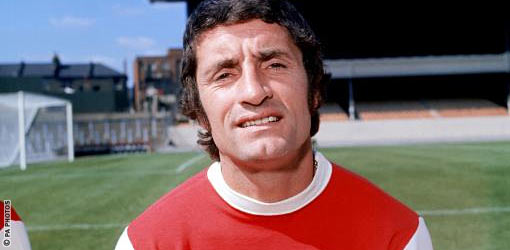
Our Double-winning hard man was brought up in the Gorbals area of Glasgow, which explains a lot. He was signed in 1964 after seven successful years at Leicester. Starting off in midfield before moving to the CB role (and the captaincy) he was a rock throughout the relatively fallow years of the late 1960s and, of course, led Arsenal to the Double in 1971.

Alan Smith

Another Leicester stalwart, signed in 1987. “Smudger” was an awkward-looking, ungainly centre forward, but there was no-one better at holding up the ball and bringing others into play – skills that, along with his eye for a goal, proved to be vital in our title-winning seasons of 1989 and 1991.

David Seaman

After winning the league in ’89 most of us were happy with John Lukic between the sticks, but George Graham decided that he wanted the best and went out and got Safe Hands from QPR in 1990. It’s no exaggeration to say that Seaman was an essential ingredient in every subsequent success achieved by the club during his time with us.

Ian Wright
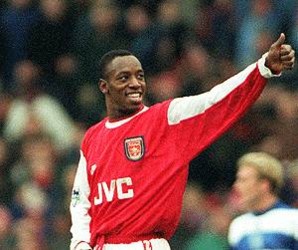
Although he would not win a champions medal until 1998 and the arrival of Arsene Wenger, Wrighty was a mainstay of the Arsenal team in the later George Graham era, when we stopped winning championships and started winning cups and when our flamboyant attacking midfield was replaced by pragmatic journeymen. Arguably, without Wright’s goals during that period, we might really have struggled.

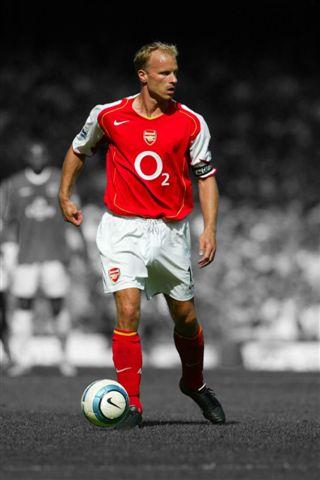
Dennis Bergkamp
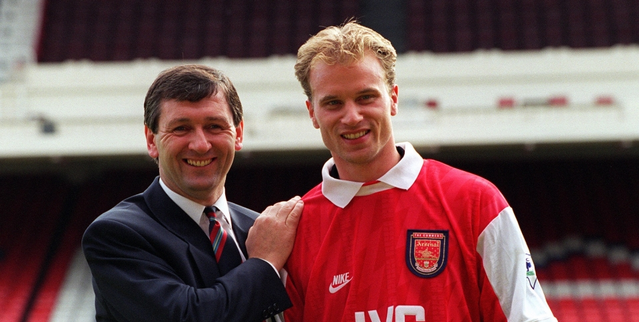
I’ll admit to being biased here. Dennis is my all-time favourite Arsenal player – but what a signing he was in terms of ambition and imagination. Bruce Rioch was the boss when Dennis arrived in 1995 but his signing is widely attributed to David Dein. The English league did not have much in the way of foreign superstars at that time (Eric Cantona apart) and Dennis showed the way forward for many of the great foreign players that followed. His touch, vision, passing and reading of the game was a damning indictment of the type of players being produced by English clubs in the Route One era.

Sol Campbell
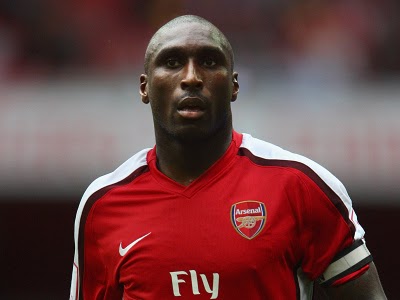
Sol’s signing from the N17 knuckle-draggers was the sensation of the close season in 2001. The fabled Adams-Keown-Bould back three was near the end of its days and a significant reinforcement was needed. You don’t get more significant than Big Sol, who went on to become an immense figure in our defence, even if he did go a bit loopy at the end.

Patrick Vieira

Signed in 1996 from Milan, Paddy took the EPL by storm and is arguably still the greatest midfielder to have strut his stuff since the Premiership was formed. Arsenal captain, Arsenal legend, fearless, tireless, gifted… what more is there to say?

Thierry Henry

After Arsene Wenger’s first Double in 1998, we were all gutted when young goal machine Nicolas Anelka was persuaded by his greedy agents (his brothers, no less) to walk out on us the following year. But we need not have worried. Arsene went one better, bringing in Thierry Henry fresh from France’s 1990 World Cup triumph. He was a winger with va-va-voom, but Arsene converted him into the deadliest striker the Premier League has ever known.

That’s it.

My choice would be Dennis, because he completely transformed Arsenal and helped transform English football. He also stayed with us until the end of his career and is clearly still a devoted Gooner.

What do you think?

RockyLives


Arsène Wenger manages the Dream Team

June 24, 2011

Written by Gooner in Exile

Arsenal.com are currently running an all time dream team vote. The problem with this it is often only the young who vote and recent memory can skew the result.

We have a wide church here with regard to ages so how about we all pick our all time eleven, manager, coach, physio and you can even throw in a few squad players.

One stipulation you must have seen them play or manage whilst you’ve been alive. On second thoughts this could put the younger members of the forum at a disadvantage so perhaps we can allow two wild cards for positions where you believe a player from before your time may have added some.

I’ll start us off:

Seaman

Lauren   Adams  O’Leary  Winterburn

Pires    Vieira  Talbot    Limpar

Bergkamp
Wright

Subs
Henry
Rocastle
Ljungberg
Merson
Campbell
Caesar

Coach : Don Howe
Physio : Gary Lewin

Manager : Arsène Wenger

That was tough and I’ve only been watching them for 29 years, good luck to our older supporters.

So just to say I know that’s not going to be everyone’s cup of tea but hey it’s my fantasy you all get to have yours too.

Admittedly some have been chosen for how they did things on the pitch, they may not all be the best in their positions but in the case of a few:

Wright……his pure enthusiasm for the game, affinity with the fans and love of scoring goals and also because of that goal against Big Nev, the whole of Highbury singing Ian Wright Wright Wright for a good ten minutes after he scored it.

Limpar…..I was there when he beat Hooper from the halfway line and it was probably the best goal I ever witnessed at Highbury.

Caesar…..you have to have an anti hero to have a hero, he was always good for a laugh (unfortunately for him we weren’t laughing with him).

So there is the challenge pick away. Don’t ask me to justify my selections I made them in five minutes and will probably change them every ten.


June 20th Is A Massive Day For Arsenal

June 20, 2011

As Arsenal supporters we have many great anniversaries to celebrate.

There was May 26th 1989 – Micky Thomas scoring in the closing seconds to clinch an improbable title away at Anfield. The sight of 40,000 thieving Scousers whining about being robbed was karma on a cosmic scale.

Or how about May 3rd, 1971, when a Ray Kennedy header made us champions of England – an achievement made all the sweeter by the location of our triumph: that’s right, that large public convenience in N17. Where better to take the piss?

Or Christmas Day 1886, when the Royal Arsenal football team was formed in the Royal Oak pub in Woolwich. Bells rang across South London that day and angels in choirs sang songs of praise. Some people thought they were celebrating the birth of a baby who would save mankind from sin. In fact they were celebrating the birth of an almighty team that would save mankind from T*ttenham. Same thing, really.

But I want to propose June 20th as the most significant day in the modern history of Arsenal?

Why? Because that is the date in 1995 when Dennis Bergkamp joined Arsenal FC.

I’m tempted to say he descended among us in a cloud from on high, but in fact I think he arrived on a ferry at Harwich.

That audacious signing (we snaffled the Dutch maestro away from Inter) came under the stewardship of Bruce Rioch, although David Dein is generally credited as being the mastermind behind the deal.

And, to my mind, it started a chain of events that has led Arsenal to its current position as one of the most successful clubs in Europe.

My theory is that without Dennis there would probably have been no Arsene Wenger. Imagine how much easier it must have been for Dein to lure Arsene to our club with Dennis Bergkamp already on the roster.

Even if Arsene had arrived and we did not have Dennis,  he may well have struggled in his first couple of seasons and his tenure may not have lasted.

And without Arsene we would almost certainly now be a struggling mid table side or a permanent wannabe like the Spuds.

So for me, June 20th represents the birth of Arsenal as a major player in the new Europeanised world of top football.

To you all I say: “Happy St Dennis’s Day.”

RockyLives 


Where does the beautiful game go from here?

July 13, 2010

I awoke on Monday morning sick and angry at the realisation that the Sam Allardyce School of football had somehow found its loathsome way to the World Cup final as Holland kicked, hacked, tripped and shirt pulled their way through 120mins of cynical attrition, laughingly described by some as football. Thus the most high profile game in the world was dragged down to a level that would have shocked Sunday morning pub footballers.

This I thought is the country that gave us Johan Cruyff, Krull, Neskins and latterly our own Dennis Bergkamp and Robin van Persie, each and every one renowned for sublime skills. Yet it was RvP, who’s own foul play straight from the kick off announced to the watching world just what today’s game plan would be.

Where has Holland’s fabled total football gone? Surely it was this concept that had inspired Barcelona through successive managers to play it with the style and panache that makes them the most attractive club side in the world.  The same style copied back here in England by Arsene Wenger as he shapes our own Arsenal after the same fashion.

Yet here and now, in the full spotlight of the world’s media and on millions of TV screens worldwide. We had watched Spain’s modern interpretation of the same concept, being ruthlessly nullified by storm troopers, wearing the same orange shirts their forbears had worn with such distinction, as footballers in previous world cups. Sure they had never won one, but their reputation and magic has entered footballs folklore and is to this day the stuff of dreams and wonder to those of us lucky enough to remember. What will this crowd of losers be remembered for?

So bad was the rough stuff that even Alan (football is a mans game and a contact sport) Hanson was a complete contradiction of all he has ever espoused on BBC TV. He was moved in his half time summation to roundly condemn the Dutch, their methods and tactics in an anti intimidation tirade that would have left most listening gooners in a state of  complete disbelief given his known track record on the subject. Miracles it seem do happen, conversion is still possible in today’s cynical football world.

So back to yesterday morning and as I lay in bed the realisation of how far we had fallen came. When I turned my radio on and Jordie Cruyff a Dutch international himself and the son of the great man, said to Nicky Campbell “of course we played the correct game we had to stop them playing, if we had let them play their tippy tappy football we may as well have gone home after 45 minutes as we would have been beaten. The referee didn’t help he was very” (picky, fussy cant remember exactly. But the meaning is clear). Like father, like son I think not.

True the referee tried valiantly enough, but no doubt warned by the politicians not to ruin South Africa’s big day, was not able to apply the law, as he should have done in order to control the game. Two sent off in the first half would no doubt have finished any hope’s he might have of higher office when his officiating days are done.

We are well used to Blackburn and Bolton and their ilk playing against us in this manner, the broken legs and in some cases spirits of fine young footballers, in our own club, testify to the malaise in this country.

But from Cruyff to Allardyce in the world cup final is a tragedy I am unable to get my head round.

Thank god they didn’t win and the beauty of the Spanish game got its just reward. Even if there was too much diving, unnecessary posturing and card waving from the Spanish players, but at least they stuck to the basics and kicked the ball most of the time.

So my football loving friends please answer the question I keep asking myself, where the hell does the game I love go from here?

Written by dandan


Dennis Bergkamp – “would you fly if you could walk on water?”

June 16, 2010

Morning all. Yesterday, irishgunner wrote this fantastic post about Dennis Bergkamp which unfortunately NewsNow didn’t pick up until early evening. As many of our regular readers might have missed it, we have decided to keep it up for a while longer and so have published it this morning under a different title. Apologies to those of you who are experiencing deja-vu, it’s that good, reading it twice won’t be a hardship.

Watching the World Cup always brings out the romantic in me. By that I mean it makes me think of the greats that I as a young one wasn’t around (and thus lucky enough) to see play. Those type of players who I feel are better than any that play nowadays.

A lot here could name them better than me, but I’ll throw out a few: Pele, Alfredo di Stefano, Zico, Bobby Charlton, Franz Beckenbauer, Liam Brady, Johnny Giles, Ferenc Puskas, Gianni Rivera, George Best and Teofilo Cubillas among others.

In my head, they are perhaps twice as good as they were on the field. I feel like I have missed out on something and the grainy footage that plays on my DVD player doesn’t do them justice. Last night after Germany demolished a static Australia, I sat down and instead of pining to “have seen Brady play at Highbury just once” I actually thought how lucky I was to have seen some of the players I have seen over the years.

I was born in 1986, got caught up in the football fever that swept Ireland during Italia 90 before becoming a Gooner in 1994. During that time I’ve seen some wonderful players: Maradona still had a bit left in his legs during the early 90s. There was that wonderful AC Milan team of Rossi, Baresi, Maldini, Rijkaard and Weah and the insane skills of Zidane, Raul, Ronaldinho and Ronaldo (the Brazilian one) in their prime.

At Arsenal we had some of our own players who were above others on the field. One stands head and shoulders above the rest – the Iceman, DB10!

Dennis Bergkamp’s arrival in London in 1995 saw the beginning of a new dawn at Arsenal as the club began to look to Europe for more talent. Some say that it was Wenger who gave the go-ahead for Bergkamp’s signature, others claim it was David Dein but lets give the credit to Bruce Rioch. He was manager, he was there when Bergkamp first held aloft the wonderful red and white.

The Dutchman came to us under a cloud. At the time he was the second most expensive signing in the world after Inter Milan paid Ajax £12million for his services in 1993. He flattered to deceive in Italy and just two years on arrived in North London for £7.5million. During the very early days, many claimed that Arsenal had wasted what was then a decent sum of money – now it is seen as one of the biggest bargains in football history.

It took Bergkamp seven games to score his first goal for the Gunners (against Southampton) and during this time he went through a tough transitional period, but then he got going, oh how he got going! He got going so much after that there was literally no stopping him.

In 423 games he scored 120 goals and I have enough confidence to say that NOT ONE of them were run of the mill tap-ins. Bergkamp didn’t do run of the mill, he did majestic, he did magical, he did genius. I have studied English Literature in college, read the greats like Byron, Keats, Shakespeare and Joyce, yet I still struggle to find a superlative to do justice to the Iceman. It seems utterly useless to even try now, so I’ll go through some of the goals he scored and you can try and put an adjective on them in your own head.

1. September 1997. His hat-trick against Leicester is voted as the first, second and third best goal of the month on Match of the Day.

2. 1998 World Cup. Long ball by Frank de Boer, Bergkamp controls it with one touch – dismissing the Argentine defender Ayala in the process – then smashes home.

3. March 2002. With his back to goal Bergkamp receives the ball from Pires, he sends the ball one way before he twists the other, rounds the dumbfounded Nikos Dabizas of Newcastle and slots the ball past Shay Given.

I remember watching the Newcastle game live on television. When Bergkamp did what he did my jaw dropped and hit off the ground – I only managed to get it back up last week. Yes, it was THAT good!

But just talking about Bergkamp’s goals is like just talking about Michael Jackson’s dancing. They are merely the icing on the proverbial cake. Michael Jackson was much more than an extremely talented dancer – he was a songwriter, a singer, an entertainer. Likewise Bergkamp was more than a goalscorer – he was the songwriter, singer and entertainer in our pack. Some of the passes he tried to play were ridiculous – to even think of attempting these passes was madness but it was crazy that he could actually carry them off. He created goals and found space for teammates like it was going out of fashion.

And for 11 years, ELEVEN YEARS it was Arsenal fans and Arsenal FC who benefited from his genius. It was US who got to watch him week in and week out while everyone else just wished they would have taken a punt on the man who nobody in Italy wanted. Nobody else got him after us either – we had all Bergkamp’s wonder to ourselves. So never, ever forget just how lucky we were to see that.

Dream of Puskas, Pele and Maradona, wonder now at Messi, Kaka and Torres but remember that once upon a time everyone else was doing the wishing. Dennis Bergkamp is the most technically gifted player to ever ply his trade in English football and he did so at the home of football. Some say his career was marred by the fact he wouldn’t fly and thus missed out on some vital European games. Well let me end this by asking you a simple question: would you fly if you could walk on water?


Gooners of 1995-2006, Never Forget How Lucky We Were!

June 15, 2010

Watching the World Cup always brings out the romantic in me. By that I mean it makes me think of the greats that I as a young one wasn’t around (and thus lucky enough) to see play. Those type of players who I feel are better than any that play nowadays.

A lot here could name them better than me, but I’ll throw out a few: Pele, Alfredo di Stefano, Zico, Bobby Charlton, Franz Beckenbauer, Liam Brady, Johnny Giles, Ferenc Puskas, Gianni Rivera, George Best and Teofilo Cubillas among others.

In my head, they are perhaps twice as good as they were on the field. I feel like I have missed out on something and the grainy footage that plays on my DVD player doesn’t do them justice. Last night after Germany demolished a static Australia, I sat down and instead of pining to “have seen Brady play at Highbury just once” I actually thought how lucky I was to have seen some of the players I have seen over the years.

I was born in 1986, got caught up in the football fever that swept Ireland during Italia 90 before becoming a Gooner in 1994. During that time I’ve seen some wonderful players: Maradona still had a bit left in his legs during the early 90s. There was that wonderful AC Milan team of Rossi, Baresi, Maldini, Rijkaard and Weah and the insane skills of Zidane, Raul, Ronaldinho and Ronaldo (the Brazilian one) in their prime.

At Arsenal we had some of our own players who were above others on the field. One stands head and shoulders above the rest – the Iceman, DB10!

Dennis Bergkamp’s arrival in London in 1995 saw the beginning of a new dawn at Arsenal as the club began to look to Europe for more talent. Some say that it was Wenger who gave the go-ahead for Bergkamp’s signature, others claim it was David Dein but lets give the credit to Bruce Rioch. He was manager, he was there when Bergkamp first held aloft the wonderful red and white.

The Dutchman came to us under a cloud. At the time he was the second most expensive signing in the world after Inter Milan paid Ajax £12million for his services in 1993. He flattered to deceive in Italy and just two years on arrived in North London for £7.5million. During the very early days, many claimed that Arsenal had wasted what was then a decent sum of money – now it is seen as one of the biggest bargains in football history.

It took Bergkamp seven games to score his first goal for the Gunners (against Southampton) and during this time he went through a tough transitional period, but then he got going, oh how he got going! He got going so much after that there was literally no stopping him.

In 423 games he scored 120 goals and I have enough confidence to say that NOT ONE of them were run of the mill tap-ins. Bergkamp didn’t do run of the mill, he did majestic, he did magical, he did genius. I have studied English Literature in college, read the greats like Byron, Keats, Shakespeare and Joyce, yet I still struggle to find a superlative to do justice to the Iceman. It seems utterly useless to even try now, so I’ll go through some of the goals he scored and you can try and put an adjective on them in your own head.

1. September 1997. His hat-trick against Leicester is voted as the first, second and third best goal of the month on Match of the Day.

2. 1998 World Cup. Long ball by Frank de Boer, Bergkamp controls it with one touch – dismissing the Argentine defender Ayala in the process – then smashes home.

3. March 2002. With his back to goal Bergkamp receives the ball from Pires, he sends the ball one way before he twists the other, rounds the dumbfounded Nikos Dabizas of Newcastle and slots the ball past Shay Given.

I remember watching the Newcastle game live on television. When Bergkamp did what he did my jaw dropped and hit off the ground – I only managed to get it back up last week. Yes, it was THAT good!

But just talking about Bergkamp’s goals is like just talking about Michael Jackson’s dancing. They are merely the icing on the proverbial cake. Michael Jackson was much more than an extremely talented dancer – he was a songwriter, a singer, an entertainer. Likewise Bergkamp was more than a goalscorer – he was the songwriter, singer and entertainer in our pack. Some of the passes he tried to play were ridiculous – to even think of attempting these passes was madness but it was crazy that he could actually carry them off. He created goals and found space for teammates like it was going out of fashion.

And for 11 years, ELEVEN YEARS it was Arsenal fans and Arsenal FC who benefited from his genius. It was US who got to watch him week in and week out while everyone else just wished they would have taken a punt on the man who nobody in Italy wanted. Nobody else got him after us either – we had all Bergkamp’s wonder to ourselves. So never, ever forget just how lucky we were to see that.

Dream of Puskas, Pele and Maradona, wonder now at Messi, Kaka and Torres but remember that once upon a time everyone else was doing the wishing. Dennis Bergkamp is the most technically gifted player to ever ply his trade in English football and he did so at the home of football. Some say his career was marred by the fact he wouldn’t fly and thus missed out on some vital European games. Well let me end this by asking you a simple question: would you fly if you could walk on water?