The Versatile Arsenal

August 2, 2012

Firstly let’s look at what ‘versatile’ means:

“Capable of or adapted for turning easily from one to another of various tasks, fields of endeavour”

Arsène Wenger is a well-known for being a visionary and a game changer; we’ve all heard the stories about how he changed certain aspects of the team when he first arrived. But are we seeing a new change on the horizons?
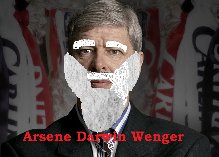
Players have evolved over the years; they are bigger, faster, and stronger. The ‘New Breed’ is starting to come through and they can do it all. Koscielny is the complete defender; he simply has no flaws in his game. The ox has the world at his fingertips; striker, winger, attacking midfielder, central midfielder…it doesn’t matter really because he will excel anywhere, and be bloody world class whilst doing it. Song has adapted and become a complete midfielder. First a defensive midfielder, now an all-rounder that can now thread the needle with the best of them. Young Jack: first thought of as an attacking midfielder, now he can play defensive, central or attacking. The list goes on really but is this simply natural athleticism? Yeah that definitely has something to do with it! But the real person behind all this is Arsene.

He has made players become more versatile, they are not one dimensional, and this has brought with it countless positives:

  • When injuries strike players can slip into the team seamlessly. Bugger Jack is down who is going to slip into the attacking midfielder role? That’s ok! Move ox there and chuck Podolski out on the wing, and bring Giroud on as the striker. This can happen in games also. Look how often Song has dropped into CB and we have not dropped an ounce of defensive quality.
  • If a player is shut down it will not impact the team as much. For instance if someone sits on our attacking midfielder the weight can shift over to Arteta and Song to create chances. This is imperative because nullify a key player and teams often panic and shut down completely. Arsene says “not here, not in my town!”
  • The team is more fluid like in nature. If Vermaelen surges forward, Song sits back. Santos moves forward Arteta slips to LB, and Song sits centrally protecting the back four. This leaves us with less chance of getting caught out on the counter.

This will give us a cutting edge in the game, we evolve, technology evolves, and now we have! Come to think of it Arsene might be a descendant from Charles Darwin!

Welcome to the New Breed of player, the COMPLETE Arsenal

Written by oz gunner


The Sagna Conundrum

August 1, 2012

The Sagna Conundrum

The first thing to know about the Sagna Conundrum is that it does not involve Bacary Sagna.

The Sagna Conundrum is a problem created not by his presence, but by his absence, and it comes down to this: when our super-consistent French right back is not available, who should take his place?

It’s a pressing question, given that Sagna will not be ready for the start of the new season.

The principal contenders to take his place are Carl Jenkinson, Johan Djourou, Francis Coquelin and Laurent Koscielny.

Last season, due to Bacary’s injuries, they all got a number of games at right back.

The conventional wisdom is that Djourou was a disaster and Jenkinson, despite showing some promise, was out of his depth; but that both Coquelin and Koscielny proved to be adequate stand-ins.

My own view – based primarily on memory of past performances – is that central defenders do not make good full backs because the FB role requires so much more mobility than they are used to. I prefer midfielders to step in if we are out of orthodox (or experienced) full backs.

From my recollection, Coquelin and Jenkinson filled in well, but the two centre backs – Koscielny and Djourou – struggled.

Memory, however, can be an unreliable guide, so I decided to take a more detailed look at how the four contenders fared when they stood in for Sagna last season.

Djourou

Jenkinson

Coquelin

Koscielny

Played

11 (10 plus 2 halves)

7

5

3.5

Won

4

4

4

3

Drawn

2

1

1

0

Lost

6

2

0

1

Goals Against

16

13

5

3

According to this table the average points per game during each of the four’s tenure at right back was as follows*:

Djourou: 1.16 Pts Per Game (with an average 1.45 Goals Conceded Per Game).

Jenkinson: 1.86 PPG (1.86 GCPG).

Coquelin:  2.6 PPG (1.0 GCPG).

Koscielny: 2.57 PPG (0.86 GCPG).

Like all such studies, there are inherent problems with drawing conclusions from these figures.  For example, if you look at Jenkinson’s “Goals Against” you would think him a liability. But eight of those goals were up at Old Trafford, when the lad had hardly ever worn an Arsenal shirt in anger and in a catastrophically weakened and confused team.

Similarly, although Djourou’s stats look the worst, they include two games against the eventual league champions, one against Chelsea and one against Manchester United, as well as a dead rubber ECL game at Olympiakos where a partly second string Arsenal team lost 3-1.

Nevertheless, I feel there is enough evidence to show that our big Swiss fellow is not cut out to be a right back. Indeed, when he was hauled off at half time in the home game against Manchester United (and replaced by the embryonic Yennaris) it may well have been a sign that Arsene Wenger had finally come to that same conclusion himself. I doubt we will ever see Djourou in that position again.

Jenkinson’s stats look a lot better if you remove the Man Utd away game from the mix (and he can hardly be blamed for that collective fiasco). He then has a Points Per Game average of 2.16 and a Goals Against of 0.83.

Surprisingly – and contrary to my recollection – Koscielny’s record as a right back is very good. I recalled him seeming to struggle, but the figures prove otherwise. His three-and-a-half games included two “easier” fixtures (Norwich away, Wigan at home) but also one-and-a-half tough ones (Dortmund at home and Manchester City away).

Conclusions: For me, the table above is generally encouraging because it shows we can expect a solid performance from any of Jenkinson, Coquelin and Koscielny when they are compelled to play right back.

I am happy with Djourou in the mix as one of our centre backs, but he does not function well at full back and, hopefully, we have seen the last of him in that position.

I mentioned Yennaris earlier. Last season he took the right back spot in a Carling Cup game (2-1 home win over Bolton) and in the second half against Man Utd at the Emirates. According to those who have been watching our pre-season friendlies he seems to be showing promise.

With Jenkinson and Yennaris maturing, we may well soon find ourselves in a position where playing other players out of position at full back is a thing of the past.

Anyway, enough of my waffle. Do you think the table has merit? Does it tally with the evidence of your eyes? Are we sufficiently covered within the squad for the right back position or do you feel we should be looking to sign someone?

RockyLives

*Before the eggheads among you start quibbling with my maths, I made certain adjustments to allow for the half games (for example, if we conceded a goal during a half in which Djourou did not play, even though he played in the other half, I have not marked down that goal in his “Goals Against” column.